
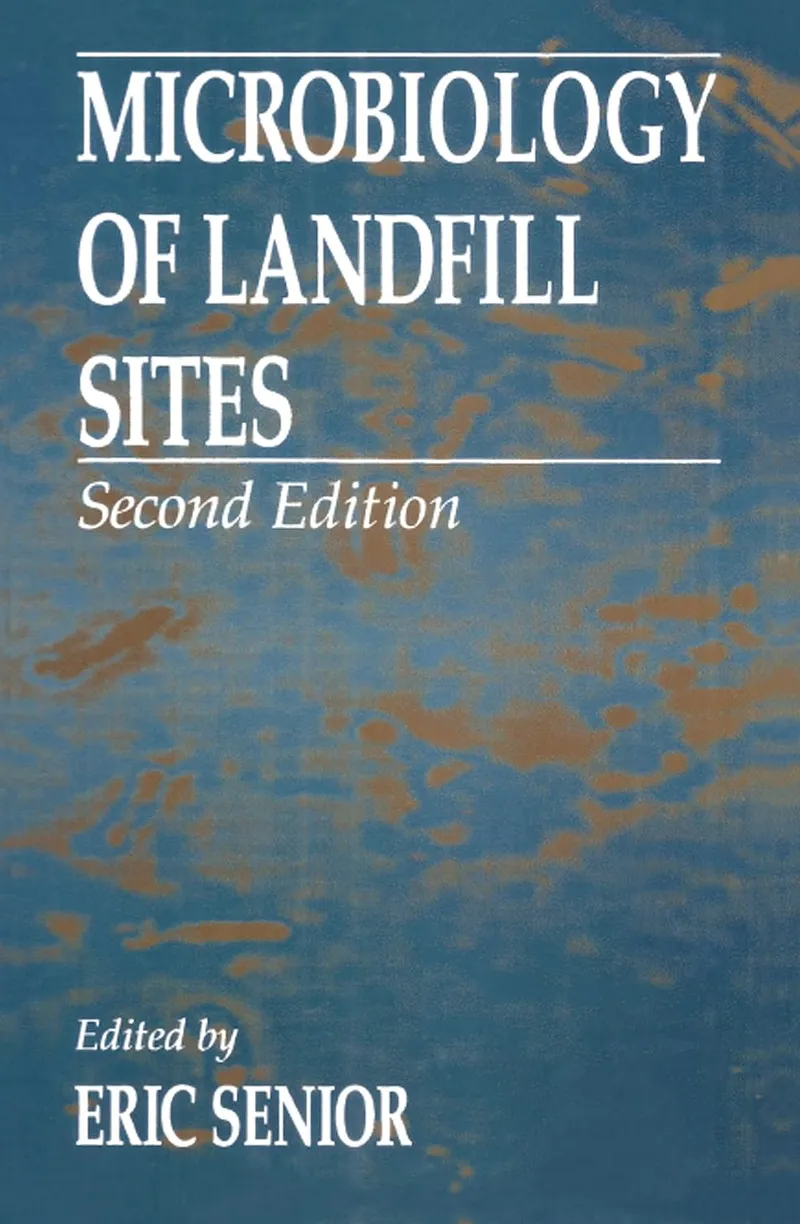

Microbiology of Landfill Sites, 2nd Edition
Microbiology of Landfill Sites, 2nd Edition is a specialized resource exploring the microorganisms and biological processes that occur within landfill environments. Published by CRC Press, this edition examines the important relationship between microbiology, waste management, environmental science, and biotechnology.
With 224 pages, the book provides a focused introduction to the microbial communities and biochemical processes involved in the decomposition and transformation of waste materials in landfill sites.
About Microbiology of Landfill Sites
Landfills are complex biological environments containing large quantities of organic and inorganic materials.
Once waste is deposited, microorganisms begin breaking down biodegradable components through a series of biological processes. These microbial activities influence the composition of landfill waste, the production of gases, and the characteristics of liquids generated within the landfill.
Understanding these processes is important for effective waste management and environmental protection.
Microbial Communities in Landfills
A wide variety of microorganisms can exist in landfill environments.
These communities may include bacteria, archaea, fungi, and other microorganisms, with different groups becoming active under different environmental conditions.
Microbial populations can change as waste materials decompose and conditions such as oxygen availability, moisture, temperature, and pH change.
Anaerobic Microbiology
Many parts of a mature landfill environment become oxygen-limited or anaerobic.
Under these conditions, anaerobic microorganisms play an important role in the decomposition of organic materials.
Microbial metabolism under anaerobic conditions can ultimately contribute to the production of gases such as methane and carbon dioxide, making landfill microbiology closely connected with environmental engineering and waste management.
Decomposition of Organic Waste
Microorganisms are major drivers of organic matter decomposition.
Complex materials can be broken down into simpler compounds through successive microbial processes. Different microbial groups may participate at different stages, creating a dynamic biological system within the landfill.
Understanding these processes helps explain how the composition of landfill waste changes over time.
Landfill Gas
Microbial activity can contribute significantly to landfill gas generation.
Methanogenic microorganisms are particularly important during anaerobic decomposition because they produce methane as part of their metabolism.
Landfill gas has environmental and energy implications, making the microbiology behind its formation relevant to both waste management and renewable energy research.
Leachate and Microbial Activity
Landfill leachate is liquid that passes through waste materials and can contain a variety of dissolved and suspended substances.
Microbial activity influences the chemical composition of landfill environments and can contribute to the transformation of organic compounds present in waste and leachate.
Understanding these biological processes is important when considering the environmental management of landfill sites.
Environmental Implications
Landfills can affect surrounding ecosystems if waste-derived substances migrate into soil, groundwater, or the atmosphere.
Microorganisms influence many of the chemical transformations occurring within these environments.
Studying landfill microbiology can therefore help researchers and environmental professionals better understand waste degradation, pollutant transformation, greenhouse gas production, and potential environmental impacts.
Microbiology and Waste Management
Modern waste management increasingly considers biological processes when evaluating landfill behavior.
Microbiological knowledge can contribute to improved strategies for:
- Organic waste decomposition
- Landfill gas management
- Leachate treatment
- Environmental monitoring
- Waste stabilization
- Resource recovery
- Pollution control
This makes landfill microbiology an important interdisciplinary field connecting microbiology with environmental engineering.
Biotechnology Applications
Microbial processes occurring in waste environments may also have biotechnological applications.
Understanding microbial communities and their metabolic activities can help researchers investigate opportunities for biogas production, waste treatment, resource recovery, and biological transformation of organic materials.
These applications demonstrate how environmental microbiology can contribute to more sustainable waste-management practices.
Who Is This Book For?
Microbiology of Landfill Sites can be useful for:
- Microbiology students
- Environmental microbiology students
- Environmental science students
- Waste management professionals
- Environmental engineers
- Biotechnology students
- Researchers studying microbial ecology
- Waste-treatment researchers
- Environmental consultants
- Students studying landfill management
The book is particularly relevant to readers interested in the intersection of microbiology and environmental management.
Why Study Landfill Microbiology?
Landfills are not simply locations where waste is stored. They are dynamic biological systems in which microorganisms continuously transform organic materials.
Studying these microbial processes helps explain waste decomposition, landfill gas formation, leachate characteristics, and environmental impacts.
This knowledge can support better approaches to waste management, pollution prevention, and resource recovery.
Final Thoughts
Microbiology of Landfill Sites, 2nd Edition provides a focused examination of the microorganisms and biological processes associated with landfill environments.
The book explores topics related to microbial communities, anaerobic decomposition, organic waste degradation, landfill gas, leachate, environmental impacts, and waste-management applications.
With 224 pages, this second edition offers a concise resource for readers interested in environmental microbiology and the biological processes that influence landfill behavior.
For students and professionals working in microbiology, environmental science, environmental engineering, biotechnology, and waste management, this book provides useful insight into the microbial world operating within landfill sites.
Book Information
Title: Microbiology of Landfill Sites
Edition: 2nd Edition
Publisher: CRC Press
Publication Date: January 29, 2020
Language: English
Print Length: 224 pages
ISBN-10: 9781000714470
ISBN-13: 978-1000714470
ASIN: B0857385KM
Subject: Environmental Microbiology / Waste Management / Microbial Ecology / Landfill Science / Environmental Biotechnology
Microbiology of Landfill Sites, 2nd Edition explores the role of microorganisms in waste decomposition, anaerobic processes, landfill gas production, leachate, and environmental management, making it a useful resource for readers interested in environmental microbiology, waste treatment, and sustainable resource management.
Support the Creators!
If you enjoy this book, please consider supporting the author and publisher by purchasing a physical or digital copy. Buying official copies ensures authors can keep writing great books.