
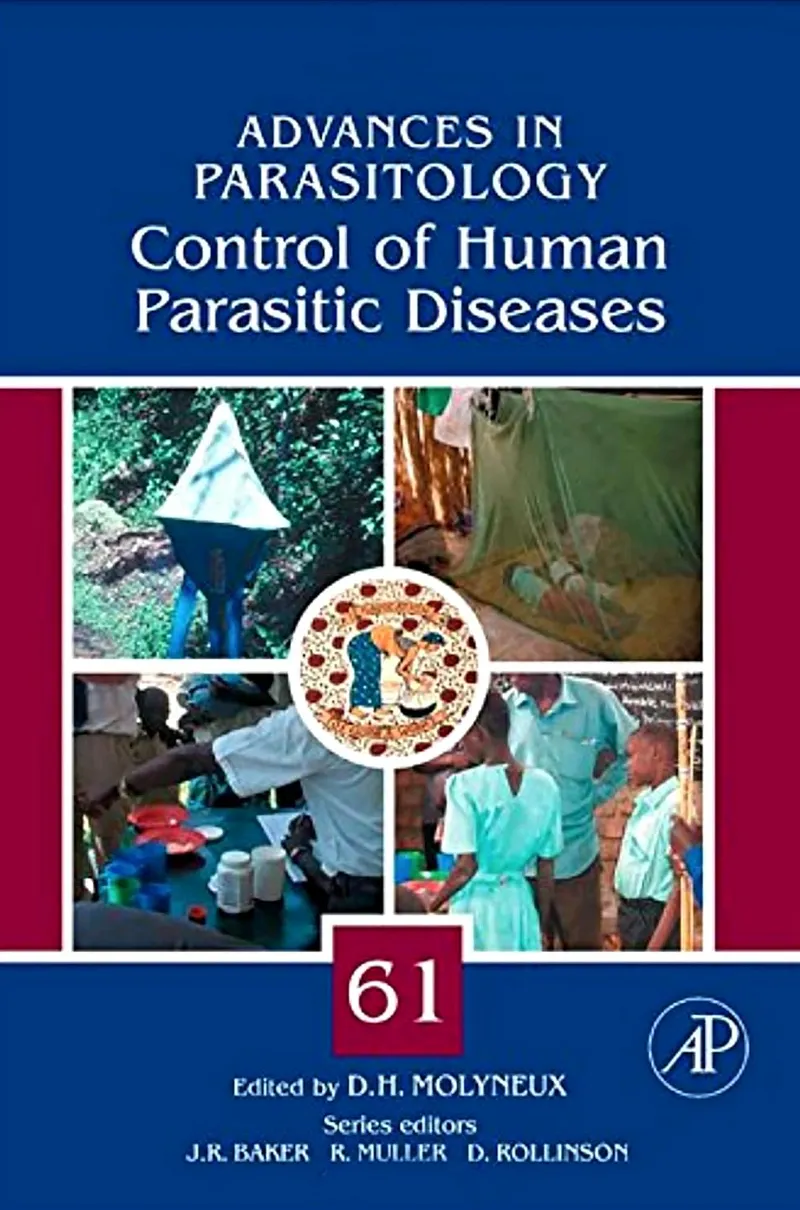

Control of Human Parasitic Diseases, 1st Edition
Control of Human Parasitic Diseases, 1st Edition is a specialized volume in the Advances in Parasitology series, published by Academic Press. The book focuses on the scientific and public health approaches used to understand, prevent, and control parasitic diseases affecting humans.
With 682 pages, it provides extensive coverage of strategies for reducing the transmission and impact of parasitic infections.
About the Book
Human parasitic diseases remain important public health challenges in many regions of the world.
Effective control requires more than treating individual infections. It involves understanding parasite transmission, epidemiology, environmental factors, host–parasite interactions, and population-level interventions.
Parasitic Disease Control
The control of parasitic infections depends on interrupting the processes that allow parasites to survive and spread.
Important approaches include early diagnosis, treatment, prevention, vector control, environmental management, and health education.
Epidemiology and Transmission
Understanding how parasites move between hosts is essential for designing effective control programs.
The book examines the factors influencing parasite transmission, infection patterns, reservoirs, vectors, environmental exposure, and disease distribution.
Prevention and Public Health
Preventing parasitic disease often requires coordinated interventions at both individual and community levels.
Strategies can involve sanitation, clean water, food safety, vector management, preventive treatment, and community-based health measures.
Treatment and Control Programs
Treatment plays an important role in reducing the burden of parasitic diseases.
However, successful disease-control programs may require combining diagnosis, appropriate therapy, surveillance, prevention, and population-level interventions.
Human–Parasite Interactions
Effective control also depends on understanding parasite biology and the relationship between parasites and their hosts.
Knowledge of parasite life cycles, host responses, transmission mechanisms, and environmental adaptation can help identify points where intervention may be most effective.
Who Is This Book For?
Control of Human Parasitic Diseases can be useful for:
- Parasitology students
- Medical students
- Microbiology students
- Public health students
- Epidemiologists
- Biomedical researchers
- Infectious disease researchers
- Healthcare professionals
- Researchers studying tropical and neglected diseases
It is particularly relevant to readers interested in disease prevention, epidemiology, and public health approaches to parasitic infections.
Final Thoughts
Control of Human Parasitic Diseases, 1st Edition provides an extensive examination of the principles and strategies involved in controlling parasitic infections.
The book connects parasite biology, epidemiology, transmission, treatment, prevention, and public health interventions, providing a broader perspective than a conventional introductory parasitology textbook.
With 682 pages, it is a substantial reference for advanced students, researchers, and professionals interested in the control and prevention of human parasitic diseases.
Book Information
Title: Control of Human Parasitic Diseases
Edition: 1st Edition
Series: Advances in Parasitology, Book 61
Publisher: Academic Press
Publication Date: April 6, 2007
Language: English
Print Length: 682 pages
ISBN-10: 0120317656
ISBN-13: 978-0120317653
Subject: Parasitology / Human Parasitic Diseases / Disease Control / Epidemiology / Public Health
Control of Human Parasitic Diseases, 1st Edition explores the epidemiology, transmission, prevention, treatment, and public health control of human parasitic infections, making it a valuable reference for advanced students, researchers, and professionals in parasitology and infectious disease control.
Support the Creators!
If you enjoy this book, please consider supporting the author and publisher by purchasing a physical or digital copy. Buying official copies ensures authors can keep writing great books.