
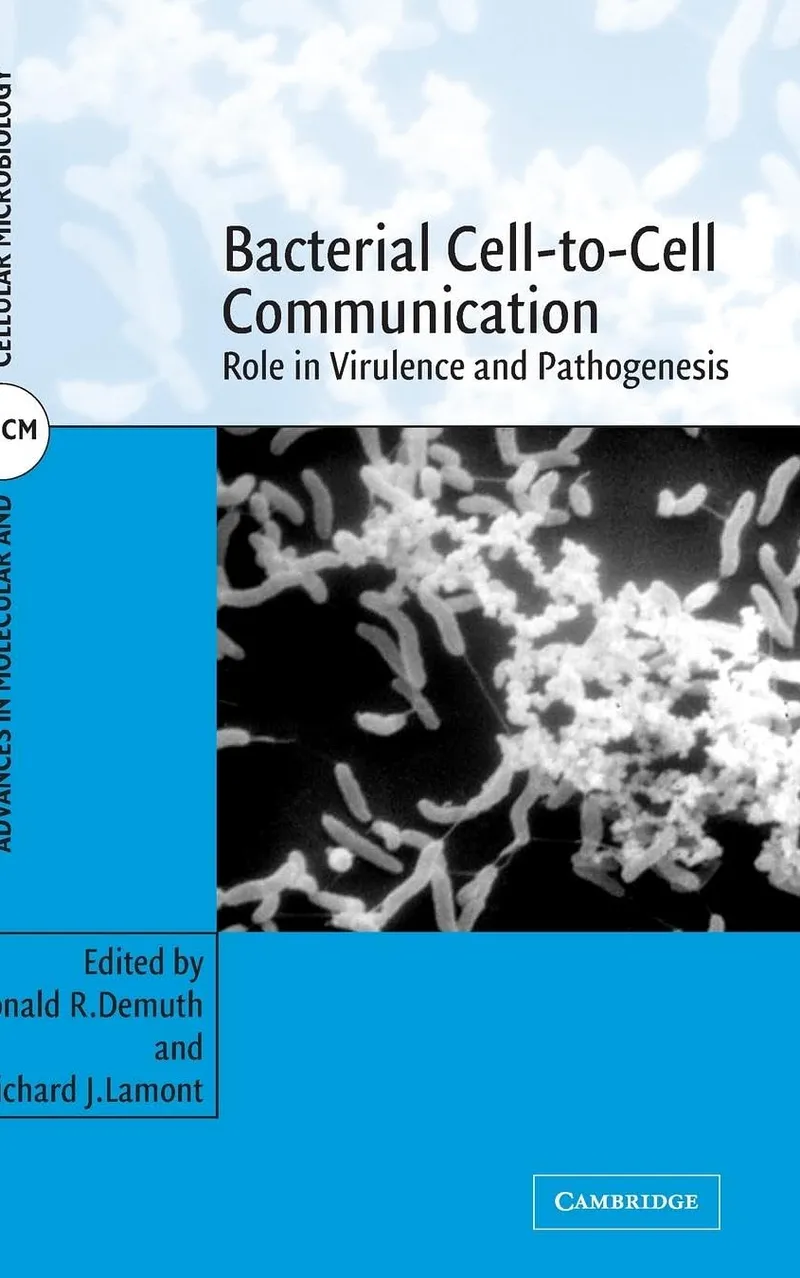

Bacterial Cell-to-Cell Communication: Role in Virulence and Pathogenesis
Bacterial Cell-to-Cell Communication: Role in Virulence and Pathogenesis is a specialized microbiology book examining how bacteria communicate with one another and how these communication systems influence bacterial behavior, virulence, and disease development. Published by Cambridge University Press, the book provides an in-depth look at bacterial signaling and its importance in microbial pathogenesis.
With 330 pages, it is particularly relevant to students and researchers studying microbiology, molecular biology, infectious diseases, bacterial physiology, and microbial pathogenesis.
About the Book
Bacteria are capable of communicating through chemical signals that allow populations of cells to coordinate their behavior.
The book explores how bacterial communication systems regulate important biological processes and how these mechanisms can contribute to colonization, virulence, persistence, and disease.
Bacterial Cell-to-Cell Communication
Bacterial populations can coordinate activities using signaling molecules.
The book introduces the molecular principles behind bacterial communication and signaling, explaining how individual cells detect chemical signals and alter their behavior in response.
Quorum Sensing
Quorum sensing allows bacterial populations to coordinate gene expression according to cell density.
The text examines the role of quorum-sensing systems and signaling molecules in controlling collective bacterial behaviors.
Regulation of Bacterial Behavior
Cell-to-cell signaling can regulate numerous bacterial processes.
The book explores how communication affects behaviors such as motility, biofilm formation, extracellular enzyme production, and other coordinated microbial activities.
Biofilm Formation
Biofilms are organized microbial communities surrounded by an extracellular matrix.
The book examines the relationship between bacterial communication and biofilm development, organization, persistence, and adaptation, highlighting their importance in infectious diseases.
Virulence and Pathogenesis
Communication systems can influence the ability of bacteria to cause disease.
The text investigates how bacterial signaling contributes to virulence-factor production, host colonization, tissue interactions, and pathogenic processes.
Host–Bacterium Interactions
Bacterial communication occurs within complex environments, including infected host tissues.
The book considers how signaling systems influence interactions between bacterial populations and their hosts, providing insight into mechanisms underlying infection.
Molecular Mechanisms
Understanding bacterial communication requires knowledge of molecular signaling pathways.
The book examines signaling molecules, receptors, regulatory proteins, gene expression, and signal-transduction mechanisms involved in bacterial communication.
Potential Therapeutic Applications
Bacterial communication systems have attracted interest as potential targets for controlling infections.
The book provides a foundation for understanding approaches aimed at interfering with bacterial signaling, virulence, and biofilm formation, potentially offering alternatives to conventional antimicrobial strategies.
Who Is This Book For?
Bacterial Cell-to-Cell Communication: Role in Virulence and Pathogenesis can be useful for:
- Microbiology students
- Molecular biology students
- Microbial pathogenesis researchers
- Infectious disease researchers
- Biotechnology students
- Biomedical science students
- Bacterial physiology researchers
- Graduate students and research professionals
It is particularly suited to readers interested in the molecular mechanisms connecting bacterial communication with virulence and infectious disease.
Final Thoughts
Bacterial Cell-to-Cell Communication: Role in Virulence and Pathogenesis provides a focused examination of bacterial signaling and its role in microbial behavior and disease.
The book connects cell-to-cell communication, quorum sensing, gene regulation, biofilm formation, virulence, and host–microbe interactions, making it a valuable resource for advanced study in microbiology and microbial pathogenesis.
Book Information
Title: Bacterial Cell-to-Cell Communication: Role in Virulence and Pathogenesis
Edition: 1st Edition
Publisher: Cambridge University Press
Publication Date: March 6, 2006
Language: English
Print Length: 330 pages
ISBN-10: 0521846382
ISBN-13: 978-0521846387
Subject: Bacteriology / Molecular Microbiology / Microbial Pathogenesis / Quorum Sensing / Infectious Diseases
Bacterial Cell-to-Cell Communication: Role in Virulence and Pathogenesis explores the molecular basis of bacterial communication, quorum sensing, biofilm formation, virulence regulation, and host–microbe interactions, making it a useful reference for students and researchers interested in bacterial physiology and infectious disease mechanisms.
Support the Creators!
If you enjoy this book, please consider supporting the author and publisher by purchasing a physical or digital copy. Buying official copies ensures authors can keep writing great books.