
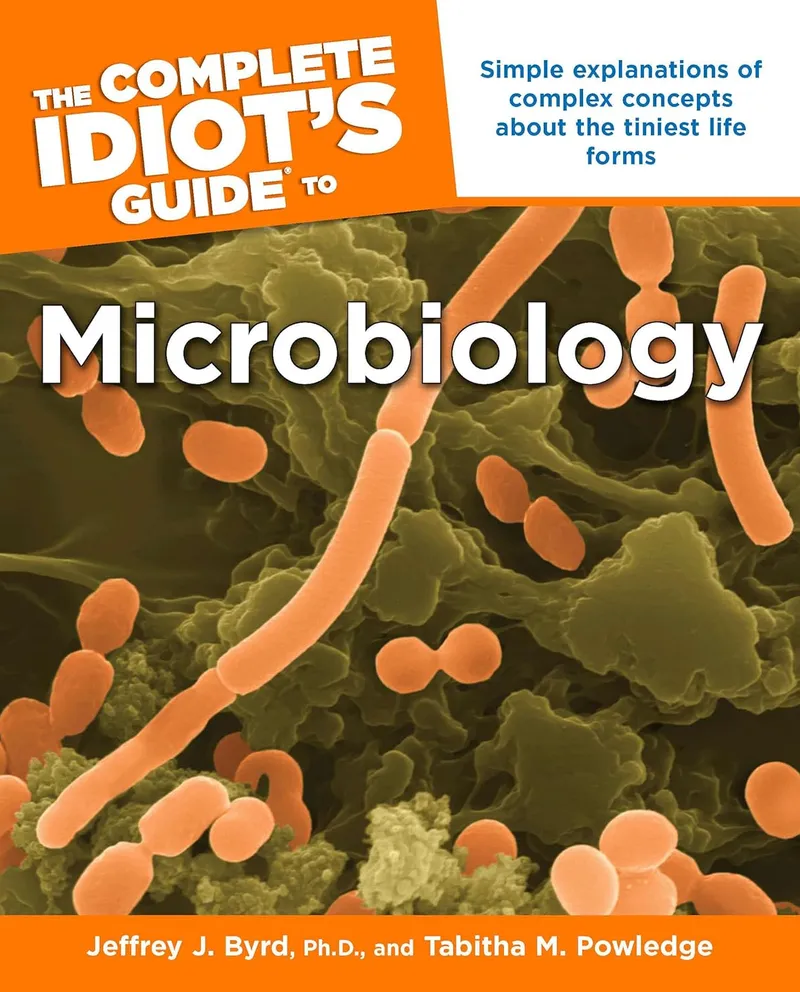

The Complete Idiot’s Guide to Microbiology
The Complete Idiot’s Guide to Microbiology is an accessible introductory guide designed to make the fundamental concepts of microbiology easier to understand. Rather than presenting the subject in a highly technical format, the book uses straightforward explanations to introduce readers to microorganisms and their roles in health, disease, the environment, and everyday life.
Published by DK, this 354-page guide is suitable for beginners, students, and general readers who want to develop a basic understanding of the microscopic world.
About the Book
Microbiology deals with organisms and biological agents that are too small to be seen without specialized equipment. These include bacteria, viruses, fungi, protozoa, and other microscopic forms of life.
The Complete Idiot’s Guide to Microbiology provides an approachable introduction to these subjects, helping readers understand complex microbiological ideas without requiring an extensive background in biology.
Introduction to Microorganisms
The book introduces the major groups of microorganisms and explains their basic characteristics.
Readers can develop a foundation in bacteria, viruses, fungi, protozoa, and other microscopic organisms, along with their importance in biological systems.
Bacteria
Bacteria are among the most important microorganisms in microbiology.
The book introduces bacterial structure, growth, reproduction, metabolism, and diversity, while explaining how bacteria can be both beneficial and harmful.
Viruses
Viruses occupy a unique position in biology because they depend on host cells for replication.
The text provides an accessible introduction to viral structure, replication, infection, and the relationship between viruses and their hosts.
Fungi and Protozoa
Microbiology also encompasses diverse eukaryotic microorganisms.
The book introduces fungi and protozoa, explaining their characteristics and their roles in ecosystems, food production, and human health.
Microbial Growth
Understanding how microorganisms grow is fundamental to microbiology.
The text explains basic concepts involving microbial nutrition, reproduction, environmental requirements, and factors that influence microbial growth.
Microbiology and Human Health
Microorganisms have a major influence on human health.
The book introduces the relationship between microbes and infectious diseases, the human body, immunity, and beneficial microorganisms, helping readers understand how microorganisms interact with humans.
Infectious Diseases
Some microorganisms can cause disease when they enter and multiply within a suitable host.
The guide explains fundamental concepts related to pathogens, infection, transmission, disease development, and prevention.
The Immune System
The body has complex mechanisms for defending itself against microorganisms.
The book provides an introductory overview of immune defenses, antibodies, immune responses, and the interaction between microorganisms and the host immune system.
Beneficial Microorganisms
Not all microbes are harmful.
The text explores the useful roles of microorganisms in digestion, food production, fermentation, biotechnology, and natural ecosystems.
Microbiology and the Environment
Microorganisms are essential components of environmental systems.
The book introduces their roles in decomposition, nutrient cycling, soil processes, and ecological interactions.
Food and Industrial Microbiology
Microorganisms have been used for centuries in food production.
The guide explains applications involving fermentation, food production, biotechnology, and industrial processes, demonstrating how microbiology affects everyday life.
Laboratory Microbiology
Studying microorganisms requires specialized laboratory techniques.
The book introduces basic concepts related to microscopy, microbial cultivation, identification, and laboratory investigation of microorganisms.
Microbiology in Everyday Life
Microorganisms are present almost everywhere.
The guide connects microbiological concepts with familiar topics such as food, health, disease, hygiene, the environment, and biotechnology, making the subject more relatable to beginners.
Who Is This Book For?
The Complete Idiot’s Guide to Microbiology can be useful for:
- Microbiology beginners
- Biology students
- Health science students
- Nursing students
- Pre-medical students
- General science readers
- Students reviewing basic microbiology
- Readers interested in microorganisms
- Lifelong learners
It is particularly appropriate for readers looking for a clear and approachable introduction to microbiology without an extensive scientific background.
Final Thoughts
The Complete Idiot’s Guide to Microbiology offers an accessible introduction to the microscopic world and the fundamental principles of microbiology.
Its coverage of bacteria, viruses, fungi, protozoa, microbial growth, infectious diseases, immunity, beneficial microorganisms, environmental microbiology, food microbiology, biotechnology, and laboratory concepts makes it a useful starting point for anyone seeking to understand the basic science of microorganisms.
Book Information
Title: The Complete Idiot’s Guide to Microbiology: Simple Explanations of Complex Concepts About the Tiniest Life Forms
Publisher: DK
Publication Date: November 7, 2006
Language: English
Print Length: 354 pages
ISBN-13: 978-1440696749
ASIN: B00AR181JE
Subject: Microbiology / General Biology / Microorganisms / Introductory Science
The Complete Idiot’s Guide to Microbiology provides a beginner-friendly introduction to microorganisms, bacteria, viruses, fungi, protozoa, microbial growth, infectious diseases, immunity, environmental microbiology, food microbiology, biotechnology, and basic laboratory concepts, making it a useful resource for students and general readers interested in microbiology.
Support the Creators!
If you enjoy this book, please consider supporting the author and publisher by purchasing a physical or digital copy. Buying official copies ensures authors can keep writing great books.