
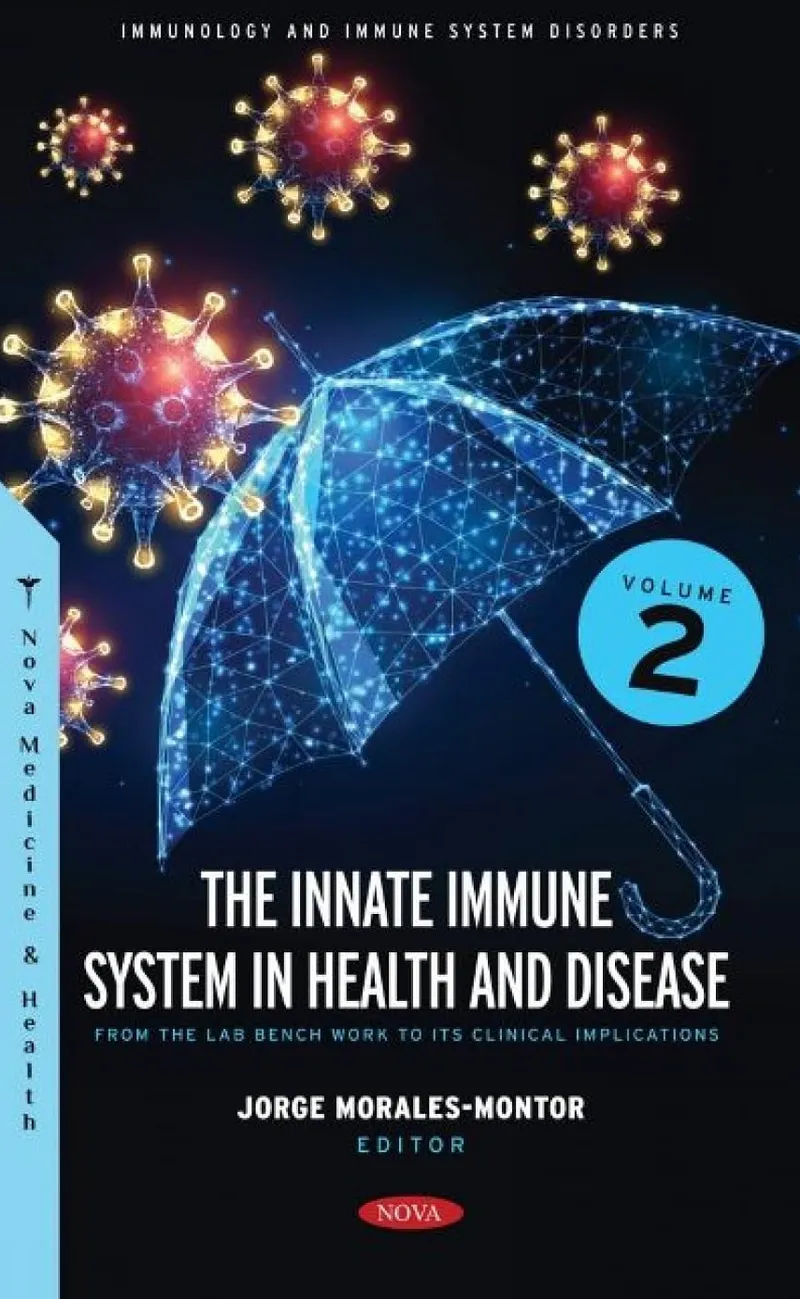

The Innate Immune System in Health and Disease: From the Lab Bench Work to Its Clinical Implications, Volume 2
The Innate Immune System in Health and Disease: From the Lab Bench Work to Its Clinical Implications, Volume 2 provides an updated examination of the innate immune system and its involvement in homeostasis, chronic inflammation, immune-mediated diseases, environmental responses, and potential therapeutic strategies. Published by Nova Science Publishers, this volume continues the series’ focus on connecting laboratory research with clinically relevant applications of innate immunity.
The book brings together contemporary research on how innate immune mechanisms contribute to chronic inflammatory diseases, lung inflammation, asthma, rheumatoid arthritis, environmental exposures, and vector-borne disease control. It is designed for scientists, clinicians, researchers, and advanced students seeking a deeper understanding of innate immunity and its role in human health and disease.
About the Book
The innate immune system is essential not only for defending the body against pathogens but also for maintaining tissue homeostasis, regulating inflammation, and responding to environmental and physiological signals.
Volume 2 expands the discussion beyond infectious diseases and cancer to examine how innate immune responses participate in chronic inflammatory conditions and other complex biological processes. It highlights the ways these responses can be modulated by hormones, extracellular vesicles, environmental chemicals, and other biological factors.
Innate Immunity and Homeostasis
A key theme of this volume is the participation of the innate immune system in homeostasis.
Innate immune mechanisms continuously interact with tissues and physiological systems to maintain a balanced internal environment. When these mechanisms become dysregulated, persistent inflammation and disease can develop.
The book examines these relationships to provide a broader understanding of the physiological and pathological functions of innate immunity.
Chronic Inflammatory Diseases
The volume explores the contribution of innate immunity to the pathogenesis of chronic inflammatory diseases.
Rather than focusing solely on adaptive immune mechanisms, the chapters highlight the importance of innate immune cells and signaling pathways in maintaining chronic inflammation and influencing disease progression.
This perspective is particularly relevant to researchers investigating inflammatory disorders and potential immune-modulating therapies.
Chronic Lung Inflammation and Sex Hormones
Another topic addressed in the book is the innate immune response during chronic lung inflammation and its modulation by sex hormones.
The interaction between hormonal signaling and innate immune mechanisms provides important insight into why immune responses can differ between individuals and how physiological factors may influence inflammatory disease.
Asthma Beyond Adaptive Immunity
The book also considers asthma from the perspective of innate immunity.
While adaptive immune responses have traditionally received considerable attention in asthma research, innate immune pathways and cells also contribute to airway inflammation and disease development.
This discussion provides a broader framework for understanding the immunological mechanisms involved in chronic respiratory disease.
Toll-Like Receptors and Rheumatoid Arthritis
A dedicated topic is the role of Toll-like receptors (TLRs) in the onset and development of rheumatoid arthritis.
TLRs are important components of innate immune recognition and signaling. Their involvement in inflammatory processes makes them significant targets for research into the mechanisms underlying autoimmune and chronic inflammatory diseases.
Extracellular Vesicles and Immune Modulation
The volume examines the modulation of the innate immune system by extracellular vesicles.
Extracellular vesicles participate in intercellular communication and can influence immune-cell behavior. Understanding these interactions may provide new insights into disease mechanisms and potential therapeutic applications.
Mosquito-Borne Disease Control
An additional topic explores a novel strategy for interrupting the transmission of diseases by mosquitoes.
This subject demonstrates how knowledge of vector biology and host immune responses can contribute to innovative approaches for controlling infectious diseases transmitted by mosquito vectors.
Environmental Chemicals and Innate Immunity
The book also examines how environmental compounds can influence innate immune responses.
Particular attention is given to the potential immunological effects of bisphenol A (BPA) and phthalates, two groups of endocrine-disrupting compounds.
Understanding how environmental exposures interact with immune pathways is increasingly important in investigating the connections between environmental factors, inflammation, and human health.
Key Topics Covered
Major subjects discussed in Volume 2 include:
- Innate immunity and homeostasis
- Chronic inflammatory diseases
- Pathogenesis of chronic inflammation
- Chronic lung inflammation
- Sex hormones and immune modulation
- Innate immunity and asthma
- Toll-like receptors
- Rheumatoid arthritis
- Extracellular vesicles and immune regulation
- Mosquito-borne disease transmission
- Innate immunity and vector-borne diseases
- Environmental immune modulation
- Bisphenol A (BPA)
- Phthalates
- Endocrine-disrupting compounds
- Innate immune signaling
- Potential therapeutic modulation of innate immunity
Who Is This Book For?
The Innate Immune System in Health and Disease, Volume 2 is suitable for:
- Immunology students
- Medical students
- Biomedical science students
- Immunology researchers
- Clinical researchers
- Microbiology researchers
- Inflammation researchers
- Rheumatology researchers
- Respiratory and asthma researchers
- Environmental health researchers
- Physicians and clinicians
- Graduate and postgraduate students
It is particularly valuable for readers interested in the role of innate immunity in chronic inflammation, autoimmune disease, respiratory disorders, environmental health, and immune regulation.
Volume 2 and the Broader Series
While the first volume focuses extensively on innate immunity in conditions such as viral infections, cancer, metabolic disease, and parasitic infections, Volume 2 broadens the scope to include homeostasis, chronic inflammatory diseases, asthma, rheumatoid arthritis, hormonal regulation, extracellular vesicles, and environmental immune modulation.
Together, the volumes provide a broad view of how innate immune mechanisms influence both infectious and non-infectious diseases and how these mechanisms may be targeted for future therapeutic applications.
Final Thoughts
The Innate Immune System in Health and Disease: From the Lab Bench Work to Its Clinical Implications, Volume 2 provides a contemporary perspective on the expanding role of innate immunity in human health.
The book examines how innate immune mechanisms contribute to homeostasis and chronic inflammation, while exploring their interactions with sex hormones, Toll-like receptors, extracellular vesicles, environmental chemicals, and disease-transmitting mosquitoes.
By connecting fundamental laboratory research with clinical implications, this volume demonstrates why innate immunity has become an important area of research in immunology, inflammation, autoimmune disease, respiratory medicine, environmental health, and infectious disease control.
For scientists, clinicians, researchers, and advanced students seeking an updated understanding of innate immune mechanisms beyond traditional host defense, this volume offers a useful resource covering both established concepts and emerging areas of investigation.
Book Information
Title: The Innate Immune System in Health and Disease: From the Lab Bench Work to Its Clinical Implications, Volume 2
Publisher: Nova Science Publishers
Language: English
ISBN-10: 168507510X
ISBN-13: 978-1685075101
Subjects: Innate Immunity / Immunology / Chronic Inflammation / Autoimmune Diseases / Asthma / Rheumatoid Arthritis / Immunoregulation / Environmental Health / Infectious Diseases
The Innate Immune System in Health and Disease, Volume 2 explores the role of innate immunity in homeostasis, chronic inflammatory diseases, asthma, rheumatoid arthritis, hormonal regulation, extracellular vesicles, environmental exposures, and vector-borne disease control, linking basic immune research with potential clinical applications.
Support the Creators!
If you enjoy this book, please consider supporting the author and publisher by purchasing a physical or digital copy. Buying official copies ensures authors can keep writing great books.