
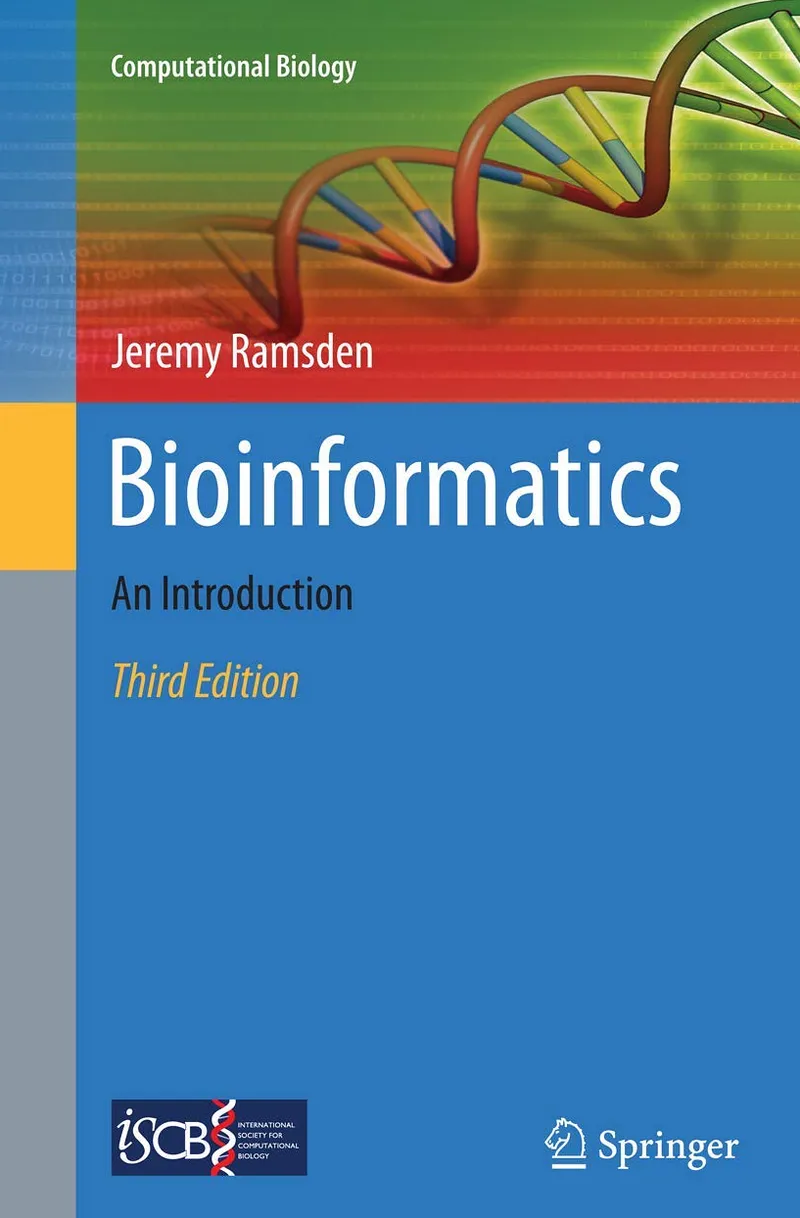

Bioinformatics: An Introduction, 3rd Edition
Bioinformatics: An Introduction, 3rd Edition is a comprehensive textbook that provides a self-contained introduction to the broad field of bioinformatics, focusing on the application of information science to biological research. Published by Springer, this thoroughly updated third edition expands its coverage to reflect the rapid growth of modern biological data and the increasing importance of computational approaches in life sciences.
The book combines fundamental concepts with practical applications, covering both organismal and molecular aspects of biology. It introduces readers to areas such as genome structure, ontogeny, phylogeny, and molecular biology while explaining how biological data can be collected, analyzed, and interpreted using bioinformatics approaches.
About the Book
The third edition has been substantially updated and expanded to provide a broad overview of bioinformatics and its growing range of applications. Rather than concentrating on a single branch of computational biology, the book presents bioinformatics in its broadest sense as the use of information science to understand biological systems.
It provides a foundation in the underlying principles while also introducing readers to practical applications and the experimental processes that generate biological data.
Fundamentals of Bioinformatics
A strong understanding of bioinformatics begins with the principles of information science and how they can be applied to biological problems.
The book introduces important foundations including:
- Information science applied to biology
- Biological data and data analysis
- Genome structure
- Molecular biology
- Ontogeny and phylogeny
- Computational approaches to biological research
- Organization and interpretation of biological information
This foundation helps readers understand the relationship between biological questions, experimental data, and computational analysis.
Organismal and Molecular Bioinformatics
The book addresses bioinformatics at multiple levels of biological organization. It examines organismal biology, including ontogeny and phylogeny, alongside molecular biology and genome structure.
This broad approach allows readers to see how computational methods can be used to investigate biological systems from individual molecules and genomes to organisms and larger biological relationships.
The Expanding World of Omics
One of the major updates in the third edition is its expanded coverage of the growing number of “-omics” disciplines. These fields generate large and increasingly complex datasets that require computational methods for analysis and interpretation.
The book includes discussion of:
- Metagenomics
- Toxicogenomics
- Glycomics
- Lipidomics
- Microbiomics
- Phenomics
The inclusion of these areas reflects the expanding scope of bioinformatics and its role in modern biological and biomedical research.
Practical Applications and Data Analysis
Beyond theoretical concepts, Bioinformatics: An Introduction examines important practical applications of bioinformatics.
The book provides descriptions of both the experimental processes that produce biological information and the subsequent data analysis required to interpret those results. This helps readers understand bioinformatics as a complete workflow rather than simply a collection of computational techniques.
The practical orientation makes the book useful for students who want to understand how computational analysis contributes to real biological investigations.
Ecosystems and the Nervous System
The third edition also introduces new chapters addressing ecosystems management and the nervous system.
These additions demonstrate the expanding application of computational and information-based approaches across different levels of biological complexity, from ecological systems to highly specialized biological structures and processes.
Problems and Further Thinking
A selection of problems is included throughout the book to encourage readers to engage actively with the material.
These exercises provide opportunities to:
- Reinforce important concepts
- Apply bioinformatics principles
- Think critically about biological data
- Explore practical applications
- Develop problem-solving skills
The inclusion of problems makes the book suitable not only as a reference but also as a structured learning resource for academic study.
Who Should Use This Book?
Bioinformatics: An Introduction, 3rd Edition may be useful for:
- Undergraduate students studying bioinformatics
- Graduate and postgraduate students
- Biology students
- Computational biology students
- Molecular biology students
- Genetics and genomics students
- Biotechnology students
- Biomedical researchers
- Life science researchers
- Researchers working with biological datasets
- Educators teaching bioinformatics and computational biology
Final Thoughts
Bioinformatics: An Introduction, 3rd Edition provides a broad and self-contained introduction to a rapidly developing field. Its combination of fundamental information science concepts, organismal and molecular biology, practical applications, experimental workflows, and data analysis gives readers a comprehensive view of modern bioinformatics.
The expanded coverage of metagenomics, toxicogenomics, glycomics, lipidomics, microbiomics, and phenomics, together with new material on ecosystems management and the nervous system, reflects the increasingly diverse role of computational methods in biological research.
For students and researchers looking for a broad foundation in bioinformatics, computational biology, genomics, and biological data analysis, this third edition offers a valuable starting point for understanding both the principles and applications of the field.
Book Information
Title: Bioinformatics: An Introduction
Publisher: Springer
Publication Date: June 9, 2015
Edition: 3rd Edition
Language: English
Print Length: 327 pages
ISBN-10: 1447167015
ISBN-13: 978-1447167013
Subjects: Bioinformatics / Computational Biology / Genomics / Molecular Biology / Biological Data Analysis / Systems Biology / Metagenomics / Microbiomics / Biotechnology / Life Sciences
Bioinformatics: An Introduction, 3rd Edition provides a comprehensive foundation in bioinformatics, combining information science, biological concepts, practical applications, data analysis, and emerging “-omics” disciplines.
Support the Creators!
If you enjoy this book, please consider supporting the author and publisher by purchasing a physical or digital copy. Buying official copies ensures authors can keep writing great books.