
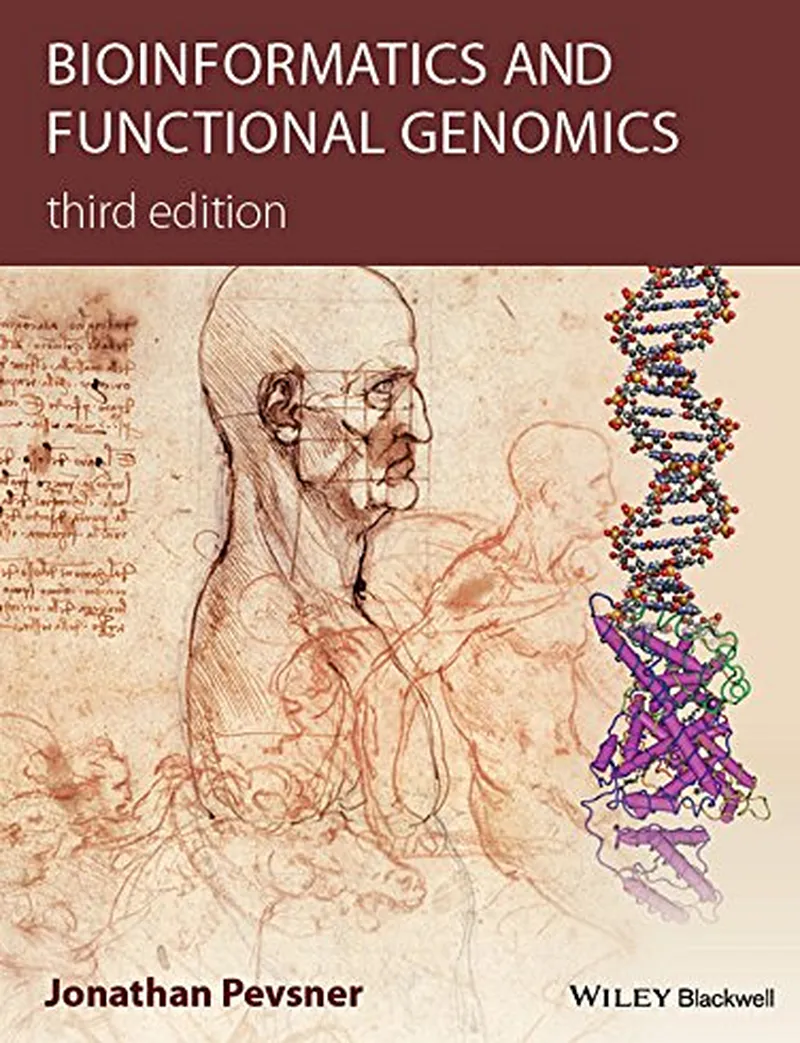

Bioinformatics and Functional Genomics, 3rd Edition
Bioinformatics and Functional Genomics, 3rd Edition by Jonathan Pevsner is a comprehensive textbook covering the computational methods, genomic technologies, and biological concepts that underpin modern bioinformatics and functional genomics. Published by Wiley-Blackwell, this thoroughly updated third edition is designed for students and professionals who want to understand how computational tools can be applied to biological and biomedical research.
With more than 1,000 pages, the book provides broad coverage of bioinformatics and genomics while placing greater emphasis on the computational side of the field. It introduces readers to software tools, sequence analysis, databases, command-line utilities, next-generation sequencing, and the R programming language, while maintaining a strong connection to biological applications.
About the Book
Bioinformatics has become an essential part of modern biology, medicine, and biomedical research as advances in genomic technologies continue to produce increasingly large and complex datasets. Bioinformatics and Functional Genomics provides a single-source introduction to the concepts and computational approaches needed to work with this information.
The third edition includes extensive revisions and reorganized material, along with a new chapter dedicated to next-generation sequencing. It also expands the computational component of the book, helping readers understand not only what bioinformatics software does, but also how computational tools and algorithms can be used to analyze biological data.
Bioinformatics and Genomics
The book explores the relationship between biological research and computational analysis, providing readers with a foundation in the methods used to investigate genes, genomes, and biological function.
Major areas covered include:
- Bioinformatics principles and applications
- Genomics and functional genomics
- Biological sequence analysis
- Genomic databases and search utilities
- Computational approaches to biological research
- Software tools for bioinformatics
- Algorithms and database concepts
- Statistical and mathematical principles used in data analysis
Next-Generation Sequencing
A new chapter in the third edition focuses on next-generation sequencing (NGS), one of the technologies that has transformed genomic research. The book introduces computational approaches for working with sequencing data and provides guidance on software used in next-generation sequence analysis.
This emphasis helps readers understand how modern sequencing technologies generate large datasets and why computational methods are essential for processing and interpreting genomic information.
Computational Tools and Programming
The third edition places increased emphasis on practical computational skills. Readers are introduced to command-line tools and computational resources that can be used for biological data analysis.
The book includes guidance on:
- Command-line bioinformatics tools
- Next-generation sequence analysis software
- R programming language
- NCBI search utilities
- Biological database resources
- Computational sequence analysis
This practical focus helps bridge the gap between learning bioinformatics concepts and actually working with the tools used in research.
Functional Genomics and Biomedical Research
Functional genomics seeks to understand the roles and interactions of genes and other genomic elements. By combining genomic information with computational analysis, researchers can investigate biological processes and explore the genomic basis of disease.
The book is particularly relevant to biomedical research, including investigations involving viral, bacterial, parasitic, and other diseases. Its broad scope also makes it useful to researchers from different biological disciplines who use genomics and bioinformatics to address specific research questions.
Mathematics, Statistics, and Data Analysis
Bioinformatics depends heavily on quantitative reasoning. The book incorporates explanations of relevant mathematics and statistics while connecting these concepts to biological applications.
Key mathematical and statistical principles are presented alongside computational methods, helping readers understand the reasoning behind bioinformatics analyses rather than treating software tools as black boxes.
Illustrations, Problems, and Learning Resources
The book contains more than 500 figures and tables, including numerous illustrations created or revised for the third edition. These visual resources help clarify computational workflows, biological concepts, and analytical techniques.
Each chapter also includes learning objectives, problem sets, discussions of potential pitfalls, explanations of important techniques and mathematical or statistical principles, chapter summaries, recommended reading, and lists of freely available software.
Who Should Use This Book?
Bioinformatics and Functional Genomics, 3rd Edition can be useful for:
- Advanced undergraduate students in biological sciences
- Beginning graduate students
- Students of bioinformatics and computational biology
- Computer science students interested in biological applications
- Genomics and functional genomics students
- Biologists using computational research tools
- Bioinformaticists and computational researchers
- Computer scientists developing biological algorithms and databases
- Medical researchers and clinicians
- Researchers studying the genomic basis of disease
Final Thoughts
Bioinformatics and Functional Genomics, 3rd Edition offers a broad and practical introduction to the rapidly developing fields of bioinformatics and genomics. Its combination of biological foundations, computational methods, genomic technologies, programming resources, and statistical concepts makes it suitable for readers who want both conceptual understanding and practical exposure to bioinformatics tools.
The addition of next-generation sequencing coverage and the stronger emphasis on command-line tools, R, and genomic databases make this edition particularly useful for students and researchers preparing to work with modern biological datasets. With extensive illustrations, exercises, software resources, and research-oriented examples, it serves as a valuable reference for studying bioinformatics, functional genomics, computational biology, and biomedical genomics.
Book Information
Title: Bioinformatics and Functional Genomics
Author: Jonathan Pevsner
Publisher: Wiley-Blackwell
Publication Date: August 17, 2015
Edition: 3rd Edition
Language: English
Print Length: 1,027 pages
ASIN: B0144NZ2EC
Subjects: Bioinformatics, Functional Genomics, Genomics, Computational Biology, Sequence Analysis, Next-Generation Sequencing, Biological Databases, Computational Genomics, Biomedical Research
Bioinformatics and Functional Genomics, 3rd Edition provides a comprehensive foundation in bioinformatics and genomics, combining biological concepts with computational tools, programming, sequencing technologies, and data analysis for modern biomedical research.
Support the Creators!
If you enjoy this book, please consider supporting the author and publisher by purchasing a physical or digital copy. Buying official copies ensures authors can keep writing great books.