
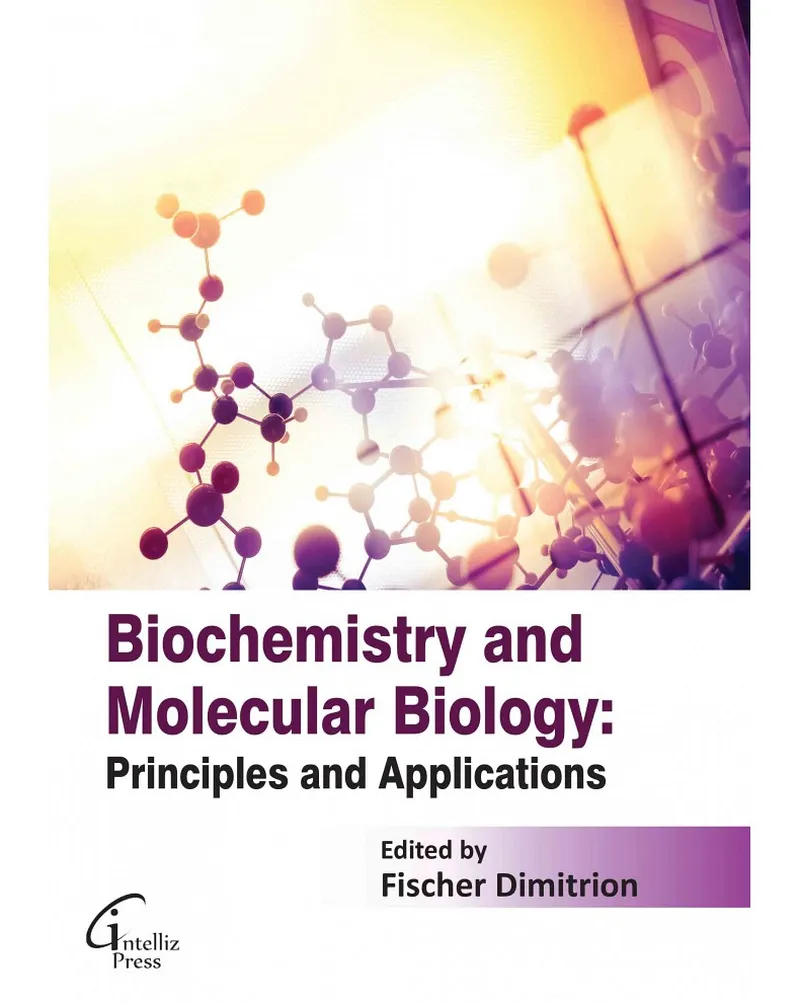

Biochemistry and Molecular Biology: Principles and Applications
Biochemistry and Molecular Biology: Principles and Applications by Fischer Dimitrion is an academic resource focused on the fundamental principles that connect biochemical processes with molecular biology and their applications in the life sciences. The subject provides an essential foundation for understanding how biological molecules interact, how cellular processes are regulated, and how molecular mechanisms contribute to health, disease, and biotechnology.
Biochemistry and molecular biology are closely interconnected disciplines. Biochemistry examines the chemical processes of living systems, while molecular biology explores how biological information is stored, expressed, regulated, and transferred at the molecular level. Studying these subjects together allows students to develop a more integrated understanding of cellular function.
The book is suited to readers seeking to strengthen their knowledge of core biochemical and molecular biological concepts while appreciating their practical applications in modern biological and biomedical sciences.
About the Book
Modern life sciences rely heavily on an understanding of molecular mechanisms. Processes involving proteins, nucleic acids, carbohydrates, lipids, enzymes, and genetic information form the basis of cellular activity and provide a framework for understanding many areas of biology and medicine.
Biochemistry and Molecular Biology: Principles and Applications brings these areas together through a principles-based approach, emphasizing the relationship between molecular structure, biochemical reactions, cellular processes, and biological function.
Fundamental Principles of Biochemistry
Biochemistry provides the chemical foundation for understanding living organisms. Biological molecules interact through precisely regulated chemical processes, allowing cells to obtain energy, synthesize essential compounds, maintain their structure, and respond to changes in their environment.
Understanding these fundamental principles is an important first step toward studying more advanced topics in molecular biology, genetics, biotechnology, and biomedical science.
Molecular Biology and Genetic Information
Molecular biology focuses on the mechanisms through which genetic information is stored and utilized by cells. Concepts involving DNA, RNA, gene expression, and protein synthesis provide a framework for understanding how information encoded in the genome ultimately contributes to cellular structure and function.
The integration of molecular biology with biochemistry helps explain these processes at both the informational and chemical levels.
Proteins, Enzymes, and Cellular Function
Proteins perform a wide range of essential functions within biological systems. Enzymes, in particular, regulate and accelerate biochemical reactions that are necessary for life.
Understanding protein structure, biochemical interactions, and enzyme activity is therefore central to connecting molecular principles with physiological and cellular processes.
Metabolism and Cellular Processes
Metabolism consists of interconnected biochemical reactions through which cells obtain, transform, and utilize energy and molecular building blocks. Studying metabolic processes provides insight into how cells maintain their functions and respond to changes in physiological conditions.
Biochemical principles also help explain how disruptions in normal metabolic processes can contribute to biological and medical problems.
Applications in Biomedical Science
The principles of biochemistry and molecular biology have applications across numerous scientific fields. Knowledge of molecular mechanisms supports research and practice in areas such as:
- Molecular medicine
- Clinical biochemistry
- Genetics
- Biotechnology
- Pharmacology
- Cell biology
- Biomedical research
These applications demonstrate why biochemical and molecular knowledge has become an essential component of modern life-science education.
An Integrated Perspective
One of the advantages of studying biochemistry and molecular biology together is the ability to connect different levels of biological organization. Molecular interactions influence biochemical reactions, biochemical pathways contribute to cellular processes, and cellular processes ultimately support the functions of living organisms.
This integrated perspective can help students move beyond memorizing individual pathways and develop a broader understanding of how biological systems operate at the molecular level.
Who Should Use This Book?
- Biochemistry students seeking a foundation in biochemical principles.
- Molecular biology students studying molecular mechanisms of life.
- Biology students looking to strengthen their understanding of molecular processes.
- Biomedical science students requiring knowledge of biochemical and molecular foundations.
- Biotechnology students interested in the applications of molecular biology and biochemistry.
- Researchers and trainees seeking an introductory reference to fundamental biochemical and molecular concepts.
- Students preparing for examinations in biochemistry, molecular biology, and related life sciences.
Final Thoughts
Biochemistry and Molecular Biology: Principles and Applications provides an integrated perspective on two closely related disciplines that form the molecular foundation of modern biological science. By connecting biochemical reactions with molecular mechanisms, the subject helps readers understand how biological systems function from the molecular level upward.
For students and professionals in biochemistry, molecular biology, biotechnology, and biomedical sciences, the book’s principles-and-applications approach can provide a useful foundation for further study and research.
Book Information
Title: Biochemistry and Molecular Biology: Principles and Applications
Author: Fischer Dimitrion
Subjects: Biochemistry, Molecular Biology, Molecular Biochemistry, Cell Biology, Genetics, Biotechnology, Biomedical Science, Biological Sciences
Biochemistry and Molecular Biology: Principles and Applications by Fischer Dimitrion provides an integrated foundation in biochemical principles, molecular mechanisms, and their applications across modern life sciences.