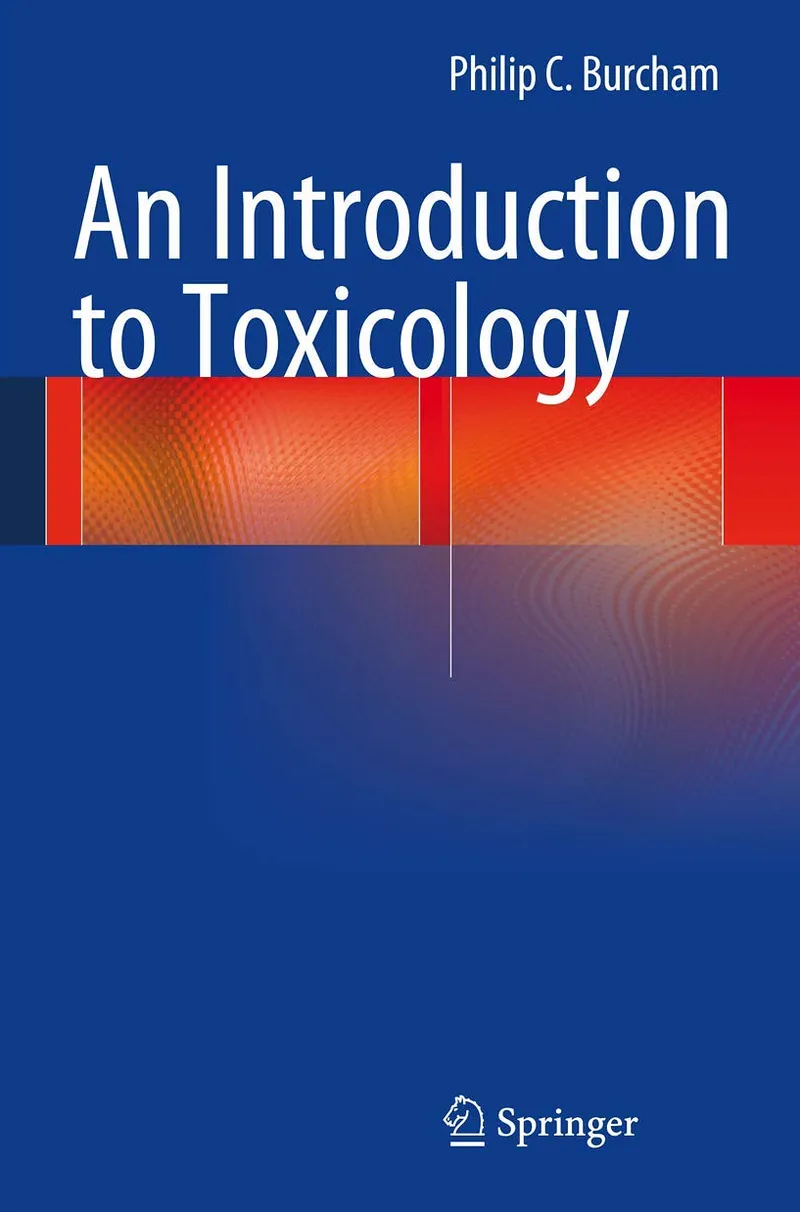

An Introduction to Toxicology – Philip C. Burcham
An Introduction to Toxicology by Philip C. Burcham provides a clear and accessible introduction to modern toxicology, with particular emphasis on the mechanisms through which foreign chemicals produce harmful effects in living organisms. Rather than treating toxicology simply as a catalog of harmful substances, the book explores what happens at the molecular and cellular level when toxic compounds interact with biological systems.
A central theme of the book is bioactivation, the process by which certain foreign substances are converted into reactive or toxic metabolites. This concept is important for understanding how chemical exposure can lead to serious outcomes, including DNA and protein damage, cancer, birth defects, and organ injury. The book connects these molecular events with broader toxicological processes and their relevance to human disease.
About the Book
Foundations of Modern Toxicology
The book introduces the principles and development of modern toxicology, helping readers understand how the discipline has evolved in response to major public-health challenges and advances in biomedical science. It provides an approachable foundation for students encountering toxicology for the first time.
Mechanisms of Toxicity
A major focus is the mechanistic basis of toxicity. The book examines how foreign substances interact with biological systems and how these interactions can ultimately produce cellular and tissue injury. This approach allows readers to understand not only what a toxic substance does, but also why and how its effects occur.
Bioactivation and Toxic Metabolites
Bioactivation receives particular attention because many important toxic syndromes involve the metabolic conversion of relatively less harmful compounds into reactive metabolites. Understanding these processes provides an important framework for explaining chemical-induced toxicity and differences in toxic responses.
DNA and Protein Damage
The molecular consequences of toxic exposure are explored through damage to essential cellular components, particularly DNA and proteins. These interactions help explain how chemical exposure can interfere with normal cellular function and contribute to serious biological consequences.
Cancer, Birth Defects, and Organ Injury
The book examines how molecular mechanisms of toxicity can be associated with diverse adverse outcomes, including cancer, developmental abnormalities, and organ damage. By connecting molecular events with physiological consequences, it helps readers develop a more integrated understanding of toxicological disease processes.
Alcohol and Tobacco Toxicology
Toxicological principles are also considered in relation to human diseases associated with alcohol and tobacco exposure. These examples demonstrate how mechanisms discussed throughout the book can be applied to real-world causes of disease and chemical injury.
Toxicology in Medicine and the Environment
Modern toxicology has become increasingly important as humans encounter pharmaceuticals, environmental pollutants, consumer chemicals, and industrial substances. The book places toxicological mechanisms within this broader context, illustrating why understanding chemical hazards is relevant to medicine, public health, environmental science, and pharmacology.
Accessible and Visual Learning
Designed as an enjoyable primer, the book uses illustrations to help unpack complex toxicological concepts. This visual approach makes molecular and cellular mechanisms easier to follow and provides useful support for students who are developing their first systematic understanding of toxicology.
Who Should Use This Book?
- Undergraduate students studying toxicology or pharmacology
- Graduate students beginning advanced study in toxicology
- Students seeking an accessible introduction to the mechanisms of chemical toxicity
- Pharmacology students interested in the harmful effects of foreign substances
- Readers interested in bioactivation and toxic metabolites
- Students studying molecular mechanisms of chemical-induced disease
- Anyone looking for a readable foundation in modern toxicology
Final Thoughts
An Introduction to Toxicology offers a mechanism-oriented introduction to the science of toxic substances and their effects on biological systems. Its emphasis on bioactivation, toxic metabolites, molecular damage, and disease provides readers with a useful framework for understanding how chemical exposures can translate into cellular and organ-level injury.
With an accessible writing style and supporting illustrations, Philip C. Burcham’s book is particularly suitable for students who want to move beyond memorizing toxic substances and instead understand the biological mechanisms responsible for toxicity. It serves as a useful supplementary resource for undergraduate and graduate programs in toxicology and pharmacology.
Book Information
Title: An Introduction to Toxicology
Author: Philip C. Burcham
Publisher: Springer
Publication Date: November 19, 2013
Language: English
Print Length: 584 pages
ISBN-13: 978-1447155539
ASIN: B0DF5H1CT2
Subjects: Toxicology, Mechanisms of Toxicity, Bioactivation, Toxic Metabolites, Molecular Toxicology, Chemical Toxicity, Pharmacology, Environmental Toxicology, DNA Damage, Protein Damage, Human Disease
An Introduction to Toxicology is an accessible guide to the molecular and cellular mechanisms through which foreign substances produce toxic effects and contribute to human disease.
Support the Creators!
If you enjoy this book, please consider supporting the author and publisher by purchasing a physical or digital copy. Buying official copies ensures authors can keep writing great books.