
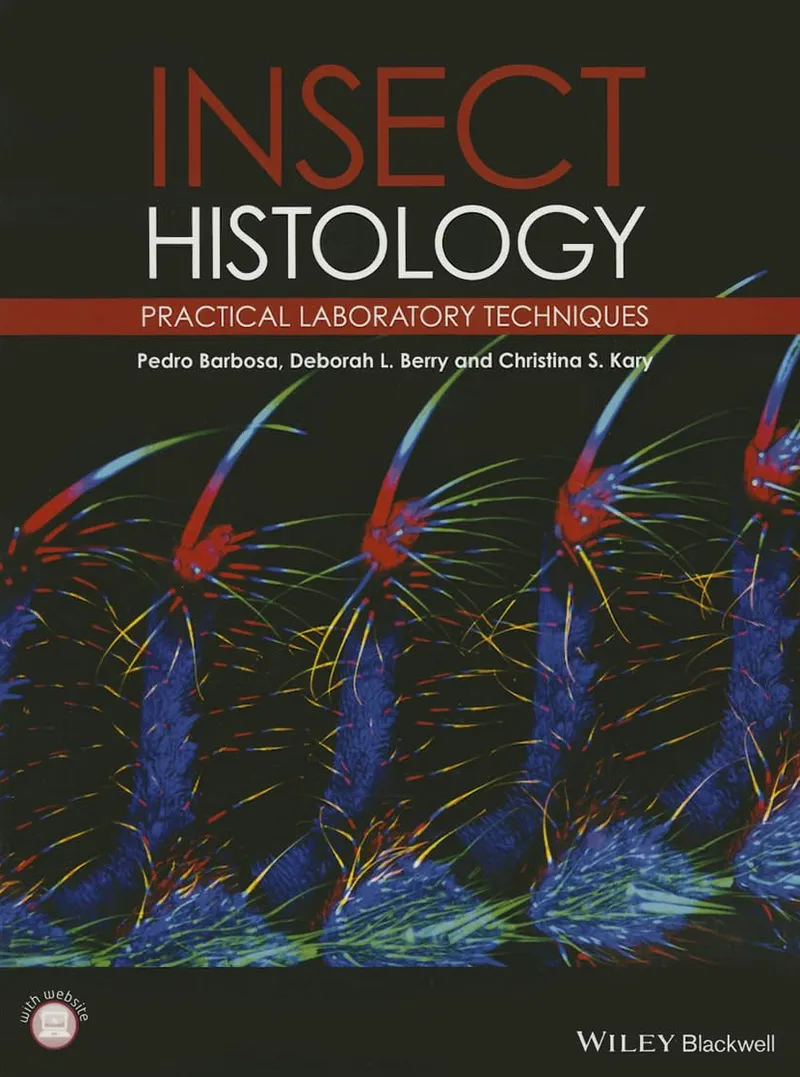

Insect Histology: Practical Laboratory Techniques
Insect Histology: Practical Laboratory Techniques is a specialized laboratory guide designed to provide students and researchers with a practical introduction to the preparation and microscopic study of insect tissues. Published by Wiley-Blackwell, this first edition brings together established and modern histological methods in a single, self-contained reference.
The book provides step-by-step guidance for preparing histological slides from different types of insect tissues. It covers essential laboratory procedures including fixation, dehydration, clearing, embedding, sectioning, and staining, while also addressing specialized approaches used in modern insect histology.
About the Book
Histological preparation of insect tissues presents challenges that can differ considerably from those encountered in other organisms. The presence of structures such as sclerotized chitin, yolk-filled eggs, chromosomes, and specialized genital tissues can make tissue preparation and visualization particularly demanding.
This laboratory manual brings together practical solutions to these challenges, presenting both historically established techniques and newer methodologies side by side. It is designed to help readers understand not only how procedures are performed, but also the expected results and advantages of different approaches.
Step-by-Step Histological Preparation
A major strength of the book is its practical, step-by-step presentation. Readers are guided through the different stages involved in preparing insect tissues for microscopic examination.
Key procedures include:
- Fixation
- Dehydration
- Clearing
- Embedding
- Sectioning
- Staining
By presenting these processes systematically, the book provides a useful foundation for researchers who need to prepare high-quality histological slides from insect tissues and organs.
Modern and Established Techniques
The manual combines traditional insect histology procedures with modern laboratory methodologies. This side-by-side presentation gives readers an opportunity to understand how established approaches relate to newer techniques used in contemporary research.
The book is presented as the first reference to bring together these various histological techniques specifically adapted to the requirements of insect tissues.
Genetic Markers and Insect Histology
Modern insect histology increasingly incorporates molecular and genetic approaches. The book discusses the use of genetic markers in insect histology, providing readers with insight into how histological studies can be combined with genetic information.
This makes the manual relevant to researchers working at the intersection of morphology, developmental biology, genetics, and insect cell biology.
SEM, TEM, and Fluorescence Approaches
The book covers important methods for preparing insect tissues and organs for advanced microscopic examination, including approaches associated with scanning electron microscopy (SEM), transmission electron microscopy (TEM), and fluorescence-based techniques.
These methods expand the possibilities for studying insect tissues at different levels of structural detail and can support investigations in morphology, development, systematics, and cell biology.
Immunohistochemical Techniques
The manual also introduces newer immunohistochemical techniques, providing additional tools for investigating the organization and characteristics of insect tissues.
The inclusion of these methods makes the book useful not only for conventional histological studies but also for research requiring more specialized tissue visualization and characterization.
Challenges in Insect Tissue Preparation
One of the most valuable aspects of Insect Histology is its attention to problems that are particularly common when working with insect tissues.
The book discusses practical approaches for dealing with difficult materials such as:
- Sclerotized chitin
- Yolk-laden eggs
- Chromosomes
- Genitalia
- Other specialized insect tissues and organs
Understanding these challenges and selecting suitable preparation methods can be critical for obtaining useful histological results.
Photographic Guidance
Photographs throughout the book illustrate the likely results of different procedures and show components of the preparation process. Visual examples help readers evaluate techniques and understand the potential advantages of particular approaches or compounds.
This practical visual support makes the manual especially useful when learning unfamiliar histological procedures.
Key Features
- Provides a self-contained guide to insect histology.
- Covers preparation of histological slides from different insect tissues.
- Provides step-by-step laboratory procedures.
- Covers fixation, dehydration, clearing, embedding, sectioning, and staining.
- Combines historically established and modern histological techniques.
- Discusses genetic markers in insect histology.
- Covers tissue preparation for SEM and TEM.
- Includes fluorescence and immunohistochemical techniques.
- Addresses difficult insect tissues such as chitinized structures and yolk-laden eggs.
- Uses photographs to demonstrate procedures and expected results.
- Designed specifically around the requirements of insect tissues.
Who Should Use This Book?
- Entomology students and researchers
- Insect morphology researchers
- Developmental biology students and scientists
- Insect cell biology researchers
- Systematics researchers
- Histology laboratory students
- Researchers studying insect tissues and organs
- Scientists working with insect microscopy and morphology
Final Thoughts
Insect Histology: Practical Laboratory Techniques provides a focused and practical resource for anyone who needs to prepare and examine insect tissues histologically. By combining fundamental slide-preparation procedures with specialized modern methods, the book addresses both the basics of insect histology and the more challenging aspects of working with insect tissues.
Its coverage of fixation, embedding, staining, microscopy, immunohistochemistry, genetic markers, SEM, TEM, and fluorescence techniques makes it a valuable laboratory reference for students and researchers working in entomology, morphology, developmental biology, systematics, and insect cell biology.
Book Information
Title: Insect Histology (Practical Laboratory Techniques)
Publisher: Wiley-Blackwell
Publication Date: November 24, 2014
Edition: 1st
Language: English
Print Length: 368 pages
ISBN-10: 9781444336955
ISBN-13: 978-1444336955
ASIN: 1444336959
Subjects: Insect Histology, Histology, Entomology, Insect Morphology, Microscopy, Laboratory Techniques, Immunohistochemistry, Developmental Biology, Insect Cell Biology, Systematics, Tissue Preparation
Insect Histology: Practical Laboratory Techniques is a comprehensive laboratory guide to preparing, sectioning, staining, and microscopically examining insect tissues using both established and modern histological techniques.
Support the Creators!
If you enjoy this book, please consider supporting the author and publisher by purchasing a physical or digital copy. Buying official copies ensures authors can keep writing great books.