
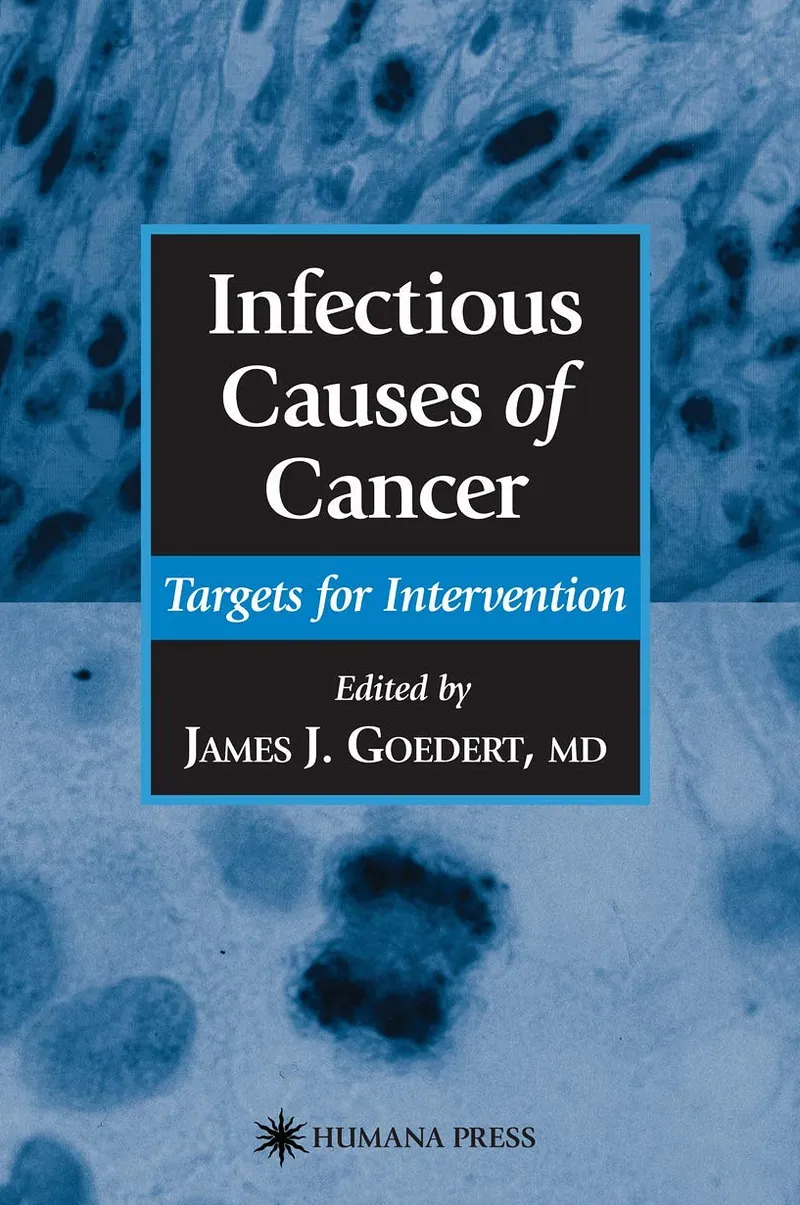

Infectious Causes of Cancer: Targets for Intervention
Infectious Causes of Cancer: Targets for Intervention examines the important relationship between infectious diseases and cancer, bringing together research on viruses, bacteria, and parasites that contribute to human malignancies. Edited by James J. Goedert and supported by contributions from leading experimental and clinical researchers, the book explores how infectious agents can initiate or promote cancer and how these mechanisms may provide opportunities for targeted intervention.
Published by Humana in 2000, this 498-page volume takes a cross-disciplinary approach to infection-associated cancer. It focuses on major groups of human carcinogenic infections and considers associated malignancies alongside emerging diagnostic technologies, therapeutic approaches, and vaccine strategies.
About the Book
The book provides an integrated examination of infectious causes of cancer, with particular attention to pathogens that have been established as important contributors to human malignancy. By connecting infectious disease research with cancer biology and clinical medicine, it provides readers with a broader understanding of infection-related carcinogenesis.
The contributors examine five major categories of human carcinogenic infections: herpesviruses, retroviruses, papillomaviruses, hepatitis viruses, and Helicobacter pylori.
Infectious Agents and Cancer
A central theme of the book is the role of infectious organisms in cancer development. Understanding how pathogens contribute to malignant transformation can reveal important biological pathways and potential opportunities for prevention and treatment.
The book reviews the malignancies associated with the major infectious agents discussed and considers the mechanisms through which these infections can influence cancer development.
Herpesviruses, Retroviruses, and Papillomaviruses
Viral infections represent an important area of infection-associated cancer research. The book examines herpesviruses, retroviruses, and papillomaviruses in the context of human carcinogenesis, providing insights into their relationships with specific malignancies and the biological processes involved.
These discussions help connect virology and molecular mechanisms with the clinical consequences of virus-associated cancers.
Hepatitis Viruses and H. pylori
The book also addresses hepatitis viruses and Helicobacter pylori, two important infectious contributors to human cancer. Their inclusion demonstrates the broad range of mechanisms through which chronic or persistent infections can be associated with malignant disease.
Examining these organisms alongside oncogenic viruses provides a comprehensive perspective on infection-related cancer.
Diagnostic and Therapeutic Opportunities
Beyond describing infectious causes of cancer, the book considers how advances in diagnosis and treatment may be applied to infection-associated malignancies. Understanding the infectious origin of certain cancers can create opportunities for more targeted therapeutic approaches.
The contributors also discuss the potential of vaccines and other interventions aimed at preventing or controlling infections associated with cancer development.
A Cross-Disciplinary Resource
The subject connects several fields, including infectious diseases, oncology, virology, microbiology, epidemiology, and clinical research. This interdisciplinary approach makes the book particularly relevant to professionals who need to understand cancer from both an infectious disease and clinical oncology perspective.
Who Should Use This Book?
This book may be particularly useful for:
- Clinical oncologists
- Infectious disease specialists
- Cancer researchers
- Infectious disease researchers
- Clinical researchers
- Virologists and microbiologists
- Biomedical scientists
- Graduate and postgraduate students studying cancer or infectious diseases
Final Thoughts
Infectious Causes of Cancer: Targets for Intervention provides an insightful examination of the connection between infectious diseases and human cancer. Its coverage of herpesviruses, retroviruses, papillomaviruses, hepatitis viruses, and H. pylori, together with its discussion of diagnostic, therapeutic, and vaccine-based opportunities, makes it a valuable interdisciplinary reference for researchers and clinicians studying infection-associated malignancies.
Book Information
Title: Infectious Causes of Cancer: Targets for Intervention
Author/Editor: James J. Goedert
Publisher: Humana
Publication Date: April 1, 2000
Edition: 2000
Language: English
Print Length: 498 pages
ISBN-10: 9780896037724
ISBN-13: 978-0896037724
ASIN: 089603772X
Subjects: Infectious Diseases, Cancer, Oncology, Cancer Biology, Viral Oncology, Bacterial Infections, Viral Infections, Carcinogenesis, Microbiology, Virology, Cancer Prevention, Therapeutic Intervention
An interdisciplinary reference exploring how infectious agents contribute to cancer and how these mechanisms can provide targets for diagnosis, treatment, and prevention.
Support the Creators!
If you enjoy this book, please consider supporting the author and publisher by purchasing a physical or digital copy. Buying official copies ensures authors can keep writing great books.