
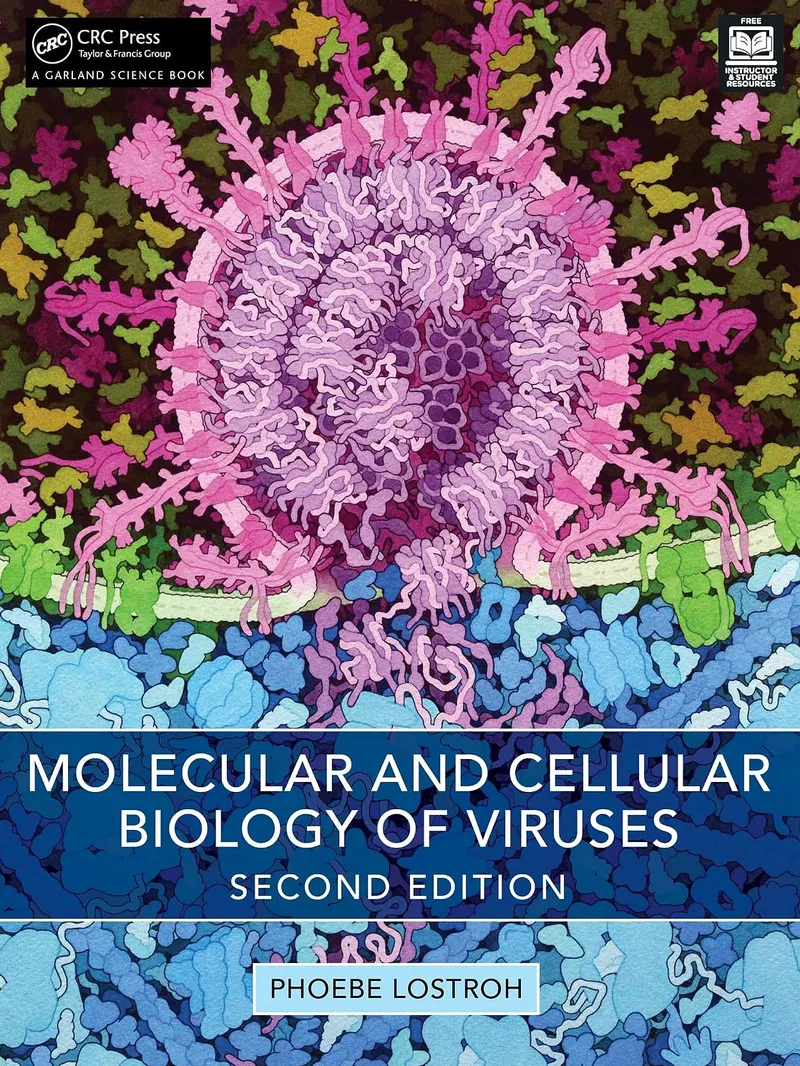

Molecular and Cellular Biology of Viruses, 2nd Edition
Molecular and Cellular Biology of Viruses, 2nd Edition provides a comprehensive and accessible exploration of the molecular and cellular mechanisms underlying viral biology. Published by CRC Press in 2024, this fully revised edition introduces students to the major groups of viruses while connecting viral replication, gene expression, host–pathogen interactions, immunity, evolution, and medical applications.
The book combines rigorous scientific coverage with an engaging learning approach. Examples from primary research literature and medically important viruses—including SARS-CoV-2, HIV, and influenza—help readers connect fundamental virology concepts with real biological and clinical contexts. Plant viruses and bacteriophages are also included, providing a broad view of viral diversity.
About the Book
The book examines viruses at both the molecular and cellular levels, with separate discussions of genome-dependent replication and expression strategies as well as mechanisms shared across different virus groups.
Rather than organizing all topics solely according to viral genome type, the book also explores processes such as viral attachment and other mechanisms that can be understood across diverse viral systems. This approach helps students recognize common principles underlying viral infection while appreciating the diversity of viral strategies.
Viral Replication and Gene Expression
A major focus of the book is how viruses replicate and express their genetic information. The molecular mechanisms of the major classes of viruses are examined through specific examples, helping readers understand how different viral genomes direct replication and protein production.
The coverage includes:
- Viral replication strategies
- Viral gene expression
- Genome-specific mechanisms
- Viral attachment and entry
- Molecular mechanisms of infection
- Major groups of animal and plant viruses
- Bacteriophages and their biology
Host–Virus Interactions
The book places strong emphasis on interactions between viruses and their host cells. It explores how viral infection affects cellular processes and how viruses interact with cellular machinery during infection.
The immune system is considered specifically through the interplay between host defenses and viral pathogens, providing a framework for understanding both antiviral responses and mechanisms viruses use to survive within their hosts.
Medical Virology and Applications
Examples throughout the book include some of the most extensively studied and medically important viruses, including SARS-CoV-2, HIV, and influenza. These examples help illustrate how molecular mechanisms translate into medical consequences.
A dedicated chapter examines medical applications of virology, including:
- Antiviral drugs
- Vaccine development
- Viral disease and host responses
- Medical consequences of viral infection
The second edition also includes a supplementary chapter on virology and public health, using the COVID-19 pandemic as an important example of how viral biology intersects with population health and disease control.
Virus Diversity and Evolution
The final chapter examines virus diversity and evolution, incorporating contemporary insights from metagenomic research. This provides a broader perspective on the enormous diversity of viruses and the ways modern genomic approaches are expanding our understanding of viral evolution.
The inclusion of metagenomics also connects traditional molecular virology with newer approaches for discovering and characterizing viruses in diverse environments.
Learning and Study Features
The second edition is designed to support active and analytical learning through:
- Readable but scientifically rigorous explanations
- Examples drawn from primary research literature
- Extensive illustrations of molecular mechanisms
- End-of-chapter questions emphasizing analysis and interpretation
- Answers to the end-of-chapter questions
- Updated suggestions for primary literature discussions
- Interactive online quiz questions
- Supplementary material covering virology and public health
These features make the book suitable for both classroom instruction and independent study.
Who Should Read This Book?
Molecular and Cellular Biology of Viruses, 2nd Edition can be useful for:
- Undergraduate and postgraduate students of virology
- Microbiology and molecular biology students
- Biomedical science students
- Students studying infectious diseases
- Researchers in molecular and cellular virology
- Students and researchers interested in host–pathogen interactions
- Readers studying viral evolution and genomics
- Instructors teaching virology and molecular biology
Final Thoughts
Molecular and Cellular Biology of Viruses, 2nd Edition offers a broad and modern introduction to the molecular and cellular biology of viruses. Its coverage extends from viral replication and gene expression to host–pathogen interactions, immune responses, antiviral therapies, vaccines, viral evolution, and public health.
By combining major virus groups with detailed molecular mechanisms and examples from primary literature, the book provides a strong foundation for understanding both the fundamental biology of viruses and their importance in medicine and public health.
Book Information
Title: Molecular and Cellular Biology of Viruses
Publisher: CRC Press
Publication Date: March 25, 2024
Edition: 2nd
Language: English
Print Length: 550 pages
ISBN-10: 1032732121
ISBN-13: 978-1032732121
Subjects: Virology, Molecular Biology, Cell Biology, Viral Replication, Viral Genetics, Host–Pathogen Interactions, Immunology, Viral Evolution, Medical Virology, Antiviral Drugs, Vaccines, Plant Viruses, Bacteriophages
Molecular and Cellular Biology of Viruses, 2nd Edition provides an engaging and rigorous introduction to viral molecular mechanisms, host interactions, medical applications, and the evolving diversity of the viral world.
Support the Creators!
If you enjoy this book, please consider supporting the author and publisher by purchasing a physical or digital copy. Buying official copies ensures authors can keep writing great books.