
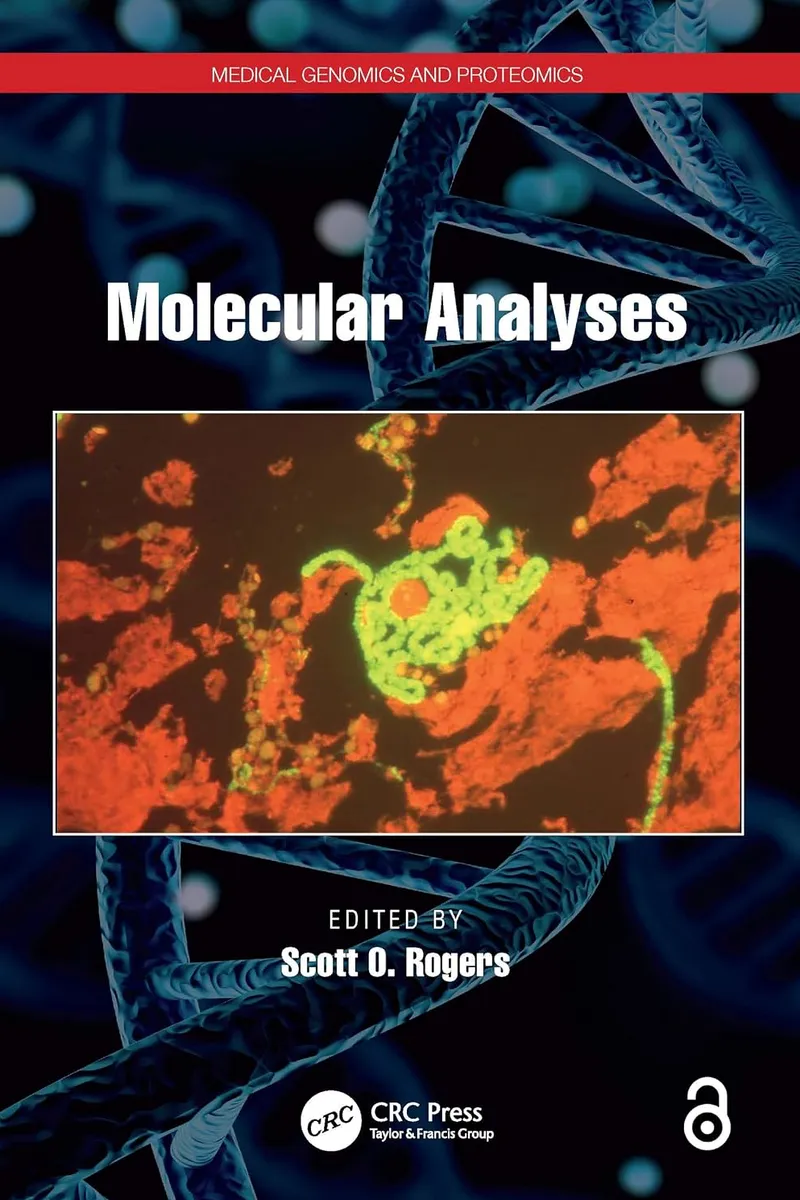

Molecular Analyses (Medical Genomics and Proteomics)
Molecular Analyses (Medical Genomics and Proteomics) provides a medically focused overview of modern molecular analysis methods used to study DNA, RNA, proteins, genomes, and disease-associated genetic variation. Published by CRC Press in 2022, the book brings together methods relevant to medical professionals, students, and researchers while also highlighting techniques applicable across biology, chemistry, bioinformatics, and bioengineering.
The rapid development of molecular technologies has made nucleic acid extraction, sequencing, and large-scale sequence analysis increasingly accessible. Modern methods can generate enormous quantities of genomic data and support the identification of genetic variants, including single-nucleotide polymorphisms (SNPs) associated with disease. This volume introduces the analytical approaches needed to obtain, preserve, sequence, and interpret such molecular information.
About the Book
The book concentrates on medically oriented molecular analysis, with particular attention to methods for working with nucleic acids and large sequencing datasets. It addresses both foundational laboratory procedures and computational approaches required to analyze increasingly complex molecular data.
Its coverage is particularly relevant to the modern integration of laboratory medicine, genomics, bioinformatics, and molecular research, where biological samples are transformed into sequence and molecular information that can contribute to understanding disease risk, diagnosis, and treatment.
DNA and RNA Extraction
A significant portion of modern molecular analysis begins with obtaining high-quality nucleic acids from biological material. The book summarizes extraction methods applicable to a wide variety of tissues and cell types, including approaches capable of working with single-cell samples.
It also discusses nucleic acid preservation, an important consideration when samples must be stored, transported, or processed before molecular analysis. The coverage provides readers with a foundation for understanding how sample quality can influence downstream molecular investigations.
Sequencing and Sequence Analysis
Advances in sequencing technologies have dramatically increased the amount of genomic information that can be generated. The book provides guidance on sequencing and the analysis of sequence data, including approaches relevant to large datasets.
Readers are introduced to methods for working with sequence information, searching biological databases, and interpreting genomic data. These techniques are increasingly important for identifying genetic variation and investigating molecular mechanisms associated with human disease.
Genetic Variation and Disease
Modern molecular analysis allows researchers and clinicians to investigate differences between genomes and identify genetic variants that may contribute to disease. The book discusses approaches such as single-nucleotide polymorphism (SNP) analysis, providing context for the study of disease-associated genetic variation.
This focus connects molecular laboratory methods with medically relevant questions concerning disease biology, genetic risk, and the interpretation of genomic information.
Phylogenetic and Computational Methods
Molecular analysis increasingly depends on computational methods capable of handling large sequence datasets. The book includes methods for sequence analysis, database searches, and phylogenetic analyses, giving readers insight into the computational side of modern molecular biology.
Although the primary emphasis is medical genomics, many of these approaches are broadly applicable to biological research and can be used in areas extending beyond human medicine.
Forensic and Other Molecular Applications
The volume also expands beyond conventional medical sample analysis by reviewing forensic sampling and nucleic acid detection. In addition, it addresses methods for delivering nucleic acids to multicellular organisms and includes analytical techniques relevant to both nucleic acids and proteins.
This broader coverage demonstrates how molecular analysis technologies can be adapted for different research and applied settings.
Interdisciplinary Applications
Although medically focused, many of the methods presented have applications in other scientific disciplines. The techniques discussed can be relevant to:
- Medical genomics and molecular medicine
- Proteomics and molecular biology
- Bioinformatics and computational biology
- Chemistry and biochemical research
- Bioengineering
- Forensic science
- Genetics and sequence analysis
- Phylogenetics and evolutionary studies
- Biomedical research
The interdisciplinary nature of the methods makes the book useful to readers who work with molecular data in different research environments.
Who Should Read This Book?
Molecular Analyses (Medical Genomics and Proteomics) is particularly relevant for:
- Medical professionals
- Medical and biomedical science students
- Researchers working in medical genomics
- Molecular biology and genetics researchers
- Bioinformatics and computational biology students
- Scientists working with sequencing data
- Researchers in biological, chemical, and bioengineering fields
- Readers interested in molecular methods for disease research
Final Thoughts
Molecular Analyses (Medical Genomics and Proteomics) provides a practical overview of molecular methods used to obtain, preserve, analyze, and interpret DNA, RNA, protein, and sequence information. Its medically oriented approach makes it particularly relevant to genomics and biomedical research, while its computational and analytical methods extend its usefulness to broader areas of science.
By bringing together nucleic acid extraction, preservation, sequencing, SNP analysis, sequence analysis, database searching, phylogenetics, forensic sampling, and related molecular techniques, the book offers a useful reference for understanding how modern molecular data are generated and analyzed in biomedical research.
Book Information
Title: Molecular Analyses (Medical Genomics and Proteomics)
Publisher: CRC Press
Publication Date: July 11, 2022
Edition: 1st Edition
Language: English
Print Length: 361 pages
ISBN-10: 0367903717
ISBN-13: 978-0367903718
Subjects: Medical Genomics, Proteomics, Molecular Biology, Genetics, DNA Analysis, RNA Analysis, Nucleic Acid Extraction, DNA Sequencing, RNA Sequencing, Sequence Analysis, Bioinformatics, SNP Analysis, Phylogenetics, Molecular Medicine, Biomedical Research
Molecular Analyses provides a medically focused introduction to modern molecular methods for studying nucleic acids, proteins, genetic variation, sequencing data, and their applications in biomedical research.
Support the Creators!
If you enjoy this book, please consider supporting the author and publisher by purchasing a physical or digital copy. Buying official copies ensures authors can keep writing great books.