
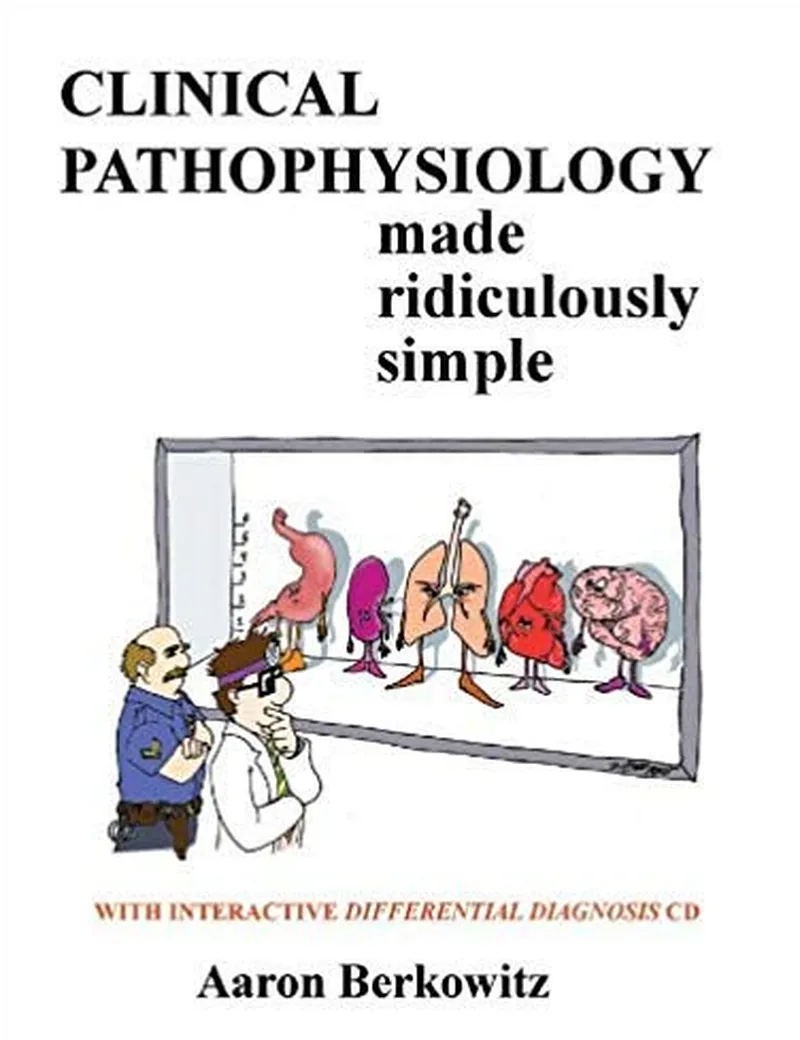

Clinical Pathophysiology Made Ridiculously Simple, 1st Edition
Clinical Pathophysiology Made Ridiculously Simple, 1st Edition is a concise, practical guide designed to help students connect the basic sciences with clinical medicine. Rather than presenting pathophysiology as a collection of isolated facts, the book emphasizes the mechanisms behind disease and their relationship to clinical findings, diagnostic testing, and treatment.
The book is particularly useful for medical students making the transition from the preclinical sciences to the clinical years, especially around the transition from the second to the third year of medical school. Its straightforward approach can also benefit nurses, nurse practitioners, physician assistants, and other healthcare professionals who need a practical understanding of disease mechanisms and clinical reasoning.
About the Book
Clinical Pathophysiology Made Ridiculously Simple provides a conceptual overview of pathophysiology, mechanisms of disease, clinical manifestations, diagnostic reasoning, and treatment considerations. The emphasis is on understanding the underlying principles that explain why diseases produce particular symptoms, laboratory findings, and imaging abnormalities.
The book covers major organ systems and clinical areas, including cardiovascular, pulmonary, renal, gastrointestinal, endocrine, hematologic, neurologic, rheumatologic, and urologic disorders.
Cardiovascular Pathophysiology
The cardiovascular section explores important cardiac disorders and their clinical evaluation, including heart failure, valvular disease, tachyarrhythmias, angina, and myocardial infarction. It also discusses the interpretation of EKG/ECG findings, chest X-rays, echocardiographic findings, and distinctions between different clinical presentations of heart failure and acute coronary syndromes.
Topics involving heart failure include HFpEF and HFrEF, while the discussion of valvular disorders includes newer intervention concepts such as TAVR and TAVI. The section also connects cardiovascular pathophysiology with diagnostic and therapeutic decision-making.
Pulmonary and Renal Systems
The pulmonary section covers diseases of the pulmonary vasculature, diagnostic laboratory and imaging findings, lung auscultation, and mechanical ventilation. These topics help readers connect respiratory physiology and pathology with practical clinical assessment.
The renal section addresses urinalysis, acute kidney injury, chronic kidney disease, and acid-base pathophysiology. Particular attention is given to understanding how changes in renal function affect laboratory findings and overall clinical status.
Gastrointestinal and Endocrine Disorders
The gastrointestinal material includes laboratory and imaging interpretation as well as important clinical conditions such as hepatorenal syndrome and hepatic encephalopathy.
The endocrine section discusses the evaluation and management of endocrine disorders, including the treatment of diabetes mellitus. It also addresses laboratory monitoring, including the use of LFTs and CBCs when evaluating patients receiving certain endocrine-related medications.
Hematology, Neurology, and Rheumatology
The book also introduces important hematologic disorders and their treatments, helping readers understand how disease mechanisms relate to clinical manifestations and therapeutic approaches.
A high-yield neurology section focuses on clinically important neurological concepts and diagnostic reasoning. Rheumatologic disorders are approached through their diagnostic evaluation and the use of immunosuppressive and immunomodulatory therapies.
The text also includes material on prostate cancer, including its diagnostic evaluation and treatment considerations.
Clinical Reasoning and Diagnostic Skills
One of the book’s central strengths is its effort to connect basic science knowledge with clinical reasoning. Readers are encouraged to consider how mechanisms of disease translate into patient symptoms, physical findings, laboratory abnormalities, and diagnostic test results.
A companion digital Differential Diagnosis program is also described as providing practice with the interpretation of common laboratory tests and patient symptoms and signs. Because this edition dates from 2007, readers should use current clinical guidelines, treatment recommendations, and reference ranges when applying the material to present-day practice.
Who Should Read This Book?
Clinical Pathophysiology Made Ridiculously Simple can be useful for:
- Medical students transitioning from basic sciences to clinical training
- Students preparing for clinical-year coursework and examinations
- Nursing students and practicing nurses
- Nurse practitioners
- Physician assistants
- Healthcare professionals seeking a concise review of pathophysiology
- Readers who prefer a practical and concept-focused approach to medical science
Final Thoughts
Clinical Pathophysiology Made Ridiculously Simple provides a compact introduction to the mechanisms of disease and their clinical relevance. Its system-based approach makes it useful for reviewing major pathophysiological concepts while developing connections between basic science, diagnosis, symptoms, laboratory findings, and treatment.
As a 2007 edition, the book is best used as a foundational pathophysiology reference rather than a current treatment guide. Its conceptual explanations can still support learning, while modern clinical guidelines and current medical references should be consulted for up-to-date management recommendations.
Book Information
Title: Clinical Pathophysiology Made Ridiculously Simple
Edition: 1st Edition
Publication Date: January 1, 2007
Language: English
ASIN: B008GB1TRI
Subjects: Clinical Pathophysiology, Pathophysiology, Mechanisms of Disease, Clinical Medicine, Medical Education, Clinical Reasoning, Cardiovascular Disorders, Pulmonary Disorders, Renal Disorders, Gastrointestinal Disorders, Endocrinology, Hematology, Neurology, Rheumatology, Prostate Cancer
Clinical Pathophysiology Made Ridiculously Simple is a practical introductory resource that connects the mechanisms of disease with clinical findings, diagnosis, and treatment to help learners move from basic science toward clinical practice.
Support the Creators!
If you enjoy this book, please consider supporting the author and publisher by purchasing a physical or digital copy. Buying official copies ensures authors can keep writing great books.