
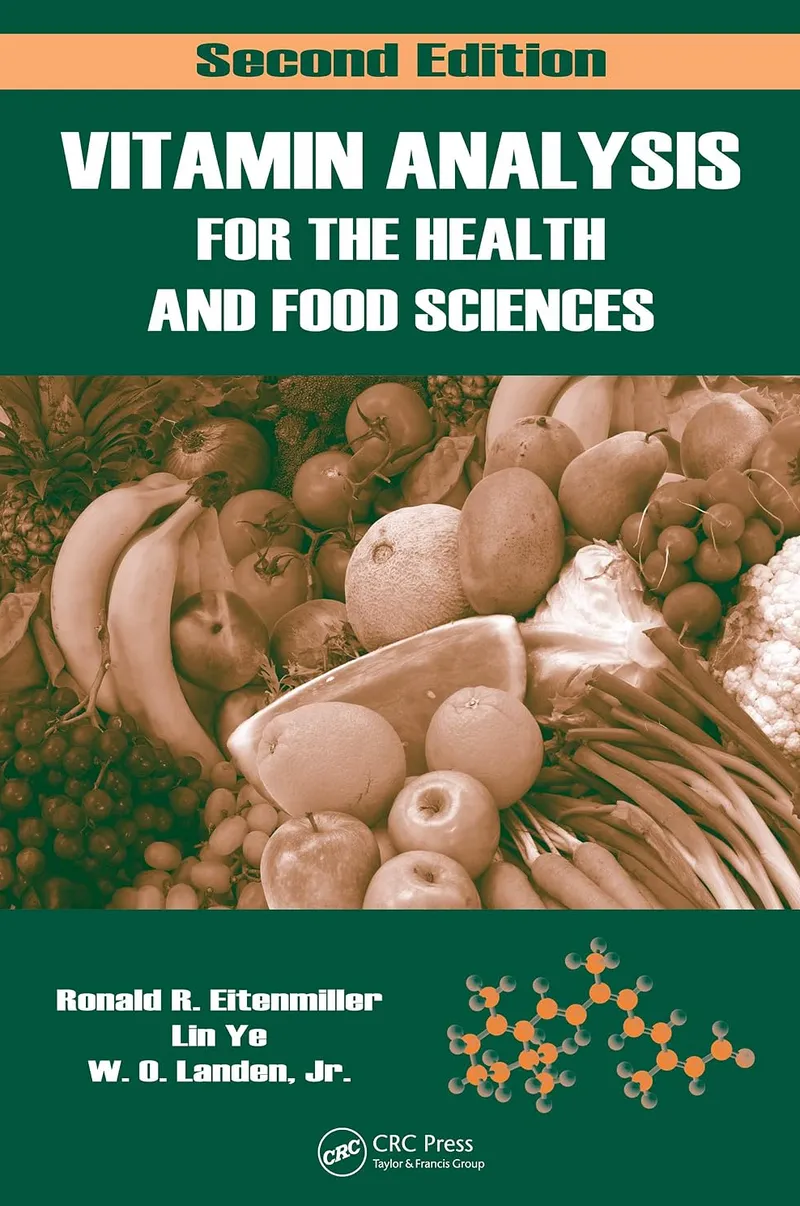

Vitamin Analysis for the Health and Food Sciences, 2nd Edition
Vitamin Analysis for the Health and Food Sciences, Second Edition is a detailed laboratory reference covering the analytical methods used to identify, measure, and evaluate vitamins in foods, dietary supplements, pharmaceuticals, and biological samples. Designed as a practical bench reference, the book combines vitamin chemistry and biochemistry with established analytical procedures and advanced instrumentation to help readers select appropriate methods for obtaining reliable analytical results.
The second edition reflects the rapid development of vitamin assay techniques, including the growing application of sophisticated analytical instruments such as liquid chromatography–mass spectrometry (LC-MS). Its consistent chapter structure makes it easier to locate information about individual vitamins and compare different approaches to their analysis.
Comprehensive Coverage of Vitamin Analysis
Each chapter focuses on a particular vitamin, beginning with an overview of its distinctive characteristics and role in metabolism. The authors then introduce the chemistry and biochemistry needed to understand how the vitamin behaves during analysis.
For each vitamin, the book provides information on:
- Chemical structure and nomenclature
- Metabolic role and biochemical characteristics
- Spectral properties presented in tables
- Stability considerations
- Extraction from different biological matrices
- Common analytical methods
- Regulatory and standardized methods
- Advanced approaches to vitamin analysis
This organization provides a useful connection between the fundamental properties of vitamins and the practical requirements of laboratory analysis.
Analytical Methods and Instrumentation
A major focus of the book is the selection and application of analytical techniques. The second edition discusses the development of modern vitamin assay methodology and the increasing importance of sophisticated instrumentation.
Particular attention is given to LC-MS, including its applications and impact on vitamin analysis. The book also summarizes commonly used analytical and regulatory methods, allowing readers to compare approaches and identify techniques appropriate for particular analytical situations.
Practical Laboratory Problem-Solving
Accurate vitamin analysis depends on more than simply selecting an analytical instrument. Sample stability, extraction procedures, matrix effects, and the chemical properties of individual vitamins can all influence analytical results.
Vitamin Analysis for the Health and Food Sciences addresses these practical considerations directly. Its discussion of vitamin stability and extraction from different biological matrices provides useful guidance for researchers dealing with real laboratory samples.
The extensive tables are designed to make important analytical information easier to locate, supporting efficient decision-making during laboratory work.
AOAC and Regulatory Methods
The book also covers commonly used regulatory approaches and includes summary tables referencing several AOAC International methods. These resources provide readers with a convenient way to compare recognized analytical procedures alongside other methods discussed throughout the chapters.
The combination of analytical methodology, regulatory information, and practical considerations makes the book useful when evaluating different approaches to vitamin measurement.
Advanced and Emerging Analytical Approaches
Beyond established procedures, the authors provide a critical and interpretive discussion of advanced methods. Rather than simply listing techniques, the book draws on extensive experience in vitamin analysis to explain their practical significance and potential applications.
This makes the text particularly valuable for readers who need to understand not only how a vitamin can be analyzed, but also how to evaluate and select an appropriate analytical approach for a particular sample or research objective.
Who Should Read This Book?
This reference can be particularly useful for:
- Food scientists and food chemistry researchers
- Analytical chemists
- Pharmaceutical researchers
- Nutrition and health science researchers
- Laboratory scientists working with vitamins and supplements
- Researchers studying biological matrices
- Students of food science, analytical chemistry, nutrition, and pharmaceutical sciences
- Professionals involved in food, supplement, or pharmaceutical quality analysis
Final Thoughts
Vitamin Analysis for the Health and Food Sciences, Second Edition provides a comprehensive reference for understanding and performing vitamin analysis. By combining vitamin chemistry, biochemistry, sample preparation, analytical methodology, regulatory procedures, and advanced instrumentation, the book offers a practical framework for laboratory decision-making.
Published in 2016, the book represents the analytical knowledge and instrumentation landscape of that period. Readers applying its methods today should verify current analytical standards, regulatory requirements, instrument capabilities, and validated laboratory procedures before use.
Book Information
Title: Vitamin Analysis for the Health and Food Sciences
Publisher: CRC Press
Publication Date: April 19, 2016
Edition: 2nd Edition
Language: English
Print Length: 664 pages
ISBN-13: 978-1420009750
ASIN: B00OD4WN0E
Subjects: Vitamin Analysis, Analytical Chemistry, Food Science, Food Chemistry, Nutrition, Pharmaceutical Analysis, Laboratory Methods, LC-MS, Food Supplements
Support the Creators!
If you enjoy this book, please consider supporting the author and publisher by purchasing a physical or digital copy. Buying official copies ensures authors can keep writing great books.