
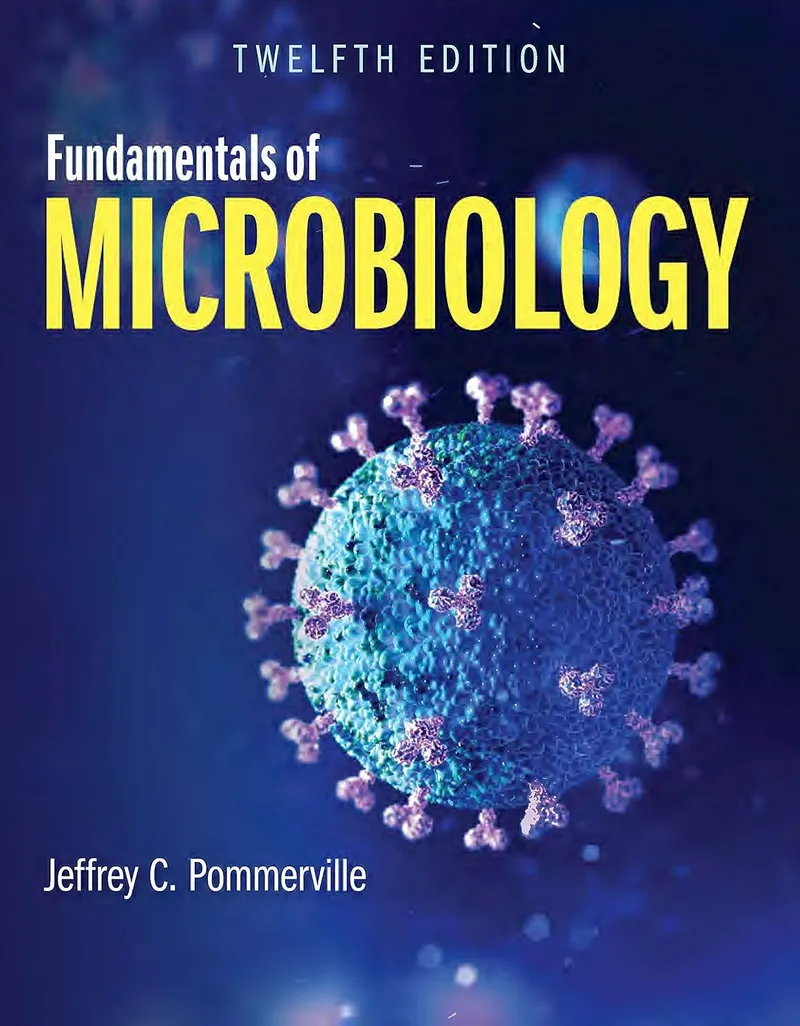

Fundamentals of Microbiology, 12th Edition
Fundamentals of Microbiology, 12th Edition is a comprehensive introductory microbiology textbook published by Jones & Bartlett Learning. With approximately 950 pages, this edition provides broad coverage of the principles of microbiology, from microbial structure and physiology to genetics, metabolism, microbial ecology, immunology, infectious diseases, and biotechnology.
The book is designed to help students build a solid foundation in microbiology while developing an understanding of how microorganisms interact with humans, other organisms, and their environments. Its broad coverage makes it suitable for students taking introductory microbiology courses as well as readers who want a substantial reference for the biological sciences.
About Fundamentals of Microbiology
Microbiology is the study of organisms and biological entities that are too small to be seen clearly without specialized equipment. Although microorganisms are microscopic, their influence is enormous.
Microorganisms participate in nutrient cycling, decomposition, food production, biotechnology, environmental processes, and human health. Some are essential to ecosystems and beneficial to humans, while others can cause infectious diseases.
A strong foundation in microbiology therefore requires an understanding of microbial structure, metabolism, genetics, growth, evolution, ecology, and interactions with other organisms. Fundamentals of Microbiology, 12th Edition brings these areas together into a broad introduction to the discipline.
The Microbial World
The textbook introduces students to the diversity of microorganisms and the characteristics that distinguish major microbial groups.
Students encounter bacteria, archaea, fungi, protozoa, algae, viruses, and other microscopic biological entities. Comparing these groups helps demonstrate the remarkable diversity of microbial life and the different strategies microorganisms use to survive.
This foundation is important for later study because microbial diversity influences everything from metabolism and ecology to disease and antimicrobial treatment.
Microbial Structure and Function
Understanding the structure of microbial cells is fundamental to microbiology.
The book examines cellular components and their functions and introduces the differences between prokaryotic and eukaryotic cells. These differences are particularly important when studying microbial physiology and antimicrobial drugs.
By understanding what microorganisms are made of and how their cellular components work together, students can better understand how microorganisms grow, reproduce, obtain energy, and respond to their environments.
Microscopy and Laboratory Techniques
Because microorganisms are generally microscopic, laboratory techniques play a central role in microbiology.
Microscopy allows scientists to observe microbial morphology and cellular structures, while staining and other laboratory procedures can reveal characteristics that are useful for identification.
These methods provide students with an introduction to the experimental side of microbiology and demonstrate how observations and laboratory evidence are used to study microorganisms.
Microbial Nutrition and Growth
Microorganisms require nutrients and appropriate environmental conditions to survive and reproduce.
The textbook examines microbial nutrition and the factors that influence microbial growth, including environmental conditions such as temperature, pH, oxygen availability, and nutrient concentration.
Understanding these relationships is important in many areas, including laboratory microbiology, food preservation, environmental science, and infectious disease.
Microbial Metabolism
Microbial metabolism explains how microorganisms obtain energy and produce the molecules required for cellular life.
One of the fascinating characteristics of microorganisms is their metabolic diversity. Different microorganisms can use very different sources of energy and carbon, allowing them to occupy environments that range from ordinary soil and water to extreme habitats.
Learning microbial metabolism also provides a foundation for understanding industrial microbiology, environmental processes, and biochemical identification methods.
Microbial Genetics
Genetics provides the framework for understanding how microorganisms inherit and express biological characteristics.
The book introduces genetic information, DNA replication, gene expression, mutation, and genetic variation. Students can then connect these mechanisms with microbial adaptation and evolution.
Microbial genetics is also essential for understanding modern biotechnology and the development of antimicrobial resistance.
Gene Regulation and Genetic Exchange
Microorganisms must respond rapidly to changing environments.
Regulation of gene expression allows cells to adjust their activities according to available nutrients and environmental conditions. Microorganisms can also acquire genetic information through different forms of genetic exchange.
These processes contribute to microbial diversity and adaptation and are particularly important when studying the spread of antimicrobial resistance.
Viruses
Viruses differ fundamentally from cellular microorganisms.
The textbook introduces viral structure, replication, classification, and interactions with host cells. Understanding viruses provides an important foundation for studying viral diseases, vaccines, antiviral therapies, and viral evolution.
The study of viruses also demonstrates the diversity of biological strategies found within the microbial world.
Microbial Control
Controlling microbial growth is important in healthcare, food production, laboratories, and everyday life.
The book discusses physical and chemical methods used to inhibit or destroy microorganisms, including principles relevant to sterilization, disinfection, sanitation, and preservation.
Understanding microbial control helps students appreciate why different methods are effective under different conditions and why some microorganisms are more resistant than others.
Antimicrobial Agents
Antimicrobial drugs represent an important application of microbiology.
Students learn the basic principles behind antimicrobial therapy and how different agents interfere with microbial structures or cellular processes.
The subject naturally leads to antimicrobial resistance, an increasingly important problem in medicine and public health.
Microbial Ecology
Microorganisms are essential components of ecosystems.
They contribute to decomposition and nutrient cycling and interact continuously with plants, animals, and other microorganisms. Some microorganisms form mutually beneficial relationships with other organisms, while others play important roles in environmental processes.
Studying microbial ecology helps students recognize that microbiology extends far beyond infectious disease.
Microorganisms and Human Health
Humans are closely associated with microorganisms throughout their lives.
Microorganisms live on and within the human body, forming complex microbial communities. Many of these organisms are harmless or beneficial, while others can become pathogenic under particular circumstances.
Understanding these relationships helps students distinguish between normal microbial colonization and infectious disease.
Immunology and Host Defenses
The immune system protects the body against potentially harmful microorganisms.
The textbook introduces the basic principles of innate and adaptive immunity and explains how immune responses recognize and respond to foreign organisms and substances.
This provides a foundation for understanding vaccination, immune disorders, and the interactions between pathogens and their hosts.
Infectious Diseases
Microbiology provides the biological foundation for understanding infectious disease.
The book examines how microorganisms establish infections, interact with host tissues, evade immune responses, and produce disease.
Students can connect these mechanisms with the transmission, prevention, diagnosis, and treatment of infectious diseases.
Microbial Diversity and Evolution
Microorganisms have existed for billions of years and display enormous biological diversity.
Evolutionary processes such as mutation, natural selection, genetic exchange, and adaptation contribute to changes in microbial populations.
Understanding microbial evolution is particularly important for explaining how microorganisms adapt to environmental changes and how antimicrobial resistance can emerge.
Biotechnology and Applied Microbiology
Microorganisms are valuable tools in modern science and industry.
Their rapid growth, metabolic diversity, and genetic flexibility make them useful in biotechnology, pharmaceutical production, food processing, environmental applications, and research.
Microbiology has therefore contributed to numerous technologies that extend well beyond the diagnosis and treatment of infectious diseases.
Who Is This Book For?
Fundamentals of Microbiology, 12th Edition can be useful for:
- Undergraduate microbiology students
- Biology students
- Pre-medical students
- Nursing and allied-health students
- Biomedical science students
- Biotechnology students
- Environmental science students
- Students studying health sciences
- Students taking introductory microbiology courses
- Independent learners interested in microbiology
Its comprehensive coverage also makes it useful as a reference when students progress to more specialized areas of microbiology.
Why Study Fundamentals of Microbiology?
Microbiology contains many interconnected concepts, and students can sometimes find it difficult to understand how individual topics relate to one another.
A strong foundation helps students recognize these connections.
For example, microbial structure influences cellular function; cellular function influences metabolism and growth; genetics influences microbial characteristics and adaptation; and microbial characteristics influence interactions with hosts and environments.
Understanding these relationships makes microbiology more than a collection of facts and provides a framework for further study.
Final Thoughts
Fundamentals of Microbiology, 12th Edition provides a broad introduction to the science of microorganisms and their importance in biology, medicine, biotechnology, and the environment.
The textbook covers major areas including microbial structure and function, microscopy, growth, metabolism, genetics, viruses, microbial control, antimicrobial agents, microbial ecology, evolution, immunology, infectious diseases, and biotechnology.
Its extensive coverage makes it a useful foundation for students beginning their study of microbiology and for readers who want a comprehensive reference covering the major principles of the field.
For students in microbiology, biology, health sciences, nursing, biotechnology, and related disciplines, the 12th edition can provide the background needed to understand microorganisms at the cellular, molecular, ecological, and applied levels.
Book Information
Title: Fundamentals of Microbiology
Edition: 12th Edition
Publisher: Jones & Bartlett Learning
Publication Date: March 29, 2021
Language: English
Print Length: 950 pages
ISBN-10: 1284211754
ISBN-13: 978-1284211757
Subject: Microbiology / Biological Sciences / Life Sciences
Fundamentals of Microbiology, 12th Edition is a comprehensive academic resource for developing a strong understanding of microbial biology, genetics, metabolism, ecology, immunology, infectious disease, and applied microbiology.
Support the Creators!
If you enjoy this book, please consider supporting the author and publisher by purchasing a physical or digital copy. Buying official copies ensures authors can keep writing great books.