
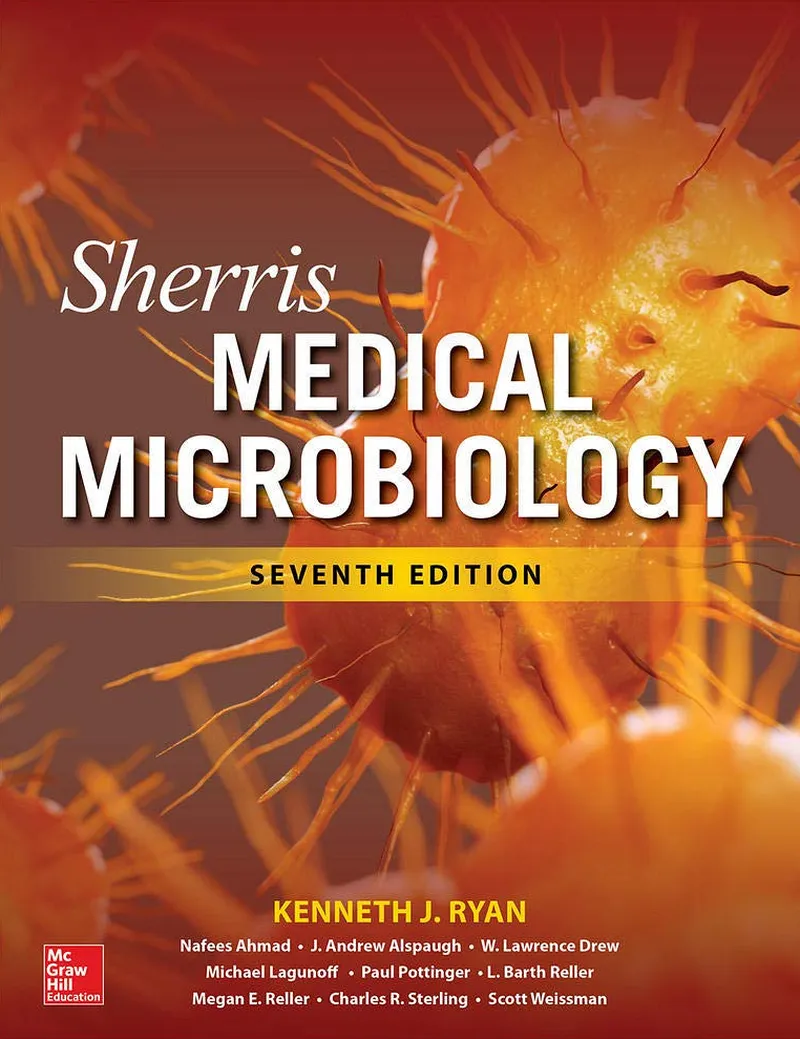

Sherris Medical Microbiology, 7th Edition
Sherris Medical Microbiology, 7th Edition is a comprehensive textbook that introduces the principles of medical microbiology and their application to human infectious diseases. Published by McGraw Hill Medical, this edition combines fundamental microbiology with clinical concepts, helping students understand microorganisms, their mechanisms of disease, laboratory diagnosis, treatment, and prevention.
With 1,056 pages, the seventh edition provides extensive coverage of the major areas of medical microbiology. It is designed for students and healthcare professionals who need a strong foundation in the microorganisms responsible for human disease and the clinical principles used to manage infectious conditions.
About Sherris Medical Microbiology
Medical microbiology connects the study of microorganisms with human health and disease. Understanding the subject requires knowledge of microbial structure, physiology, genetics, pathogenesis, immunity, laboratory diagnosis, and antimicrobial therapy.
Sherris Medical Microbiology presents these concepts in an integrated manner, allowing readers to move from the basic biology of microorganisms to their clinical importance.
This approach helps students understand not only which microorganisms cause disease, but also why they cause particular infections and how those infections can be recognized, diagnosed, treated, and prevented.
Bacteriology
Bacteria are responsible for many common and serious human infections.
The book examines medically important bacterial groups and discusses their biological characteristics, mechanisms of pathogenicity, clinical manifestations, and laboratory identification.
Understanding bacterial morphology, growth, biochemical characteristics, and virulence helps students connect laboratory findings with clinical disease.
Virology
Viruses are important causes of human disease and have biological characteristics that distinguish them from cellular microorganisms.
The textbook introduces viral structure, replication, transmission, and pathogenesis, providing a foundation for understanding viral infections and their diagnosis.
These concepts are also important for understanding vaccination, antiviral therapy, and strategies for preventing the spread of viral diseases.
Medical Mycology and Parasitology
Fungi and parasites are important causes of infectious disease and require specialized approaches to diagnosis and treatment.
Fungal infections can range from superficial conditions to severe systemic disease, while parasitic infections may involve complex life cycles and distinctive transmission routes.
The book introduces medically significant fungi and parasites and places their biology within a clinical context.
Microbial Pathogenesis
Microorganisms cause disease through a variety of mechanisms.
Pathogens may attach to host cells, invade tissues, produce toxins, damage cells, or interfere with immune responses. The outcome of an infection depends on both the characteristics of the microorganism and the defenses of the host.
Understanding microbial pathogenesis helps students connect basic microbiology with the clinical manifestations of infectious disease.
Immunology and Host Defense
The immune system provides the body’s primary defense against many infectious microorganisms.
The book introduces important principles of innate and adaptive immunity and explains how immune responses recognize and respond to pathogens.
This knowledge is essential for understanding susceptibility to infection, vaccination, immune-mediated disease, and interactions between pathogens and their hosts.
Laboratory Diagnosis
Clinical microbiology laboratories play an essential role in identifying infectious agents.
Depending on the suspected infection, diagnostic investigation may involve:
- Microscopy and staining
- Culture
- Biochemical testing
- Antigen detection
- Serological testing
- Molecular diagnostics
- Antimicrobial susceptibility testing
Understanding these methods helps students appreciate how laboratory evidence contributes to the diagnosis of infectious diseases.
Antimicrobial Therapy
The treatment of bacterial, fungal, parasitic, and other infections requires an understanding of antimicrobial agents.
Students need to know how antimicrobial drugs act on microorganisms and why certain treatments are effective against particular pathogens.
The book connects antimicrobial therapy with microbiological principles, allowing readers to better understand the relationship between pathogens, drugs, and treatment outcomes.
Antimicrobial Resistance
Antimicrobial resistance presents an increasing challenge in healthcare.
Microorganisms can develop or acquire genetic mechanisms that allow them to survive exposure to antimicrobial drugs. Resistant infections may limit treatment options and complicate clinical management.
Understanding resistance mechanisms and susceptibility testing is therefore an important component of medical microbiology.
Epidemiology and Infection Control
Microorganisms spread through a variety of routes, including direct contact, respiratory transmission, food and water, vectors, and other environmental pathways.
Understanding transmission is essential for preventing infectious diseases.
The book introduces principles relevant to epidemiology, infection control, vaccination, and other preventive strategies that help reduce the spread of pathogens.
Connecting Microbiology with Clinical Medicine
A major goal of medical microbiology is to connect laboratory science with patient care.
When a patient presents with signs of infection, healthcare professionals must consider the possible pathogens, select appropriate diagnostic tests, interpret laboratory results, and determine suitable treatment and prevention strategies.
Understanding the biological characteristics of microorganisms makes this clinical reasoning more effective.
Who Is This Book For?
Sherris Medical Microbiology, 7th Edition can be useful for:
- Medical students
- Dental students
- Microbiology students
- Nursing and allied-health students
- Biomedical science students
- Pharmacy students
- Medical laboratory science students
- Healthcare professionals reviewing microbiology
- Students preparing for medical and microbiology examinations
Its broad coverage makes it suitable as both a course textbook and a reference for reviewing important medical microbiology concepts.
A Comprehensive Medical Microbiology Textbook
With 1,056 pages, the seventh edition provides considerably more detail than a short introductory microbiology guide.
The book brings together fundamental concepts and clinical applications, helping students develop an understanding of microorganisms from several perspectives.
Readers can study pathogens in relation to their:
- Structure and biology
- Mechanisms of infection
- Virulence factors
- Clinical manifestations
- Laboratory diagnosis
- Antimicrobial treatment
- Resistance mechanisms
- Prevention and control
This integrated approach can make the large amount of information found in medical microbiology easier to organize.
Final Thoughts
Sherris Medical Microbiology, 7th Edition provides a broad and detailed introduction to the microorganisms responsible for human disease and the principles used to diagnose, treat, and prevent infectious conditions.
The textbook covers major areas including bacteriology, virology, mycology, parasitology, microbial pathogenesis, immunology, laboratory diagnosis, antimicrobial therapy, antimicrobial resistance, epidemiology, and infection control.
Its extensive 1,056-page format makes it a useful academic resource for students who need more than a basic introduction to microbiology while still benefiting from a clinically focused approach.
For students studying medicine, dentistry, microbiology, laboratory science, pharmacy, nursing, and related health disciplines, Sherris Medical Microbiology can provide a strong foundation for understanding the relationship between microorganisms and human disease.
Book Information
Title: Sherris Medical Microbiology
Edition: 7th Edition
Publisher: McGraw Hill Medical
Publication Date: January 4, 2018
Language: English
Print Length: 1,056 pages
ISBN-10: 1259859800
ISBN-13: 978-1259859809
Subject: Medical Microbiology / Infectious Diseases / Clinical Microbiology / Medical Education
Sherris Medical Microbiology, 7th Edition is a comprehensive resource for studying microbial biology, infectious diseases, pathogenesis, immunity, laboratory diagnosis, antimicrobial therapy, and infection prevention, making it a valuable reference for students and healthcare professionals.
Support the Creators!
If you enjoy this book, please consider supporting the author and publisher by purchasing a physical or digital copy. Buying official copies ensures authors can keep writing great books.