
Microbiology For Dummies, 1st Edition
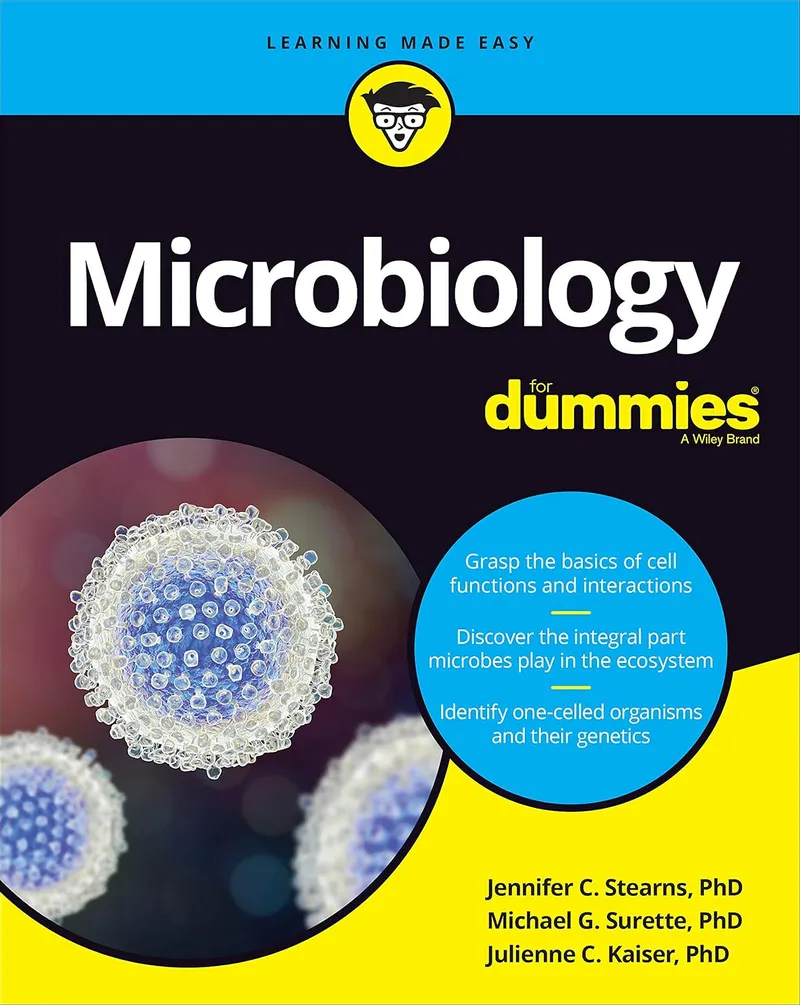
Microbiology For Dummies, 1st Edition by Jennifer C. Stearns is an accessible introduction to the fascinating world of microorganisms. Published by For Dummies, the book is designed to make microbiology easier to understand by explaining fundamental concepts in a straightforward and approachable way.
With 384 pages, this first edition provides an introduction to microorganisms, microbial structure and function, genetics, metabolism, infectious diseases, immunity, and the role of microbes in everyday life. It can be particularly useful for students who are encountering microbiology for the first time or readers who want to build a basic understanding of the subject without starting with a highly technical textbook.
About Microbiology For Dummies
Microbiology may initially seem like a subject filled with unfamiliar terminology, classifications, and microscopic organisms. However, microorganisms are involved in almost every aspect of life.
Bacteria, fungi, viruses, and other microorganisms live in soil, water, food, animals, and the human body. Some are essential for healthy ecosystems and biotechnology, while others can cause infectious diseases.
Microbiology For Dummies introduces these concepts in a simplified format, helping readers understand the basic principles before moving into more specialized areas of microbiology.
Understanding the Microbial World
The microbial world includes a remarkable variety of organisms and biological entities.
The book introduces readers to major microbial groups and explains some of the characteristics that distinguish them. Understanding these differences provides a foundation for studying microbial growth, metabolism, genetics, ecology, and disease.
Rather than treating microorganisms as a collection of names to memorize, introductory microbiology can be understood by looking at how these organisms obtain energy, reproduce, interact with their environments, and respond to changing conditions.
Bacteria
Bacteria are among the most familiar and important microorganisms.
Some bacteria are beneficial and participate in processes such as digestion, nutrient cycling, food production, and biotechnology. Others are capable of causing infectious diseases.
Understanding bacterial structure, growth, metabolism, and reproduction helps explain both their beneficial roles and their ability to become pathogens.
Viruses
Viruses are different from cellular microorganisms and depend on host cells for replication.
Understanding viral structure and replication provides a foundation for learning about viral infections, transmission, prevention, and treatment.
The book introduces these concepts in an accessible way, helping readers develop a basic understanding of why viruses behave differently from bacteria and other microorganisms.
Fungi and Other Microorganisms
Fungi and other microbial organisms also play important roles in nature and human health.
Some fungi are useful in food production and biotechnology, while others can cause infections. Other microorganisms participate in ecological processes and contribute to the diversity of life.
Studying these organisms demonstrates that microbiology extends far beyond the study of infectious disease.
Microbial Growth and Metabolism
Microorganisms need appropriate nutrients and environmental conditions to survive and reproduce.
Factors such as temperature, pH, oxygen availability, and nutrient supply can influence microbial growth.
Microbial metabolism explains how microorganisms obtain energy and build the molecules necessary for life. Their metabolic diversity allows them to survive in an extraordinary range of environments.
Microbial Genetics
Genetics is another fundamental area of microbiology.
Microbial DNA contains information that controls cellular functions and inherited characteristics. Changes in genetic material can produce variation within microbial populations and allow microorganisms to adapt to their environments.
Understanding microbial genetics also provides a foundation for studying biotechnology and antimicrobial resistance.
Microorganisms and Human Health
Microorganisms are closely associated with the human body.
The human microbiome contains large communities of microorganisms that interact with our tissues and each other. Many of these microorganisms are harmless or beneficial, while others can cause disease when they enter inappropriate parts of the body or when normal host defenses are disrupted.
Understanding these relationships helps explain the difference between normal microbial communities and infectious disease.
Infectious Diseases
Some microorganisms are capable of causing disease.
Microbial pathogenesis involves the ways in which microorganisms establish infections, interact with host tissues, evade immune defenses, and produce damage.
Learning these principles helps readers understand why certain microorganisms are pathogenic and how infectious diseases develop.
The Immune System
The immune system provides protection against potentially harmful microorganisms.
An introduction to microbiology therefore also requires an understanding of basic immune responses. The book connects microorganisms with the body’s defenses and explains how immune mechanisms help prevent or control infections.
This provides useful background for understanding vaccination and other approaches to disease prevention.
Microbial Control and Antibiotics
Controlling microorganisms is important in healthcare, food production, laboratories, and everyday life.
Methods used to control microbial growth include physical and chemical approaches such as sterilization, disinfection, and sanitation.
Antimicrobial drugs provide another important method of controlling infections. Understanding how these drugs affect microorganisms also introduces the problem of antimicrobial resistance.
Microbiology in Everyday Life
Microorganisms are not simply associated with disease.
They contribute to food production, agriculture, environmental processes, biotechnology, and scientific research. Fermentation, decomposition, nutrient cycling, and the production of useful biological products all depend on microbial activity.
Recognizing these beneficial roles gives readers a broader understanding of why microbiology is important.
Who Is This Book For?
Microbiology For Dummies, 1st Edition can be useful for:
- Students beginning microbiology
- Biology students
- Pre-medical students
- Nursing and allied-health students
- Healthcare students
- Readers reviewing basic microbiology
- Independent learners
- Anyone interested in microorganisms and infectious diseases
Its approachable format can be especially helpful for readers who find traditional scientific textbooks difficult to enter.
Why Study Microbiology For Dummies?
One of the challenges of introductory microbiology is the amount of new terminology students encounter.
Learning becomes easier when concepts are organized around basic questions:
What is the microorganism?
How does it grow?
How does it obtain energy?
How does it reproduce?
How does it interact with its environment?
Can it cause disease?
How does the host respond?
How can the microorganism be controlled?
Using these questions as a framework helps connect individual microbiological concepts into a larger picture.
Final Thoughts
Microbiology For Dummies, 1st Edition by Jennifer C. Stearns provides an approachable introduction to the fundamentals of microbiology.
The book covers important topics including microbial diversity, bacteria, viruses, fungi, microbial growth, metabolism, genetics, infectious diseases, immunity, microbial control, antibiotics, and the beneficial roles of microorganisms.
Its relatively concise 384-page format makes it suitable for students and general readers who want to develop a foundation in microbiology without immediately approaching the subject through a highly specialized reference textbook.
For students beginning their studies in microbiology, biology, medicine, nursing, healthcare, and related disciplines, the book can serve as a useful starting point for understanding the microscopic organisms that influence human health, the environment, and everyday life.
Book Information
Title: Microbiology For Dummies
Edition: 1st Edition
Author: Jennifer C. Stearns
Publisher: For Dummies
Publication Date: March 26, 2019
Language: English
Print Length: 384 pages
ISBN-10: 1119544424
ISBN-13: 978-1119544425
Subject: Microbiology / Biology / Life Sciences / Health Sciences
Microbiology For Dummies, 1st Edition is a practical starting point for understanding microorganisms, microbial biology, genetics, infectious diseases, immunity, antibiotics, and the many ways microbes influence the world around us.
Support the Creators!
If you enjoy this book, please consider supporting the author and publisher by purchasing a physical or digital copy. Buying official copies ensures authors can keep writing great books.