
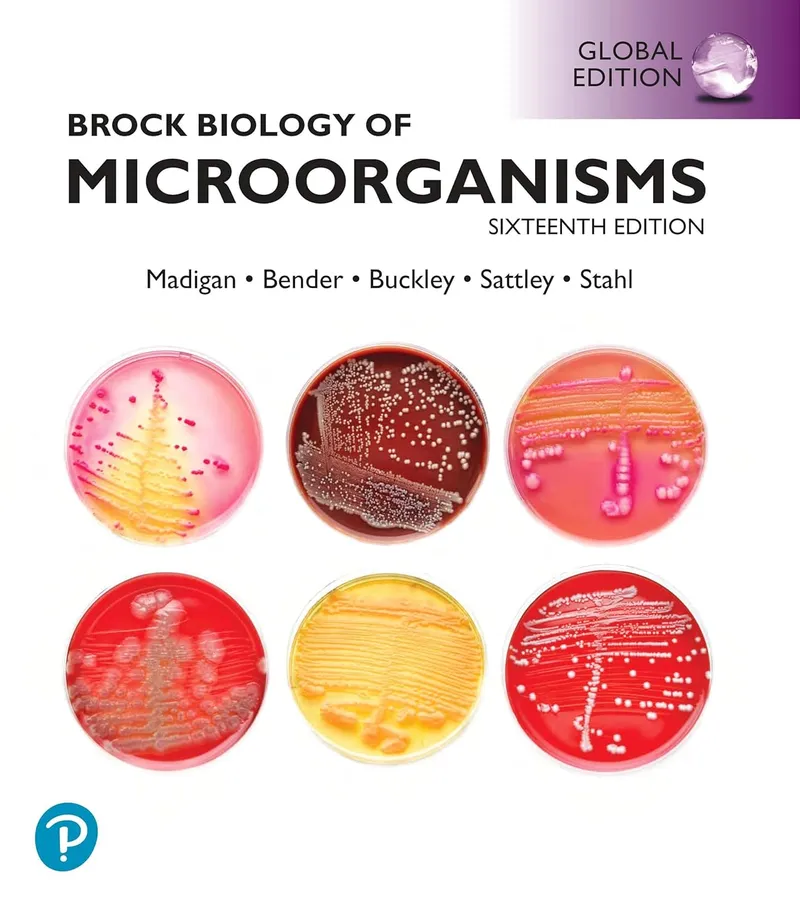

Brock Biology of Microorganisms, 16th Edition
Brock Biology of Microorganisms, 16th Edition is a comprehensive textbook that explores the biology, diversity, ecology, genetics, and biotechnology of microorganisms. Published by Pearson, this edition provides a broad introduction to microbiology while connecting fundamental microbial processes with their roles in the environment, human health, and biotechnology.
With 1,128 pages, the 16th edition is designed as a detailed resource for students studying microbiology and related biological sciences. It is particularly useful for understanding microorganisms not only as causes of disease, but also as essential organisms that influence ecosystems, nutrient cycles, industry, and scientific research.
About Brock Biology of Microorganisms
Microorganisms are among the most diverse and influential forms of life on Earth. They inhabit virtually every environment, from oceans and soils to extreme environments and the human body.
Brock Biology of Microorganisms introduces the fundamental principles needed to understand this microbial world. The book explores microbial structure and function while also examining how microorganisms interact with their environments and other organisms.
This broader perspective makes microbiology more than the study of infectious diseases. It reveals how microorganisms contribute to the functioning of ecosystems and support many processes that are important to life and human society.
Microbial Diversity
The microbial world contains an extraordinary range of organisms with different structures, metabolic pathways, and lifestyles.
Understanding microbial diversity helps explain how microorganisms have adapted to environments ranging from nutrient-rich habitats to extreme conditions.
The book introduces major microbial groups and examines the biological characteristics that distinguish them, providing a foundation for studying microbial evolution, ecology, and physiology.
Microbial Structure and Function
Understanding the structure of a microorganism is essential for understanding how it functions.
Students explore topics such as cellular organization, membranes, transport, energy production, and other fundamental processes that allow microorganisms to grow and reproduce.
These principles provide the foundation for understanding more advanced subjects such as microbial metabolism, genetics, biotechnology, and pathogenesis.
Microbial Metabolism
Microorganisms display remarkable metabolic diversity.
Different microorganisms can obtain energy from a wide range of chemical and environmental sources. Their metabolic capabilities allow them to survive in habitats where many other organisms could not.
Studying microbial metabolism also helps explain important ecological processes such as nutrient cycling and decomposition.
Microbial Genetics
Genetic information controls many of the characteristics that allow microorganisms to survive and adapt.
The study of microbial genetics introduces DNA replication, gene expression, mutation, genetic exchange, and regulation of cellular processes.
These concepts are fundamental to modern microbiology and provide a foundation for understanding microbial evolution, biotechnology, and antimicrobial resistance.
Microbial Growth
Microorganisms reproduce and grow under specific environmental conditions.
Factors such as temperature, pH, nutrient availability, oxygen concentration, and water availability can influence microbial growth.
Understanding these factors is important in many fields, including laboratory microbiology, food science, environmental microbiology, and biotechnology.
Microbial Ecology
Microorganisms are essential components of ecosystems.
They participate in processes that recycle elements such as carbon, nitrogen, sulfur, and phosphorus. Microbial communities can influence soil fertility, aquatic environments, decomposition, and global biogeochemical cycles.
Studying microbial ecology demonstrates how microorganisms contribute to the functioning of the planet.
Microorganisms and the Environment
Microorganisms can survive in an enormous range of environments.
Some thrive in ordinary habitats such as soil and freshwater, while others have adapted to extreme temperatures, acidity, salinity, pressure, or limited nutrient availability.
These organisms provide valuable examples of biological adaptation and have also attracted interest in biotechnology and the search for useful enzymes and biochemical processes.
Microbiology and Human Health
Although many microorganisms are harmless or beneficial, some can cause infectious diseases.
The study of microbial pathogenesis examines how particular microorganisms interact with hosts and how infections develop.
Understanding microbial biology also helps explain the human microbiome, in which large communities of microorganisms live on and within the human body.
Viruses
Viruses represent an important area of microbiological study.
Unlike cellular microorganisms, viruses depend on host cells for replication. Their unique biology provides important insights into molecular biology, genetics, evolution, and infectious disease.
The study of viruses also contributes to areas such as vaccine development, antiviral research, and biotechnology.
Microbial Biotechnology
Microorganisms have become valuable tools in modern biotechnology.
Their metabolic and genetic capabilities can be used to produce useful compounds, enzymes, pharmaceuticals, foods, and industrial products.
Microbial biotechnology demonstrates how fundamental knowledge of microorganisms can be transformed into practical applications.
Industrial and Applied Microbiology
Microorganisms have been used by humans for thousands of years, particularly in fermentation and food production.
Modern microbiology has expanded these applications into areas such as pharmaceutical manufacturing, environmental biotechnology, agriculture, biofuels, and industrial bioprocessing.
Understanding microbial physiology allows researchers to select and modify microorganisms for specific purposes.
Microbial Evolution
Microorganisms provide excellent systems for studying evolution.
Their relatively rapid reproduction and genetic adaptability allow populations to respond to environmental changes. Mutation, natural selection, genetic exchange, and other evolutionary processes can produce significant changes in microbial populations.
This perspective is particularly important when studying antimicrobial resistance and the emergence of new microbial characteristics.
Who Is This Book For?
Brock Biology of Microorganisms, 16th Edition can be useful for:
- Microbiology students
- Biology students
- Biochemistry students
- Biotechnology students
- Biomedical science students
- Environmental science students
- Pre-medical students
- Graduate students beginning microbiology
- Researchers reviewing fundamental microbiology
- Students preparing for microbiology examinations
Its broad coverage makes it suitable for university-level microbiology courses and as a reference for readers exploring different areas of microbial science.
A Broad Introduction to Microbiology
One of the strengths of Brock Biology of Microorganisms is its broad view of microbiology.
Rather than focusing exclusively on pathogenic microorganisms, the textbook examines microbes as biological organisms that influence health, ecosystems, evolution, biotechnology, agriculture, and industry.
This approach helps students appreciate why microbiology is connected to so many areas of modern science.
Final Thoughts
Brock Biology of Microorganisms, 16th Edition provides an extensive introduction to the biology of microorganisms and their importance in the natural and human-made world.
The textbook covers major areas including microbial diversity, cellular structure, metabolism, growth, genetics, evolution, microbial ecology, viruses, human health, environmental microbiology, and biotechnology.
With 1,128 pages, the 16th edition offers substantial depth for university-level study while providing a broad framework for understanding the microbial world.
For students studying microbiology, biology, biotechnology, environmental science, biomedical science, and related disciplines, Brock Biology of Microorganisms can serve as a comprehensive academic resource for exploring how microorganisms function, evolve, interact with their environments, and contribute to human society.
Book Information
Title: Brock Biology of Microorganisms
Edition: 16th Edition
Publisher: Pearson
Publication Date: July 1, 2021
Language: English
Print Length: 1,128 pages
ISBN-10: 1292404795
ISBN-13: 978-1292404790
Subject: Microbiology / Microbial Biology / Biotechnology / Environmental Microbiology / Biology
Brock Biology of Microorganisms, 16th Edition offers a comprehensive foundation in microbial biology, genetics, metabolism, ecology, evolution, biotechnology, and microbial interactions with humans and the environment, making it a valuable resource for students and readers interested in the diverse world of microorganisms.
Support the Creators!
If you enjoy this book, please consider supporting the author and publisher by purchasing a physical or digital copy. Buying official copies ensures authors can keep writing great books.