
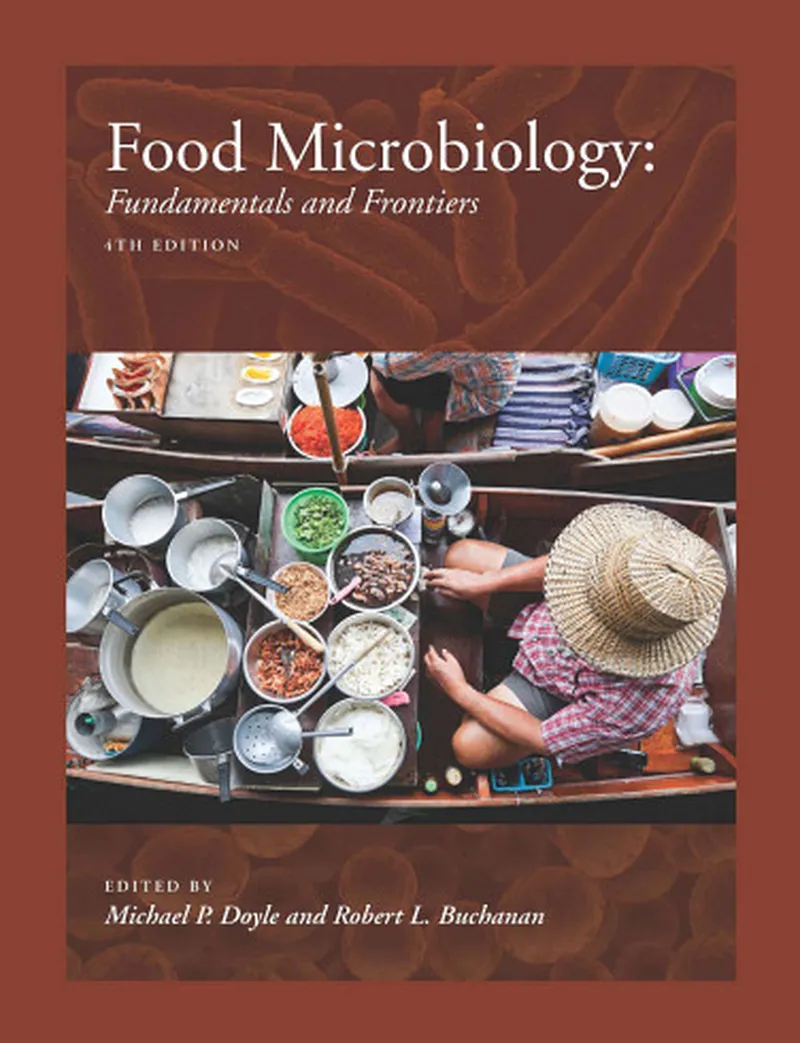

Food Microbiology: Fundamentals and Frontiers, 4th Edition
Food Microbiology: Fundamentals and Frontiers, 4th Edition is a comprehensive reference exploring the microorganisms associated with food, food production, food safety, and preservation. Published by the American Society for Microbiology, the book brings together fundamental microbiology with practical and emerging topics in food science.
The book examines both the beneficial and harmful roles of microorganisms in food systems. It covers foodborne pathogens, spoilage organisms, fermentation, preservation, microbial ecology, and food safety, making it a useful resource for students and professionals working at the intersection of microbiology and food science.
About Food Microbiology
Microorganisms are closely connected with the foods people produce and consume.
Some microorganisms are essential for fermentation and the production of foods such as cheese, yogurt, bread, and fermented vegetables. Others can cause food spoilage or foodborne illness.
Food Microbiology: Fundamentals and Frontiers explores these different roles and explains how microorganisms interact with food environments, processing methods, and consumers.
Foodborne Microorganisms
Food can provide an environment in which microorganisms grow and multiply.
Understanding which microorganisms can survive in particular foods is essential for maintaining food quality and safety. Factors such as temperature, moisture, acidity, oxygen availability, and nutrient composition can influence microbial growth.
The book provides a foundation for understanding these relationships and their importance in food microbiology.
Foodborne Pathogens
Foodborne pathogens are microorganisms capable of causing illness when contaminated food or beverages are consumed.
Understanding their sources, survival mechanisms, growth conditions, transmission, and control is an important part of food safety.
Food microbiology therefore connects laboratory science with public health, helping researchers and food professionals develop strategies for reducing the risk of foodborne disease.
Food Spoilage
Not all microorganisms associated with food cause disease.
Many microorganisms are responsible for undesirable changes in food, including changes in flavor, odor, texture, color, or appearance.
Understanding food spoilage helps food scientists determine how microorganisms grow and how preservation techniques can slow or prevent unwanted microbial activity.
Food Preservation
Food preservation aims to extend shelf life while maintaining food quality and safety.
A variety of approaches can influence microbial growth, including refrigeration, freezing, drying, heating, fermentation, chemical preservatives, and control of acidity or water availability.
Understanding the microbiological principles behind these techniques is essential for developing effective food preservation strategies.
Fermentation and Beneficial Microorganisms
Microorganisms are not only associated with food safety problems.
Many foods depend on microbial activity during production. Bacteria, yeasts, and other microorganisms can transform raw ingredients into products with distinctive flavors, textures, and nutritional characteristics.
Fermentation is one of the clearest examples of how microorganisms can be intentionally used to produce valuable foods and ingredients.
Microbial Ecology of Foods
Food represents a complex microbial environment.
Different microorganisms compete and interact with one another, while changes in temperature, acidity, moisture, oxygen, and other conditions can alter the microbial community.
Understanding food-associated microbial ecology helps explain why particular organisms dominate under certain conditions and how food processing can influence microbial populations.
Food Safety and Public Health
Food microbiology plays a major role in protecting public health.
Foodborne illnesses can affect individuals as well as large populations when contaminated products are distributed widely. Microbiological testing, sanitation, appropriate processing, storage, and monitoring are therefore important components of food safety systems.
Understanding the microorganisms involved allows food scientists and public-health professionals to develop better strategies for preventing contamination and reducing risks.
Modern Food Microbiology
Food microbiology continues to evolve as new technologies become available.
Modern approaches can provide more detailed information about microbial populations, contamination sources, foodborne pathogens, and microbial interactions.
These developments are helping researchers better understand food-associated microorganisms and improve methods for detecting and controlling them.
Who Is This Book For?
Food Microbiology: Fundamentals and Frontiers, 4th Edition can be useful for:
- Food science students
- Microbiology students
- Food microbiology students
- Biotechnology students
- Nutrition and health-science students
- Food safety professionals
- Microbiology researchers
- Food industry professionals
- Public-health professionals
- Students studying foodborne diseases
It can also serve as a reference for readers interested in the relationship between microorganisms, food production, and human health.
Why Study Food Microbiology?
Food microbiology brings together several scientific disciplines.
Understanding food-associated microorganisms requires knowledge of microbiology, microbial physiology, ecology, chemistry, food processing, public health, and biotechnology.
Studying these connections helps explain why some foods have long shelf lives while others spoil quickly, why certain foods require refrigeration, how fermentation works, and how foodborne infections can be prevented.
Final Thoughts
Food Microbiology: Fundamentals and Frontiers, 4th Edition provides a broad examination of microorganisms associated with food and their importance to food quality, food safety, preservation, and production.
The book covers important areas including foodborne pathogens, microbial spoilage, food preservation, fermentation, microbial ecology, food safety, and emerging developments in food microbiology.
By combining fundamental principles with practical and modern perspectives, it provides a useful foundation for understanding the complex relationship between microorganisms and food.
For students and professionals in food science, microbiology, biotechnology, public health, and related fields, this book can serve as a valuable reference for exploring how microorganisms influence the safety, quality, production, and preservation of food.
Book Information
Title: Food Microbiology: Fundamentals and Frontiers
Edition: 4th Edition
Publisher: American Society for Microbiology
Language: English
ASIN: B00E6TJ0J8
Subject: Food Microbiology / Food Safety / Microbiology / Food Science / Biotechnology
Food Microbiology: Fundamentals and Frontiers, 4th Edition provides a comprehensive foundation for understanding foodborne microorganisms, microbial spoilage, fermentation, food preservation, microbial ecology, and food safety, making it a useful academic resource for students and professionals interested in the microbiology of food.
Support the Creators!
If you enjoy this book, please consider supporting the author and publisher by purchasing a physical or digital copy. Buying official copies ensures authors can keep writing great books.