
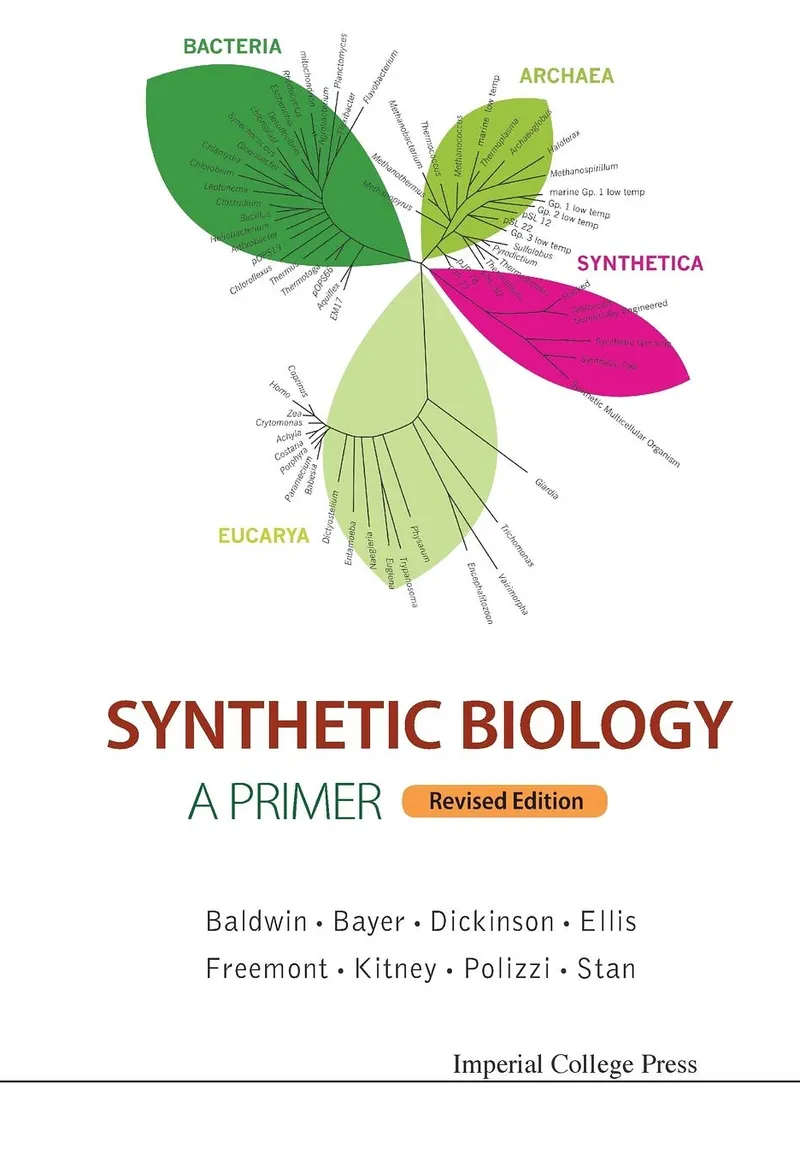

Synthetic Biology: A Primer, Revised Edition
Synthetic Biology: A Primer by Geoff Baldwin is a concise introduction to the rapidly developing field of synthetic biology, exploring how biological systems can be understood, redesigned, and engineered for useful purposes. Published by Imperial College Press (ICP), the book provides an accessible starting point for readers interested in the intersection of biology, engineering, genetics, and biotechnology.
With 194 pages, this revised edition offers a focused overview of synthetic biology without the extensive length of a specialized research reference. It can be particularly useful for students and readers who want to understand the basic ideas behind the design and engineering of biological systems.
About Synthetic Biology
Synthetic biology combines principles from biology and engineering to develop or modify biological systems with specific functions.
Rather than studying organisms only as naturally occurring systems, synthetic biology considers how biological components can be characterized, assembled, redesigned, and used to create new biological functions.
The field draws on concepts from molecular biology, genetics, microbiology, biochemistry, biotechnology, and engineering.
Biological Systems as Engineering Platforms
A central idea in synthetic biology is that biological components can be studied and combined in systematic ways.
Genes, regulatory elements, proteins, and cellular pathways can function as components within larger biological systems. Understanding how these components interact allows researchers to design systems with particular characteristics or behaviors.
This engineering perspective distinguishes synthetic biology from many traditional approaches to biological research.
Genetic Engineering and DNA
DNA provides the information required to build and regulate biological systems.
Synthetic biology builds upon genetic engineering by applying increasingly systematic approaches to DNA design and biological modification.
Understanding genes, gene expression, genetic circuits, and regulation provides an important foundation for exploring how biological systems can be redesigned.
Microorganisms and Synthetic Biology
Microorganisms are particularly important in synthetic biology because they can serve as relatively manageable biological platforms for engineering.
Bacteria and other microorganisms can be modified to produce useful compounds, perform specific biological functions, or serve as experimental systems for studying biological processes.
These applications connect synthetic biology with microbiology, industrial biotechnology, and pharmaceutical research.
Biological Design and Engineering
Synthetic biology introduces an engineering-oriented way of thinking about biological systems.
Researchers may begin with a desired biological function and then consider which genetic components, regulatory mechanisms, and cellular processes are needed to achieve it.
This approach encourages concepts such as design, construction, testing, measurement, and optimization.
Applications of Synthetic Biology
Synthetic biology has potential applications across many areas of science and technology.
Potential applications include:
- Biotechnology
- Pharmaceutical research
- Industrial biomanufacturing
- Microbial engineering
- Environmental biotechnology
- Bio-based production
- Synthetic genetic circuits
- Biological research
The field continues to develop as researchers gain greater control over biological systems and improve their ability to design biological functions.
Synthetic Biology and Biotechnology
Synthetic biology builds upon many established biotechnology techniques while introducing a more systematic design philosophy.
Traditional biotechnology often makes use of naturally occurring biological capabilities. Synthetic biology can go further by modifying existing systems or constructing new combinations of biological components.
This creates opportunities for developing microorganisms and biological systems with specialized functions.
Challenges and Considerations
Engineering biological systems is considerably more complex than engineering many conventional machines.
Biological components interact with one another and with their environments in ways that can be difficult to predict. A genetic modification may produce unexpected effects because biological systems are interconnected.
Consequently, synthetic biology requires careful experimentation, characterization, testing, and refinement.
The field also raises important questions about the responsible development and application of new biological technologies.
Who Is This Book For?
Synthetic Biology: A Primer can be useful for:
- Biology students
- Microbiology students
- Biotechnology students
- Biochemistry students
- Molecular biology students
- Bioengineering students
- Graduate students beginning synthetic biology
- Researchers entering the field
- Readers interested in modern biotechnology
Its concise format makes it particularly suitable as an introductory resource before moving into more specialized synthetic biology literature.
Why Study Synthetic Biology?
Synthetic biology represents an important change in the way scientists think about biological systems.
Instead of simply asking how biological systems work, researchers can also ask how those systems might be redesigned, modified, or engineered to perform useful functions.
This perspective connects fundamental biological research with practical applications in biotechnology and medicine.
Final Thoughts
Synthetic Biology: A Primer by Geoff Baldwin provides a concise introduction to the principles and ideas behind synthetic biology.
The book explores concepts related to genetic engineering, biological design, DNA, microbial systems, biotechnology, and the engineering of biological functions, while providing context for understanding the development of this rapidly evolving field.
With 194 pages, the revised edition is a relatively accessible starting point for readers who want to understand the foundations of synthetic biology without beginning with a highly specialized reference work.
For students and readers interested in microbiology, molecular biology, biotechnology, biochemistry, and bioengineering, Synthetic Biology: A Primer offers a useful introduction to the concepts behind designing and engineering biological systems.
Book Information
Title: Synthetic Biology: A Primer
Author: Geoff Baldwin
Edition: Revised Edition
Publisher: Imperial College Press (ICP)
Publication Date: August 24, 2015
Language: English
Print Length: 194 pages
ISBN-10: 1783268794
ISBN-13: 978-1783268795
Subject: Synthetic Biology / Biotechnology / Molecular Biology / Genetic Engineering / Microbiology
Synthetic Biology: A Primer provides an accessible introduction to synthetic biology, genetic engineering, biological design, microbial systems, and biotechnology, making it a useful starting point for students and readers interested in how biological systems can be redesigned and engineered for new applications.
Support the Creators!
If you enjoy this book, please consider supporting the author and publisher by purchasing a physical or digital copy. Buying official copies ensures authors can keep writing great books.