
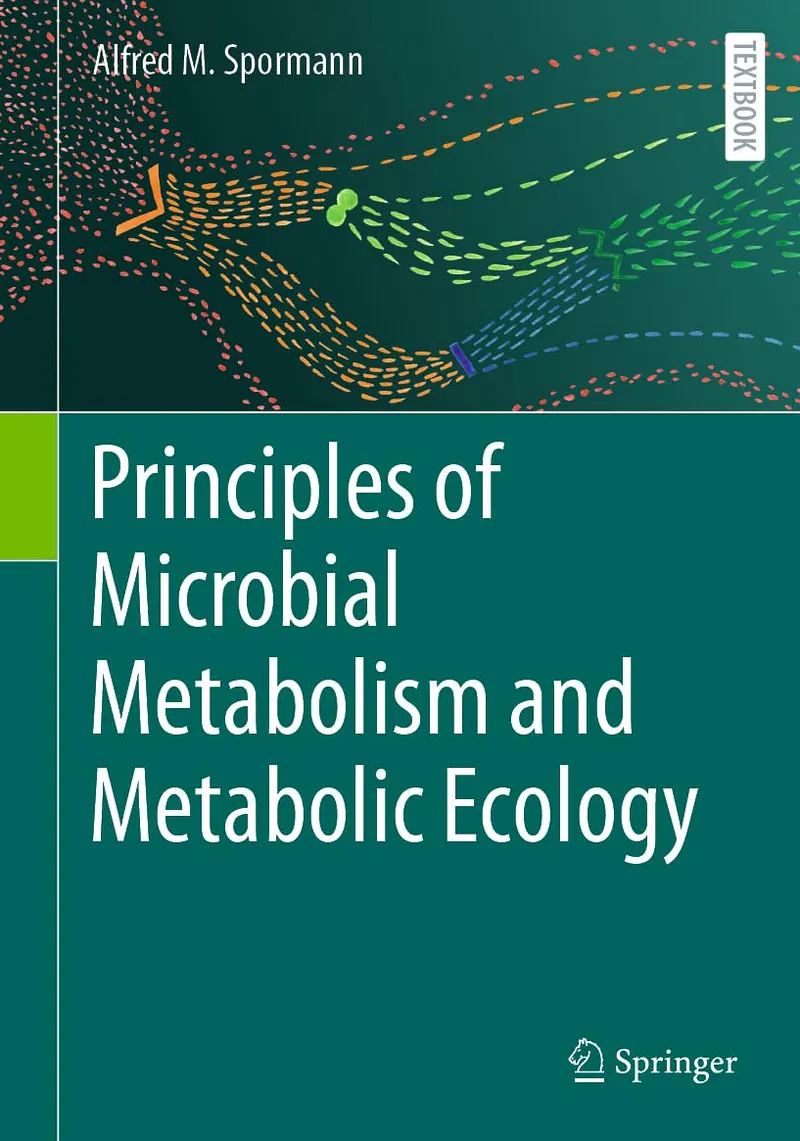

Principles of Microbial Metabolism and Metabolic Ecology
Principles of Microbial Metabolism and Metabolic Ecology by Alfred M. Spormann is an advanced microbiology resource exploring how microorganisms obtain energy, process nutrients, and interact with their surrounding environments. Published by Springer, the book connects fundamental principles of microbial metabolism with the broader ecological roles of microorganisms.
With 355 pages, this first edition provides a focused introduction to the relationship between microbial biochemical processes and the functioning of microbial communities and ecosystems. It is particularly relevant to students and researchers interested in microbial physiology, environmental microbiology, biogeochemistry, and microbial ecology.
About Principles of Microbial Metabolism and Metabolic Ecology
Microorganisms have extraordinary metabolic diversity. They can use a wide range of organic and inorganic compounds as sources of energy and nutrients, allowing them to survive in environments ranging from soils and oceans to sediments and host-associated ecosystems.
Microbial metabolism is therefore not only a cellular process but also an important driver of ecological and environmental change.
This book explores how metabolic activities at the cellular level influence interactions between microorganisms and contribute to larger ecological processes.
Microbial Metabolism
Microbial metabolism consists of the chemical reactions that allow microorganisms to obtain energy, synthesize cellular components, grow, and maintain their biological functions.
Different microorganisms use different metabolic strategies depending on the resources and environmental conditions available to them.
Understanding these pathways is essential for explaining microbial diversity and the ability of microorganisms to occupy a wide range of ecological niches.
Energy Conservation
Energy conservation is fundamental to microbial survival.
Microorganisms can obtain energy through diverse processes, including respiration, fermentation, and other forms of energy metabolism. These strategies allow microbial populations to remain active under very different environmental conditions.
The study of microbial energy metabolism also helps explain why particular microorganisms dominate particular habitats.
Metabolic Diversity
One of the most remarkable characteristics of microorganisms is their metabolic flexibility.
Microbes can use different electron donors and acceptors and can transform a wide variety of chemical compounds. This diversity allows microbial communities to perform biochemical transformations that are essential for natural ecosystems.
Such metabolic capabilities are also important in biotechnology and environmental applications.
Microbial Interactions
Microorganisms rarely exist in isolation.
Different microbial species can compete for resources, cooperate through metabolic exchanges, or depend on the products generated by other organisms.
These interactions can shape the structure and function of microbial communities and influence the overall chemical environment in which they live.
Metabolic Ecology
Metabolic ecology examines how microbial metabolic activities influence and are influenced by their environments.
A microorganism’s metabolism can change the availability of nutrients and chemical compounds, which in turn affects other organisms within the community.
This creates interconnected networks of microbial activity that can influence entire ecosystems.
Biogeochemical Cycles
Microorganisms play essential roles in the cycling of elements throughout the environment.
Their metabolic activities contribute to transformations involving carbon, nitrogen, sulfur, and other elements.
These processes influence soil, freshwater, marine environments, sediments, and the global movement of important chemical compounds.
Understanding microbial metabolism is therefore essential for understanding environmental and biogeochemical processes.
Microbial Communities and Ecosystems
Microbial communities can contain many different organisms with complementary metabolic capabilities.
One microorganism may produce a compound that another uses as a nutrient or energy source. These interactions can create complex metabolic networks that allow communities to perform processes that individual organisms could not accomplish alone.
This community-level perspective is an important part of modern microbial ecology.
Environmental and Biotechnological Applications
Knowledge of microbial metabolism has practical applications in environmental science and biotechnology.
Microorganisms can be used for processes such as wastewater treatment, bioremediation, nutrient recovery, and the transformation of environmental pollutants.
Understanding their metabolic capabilities can help researchers design biological systems for addressing environmental and industrial challenges.
Who Is This Book For?
Principles of Microbial Metabolism and Metabolic Ecology can be useful for:
- Microbiology students
- Microbial ecology students
- Environmental microbiology students
- Biochemistry students
- Biotechnology students
- Graduate students
- Researchers studying microbial metabolism
- Researchers studying microbial communities
- Environmental scientists
- Readers interested in biogeochemistry
The book is particularly suitable for readers who already have a basic foundation in microbiology or biochemistry and want to explore microbial metabolism from an ecological perspective.
Why Study Microbial Metabolism and Ecology?
Microbial metabolism provides a bridge between cellular biology and environmental science.
At the cellular level, microorganisms use metabolic pathways to obtain energy and build cellular components. At the ecological level, those same reactions influence nutrient availability, chemical transformations, microbial interactions, and ecosystem processes.
Understanding this connection helps explain why microorganisms have such a significant influence on the natural world.
Final Thoughts
Principles of Microbial Metabolism and Metabolic Ecology by Alfred M. Spormann provides a focused examination of the relationship between microbial metabolism and ecological processes.
The book explores important topics including microbial energy metabolism, metabolic diversity, microbial interactions, metabolic ecology, biogeochemical cycles, microbial communities, and environmental applications.
With 355 pages, it offers a relatively concise resource for readers seeking to understand how microbial biochemical processes operate within broader ecological systems.
For students and researchers in microbiology, microbial ecology, environmental science, biochemistry, biotechnology, and related fields, this book provides a useful perspective on how microorganisms transform their environments and how microbial metabolism contributes to the functioning of ecosystems.
Book Information
Title: Principles of Microbial Metabolism and Metabolic Ecology
Author: Alfred M. Spormann
Edition: 1st Edition (2023)
Publisher: Springer
Publication Date: January 1, 2024
Language: English
Print Length: 355 pages
ISBN-10: 3031282175
ISBN-13: 978-3031282171
Subject: Microbial Metabolism / Microbial Ecology / Microbial Physiology / Environmental Microbiology / Biochemistry
Principles of Microbial Metabolism and Metabolic Ecology provides a modern perspective on microbial metabolism, energy conservation, metabolic diversity, microbial interactions, biogeochemical cycles, and microbial communities, making it a valuable resource for readers interested in the connection between microbial physiology and environmental processes.
Support the Creators!
If you enjoy this book, please consider supporting the author and publisher by purchasing a physical or digital copy. Buying official copies ensures authors can keep writing great books.