
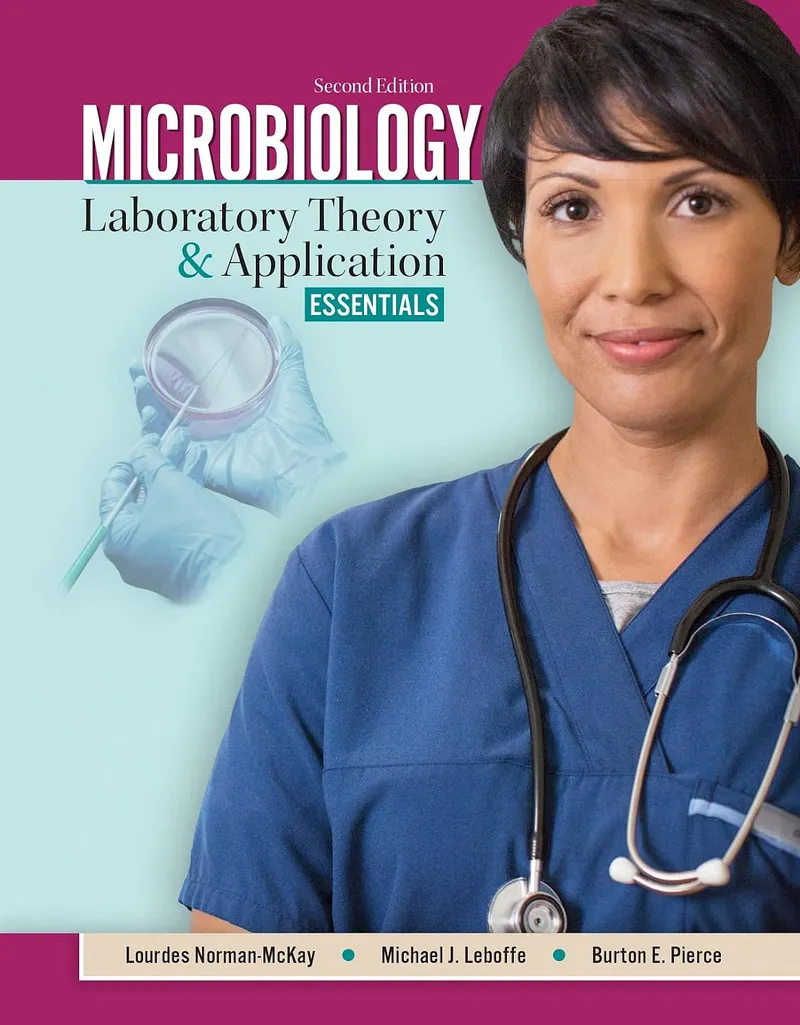

Microbiology: Laboratory Theory and Application, Essentials, 2nd Edition
Microbiology: Laboratory Theory and Application, Essentials, 2nd Edition is a practical microbiology textbook designed to help students connect fundamental microbiological concepts with laboratory techniques and applications. Published by Morton Publishing Company, the book provides a focused introduction to the methods used to observe, culture, identify, and study microorganisms.
With 528 pages, this second edition is particularly useful for students taking introductory or laboratory-based microbiology courses.
About Microbiology: Laboratory Theory and Application
Laboratory work is an essential part of microbiology because microorganisms cannot be fully understood through theory alone.
Students need to learn how to safely handle microorganisms, prepare and examine specimens, grow microbial cultures, perform laboratory tests, and interpret experimental results.
This book connects microbiology theory with these practical laboratory skills, helping students understand not only what a laboratory technique does, but also why it is used.
Microbiology Laboratory Techniques
Microbiology laboratories use a wide range of techniques to examine microorganisms.
Students may encounter methods involving:
- Microscopy
- Staining
- Aseptic technique
- Culture methods
- Microbial isolation
- Biochemical testing
- Microbial identification
- Environmental microbiology
- Antimicrobial susceptibility testing
Learning these techniques provides an important foundation for further study in clinical, environmental, industrial, and research microbiology.
Aseptic Technique and Laboratory Safety
Proper laboratory technique is essential when working with microorganisms.
Aseptic procedures help prevent contamination of cultures, samples, equipment, and laboratory environments. At the same time, appropriate safety practices help protect students and laboratory personnel from unnecessary exposure to biological materials.
Developing these skills is one of the most important objectives of an introductory microbiology laboratory course.
Microscopy and Staining
Microscopy allows students to observe microorganisms that cannot be seen clearly with the unaided eye.
Staining techniques can make microbial structures more visible and can provide information useful for differentiating microorganisms.
These methods introduce students to the relationship between microbial structure and laboratory identification.
Culturing and Identifying Microorganisms
Growing microorganisms under controlled laboratory conditions allows students to observe their characteristics and perform identification tests.
Culture characteristics, microscopic appearance, biochemical reactions, and other laboratory observations can be combined to determine the identity or characteristics of an unknown microorganism.
This process introduces students to the reasoning used in microbiological identification.
Laboratory Theory and Practice
An important aspect of microbiology education is understanding the connection between laboratory observations and microbiological principles.
For example, microbial growth observed on a culture medium can be interpreted using knowledge of nutritional requirements, metabolism, environmental conditions, and microbial physiology.
Connecting experimental results with theory helps students develop a deeper understanding of microbiology.
Antimicrobial Susceptibility
Microbiology laboratories can also be used to examine how microorganisms respond to antimicrobial substances.
Testing microbial susceptibility provides information about whether particular antimicrobial agents are effective against an organism and introduces students to important concepts related to antimicrobial therapy and resistance.
Who Is This Book For?
Microbiology: Laboratory Theory and Application, Essentials can be useful for:
- Undergraduate microbiology students
- Biology students
- Medical laboratory students
- Nursing students
- Pharmacy students
- Biotechnology students
- Allied health students
- Students taking microbiology laboratory courses
- Students learning basic microbiological techniques
It is particularly suited to readers who want a practical introduction to microbiology laboratory work alongside their theoretical studies.
Why Study Microbiology Through Laboratory Work?
Laboratory exercises allow students to observe microbiological concepts directly.
Rather than simply learning about bacterial morphology, microbial growth, or biochemical characteristics from a textbook, students can perform experiments and interpret actual laboratory observations.
This hands-on approach can strengthen understanding and help develop essential scientific and laboratory skills.
Final Thoughts
Microbiology: Laboratory Theory and Application, Essentials, 2nd Edition provides a practical introduction to microbiology laboratory theory, techniques, and applications.
The book covers important areas including laboratory safety, aseptic technique, microscopy, staining, microbial culture, identification, biochemical testing, and antimicrobial susceptibility, helping students connect classroom concepts with laboratory practice.
With 528 pages, this second edition offers substantial material for students studying introductory microbiology and laboratory science.
For students in microbiology, biology, medical laboratory science, nursing, pharmacy, biotechnology, and allied health programs, this book can be a useful companion for developing both theoretical knowledge and practical laboratory skills.
Book Information
Title: Microbiology: Laboratory Theory and Application, Essentials
Edition: 2nd Edition
Publisher: Morton Publishing Company
Publication Date: January 1, 2022
Language: English
Print Length: 528 pages
ISBN-10: 1640434003
ISBN-13: 978-1640434004
ASIN: B0B3SHWRS6
Subject: Microbiology / Laboratory Techniques / Microbial Identification / Biology / Laboratory Science
Microbiology: Laboratory Theory and Application, Essentials, 2nd Edition provides a practical foundation in microbiology laboratory techniques, aseptic procedures, microscopy, staining, microbial culture, identification, and antimicrobial testing, making it a useful resource for students developing essential microbiology laboratory skills.
Support the Creators!
If you enjoy this book, please consider supporting the author and publisher by purchasing a physical or digital copy. Buying official copies ensures authors can keep writing great books.