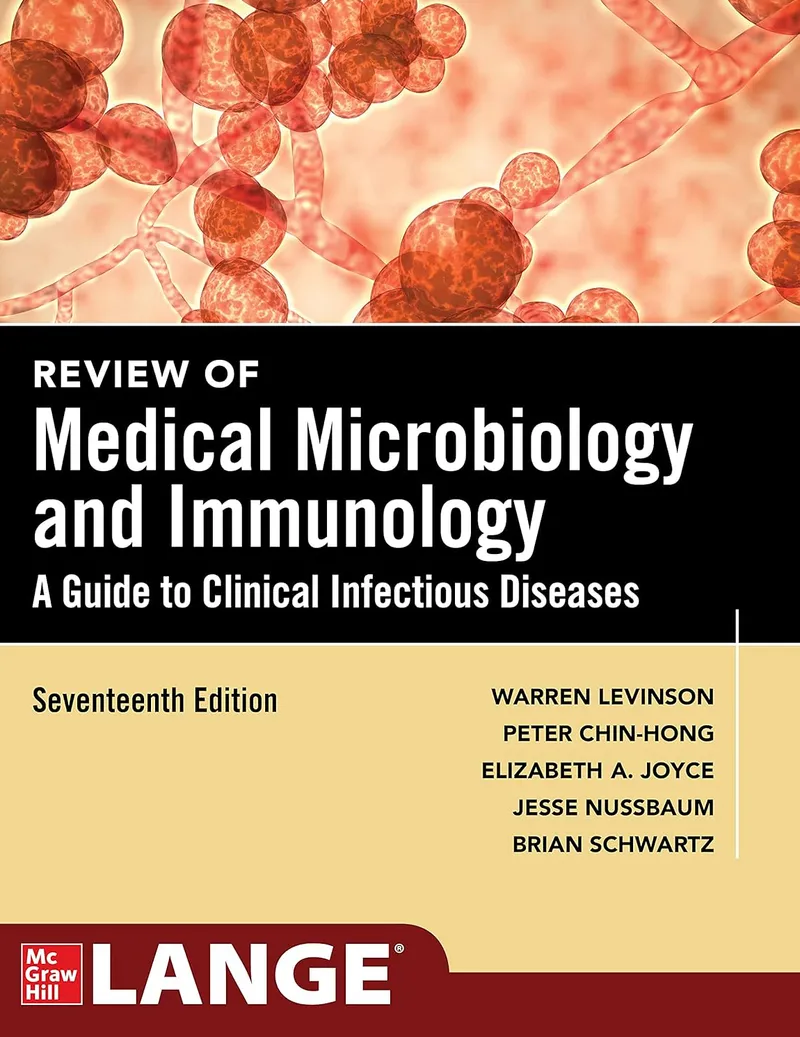

Review of Medical Microbiology and Immunology, 17th Edition
Review of Medical Microbiology and Immunology, 17th Edition is a concise study and review resource that brings together essential concepts from medical microbiology and immunology. Published by McGraw Hill / Medical, this edition is designed to help students organize and review important information about microorganisms, infectious diseases, host defenses, laboratory diagnosis, and antimicrobial therapy.
The book is particularly useful for students who want a focused resource for course review, examination preparation, and rapid revision.
About Review of Medical Microbiology and Immunology
Medical microbiology and immunology are closely connected subjects. Understanding an infectious disease requires knowledge of both the microorganism responsible for the infection and the body’s response to that microorganism.
This book brings these areas together, helping readers review the major organisms, diseases, immune mechanisms, and clinical principles encountered in medical education.
Medical Microbiology
Medical microbiology examines microorganisms that can affect human health, including bacteria, viruses, fungi, and parasites.
Important concepts include microbial structure, growth, pathogenicity, transmission, diagnosis, and treatment. Reviewing these concepts systematically can help students recognize the relationships between microorganisms and the diseases they cause.
Immunology
The immune system provides the body’s primary defense against infectious organisms.
Understanding innate and adaptive immunity, immune cells, antibodies, inflammation, and immune responses helps explain how the body recognizes and responds to pathogens.
Immunology is also important for understanding vaccination, hypersensitivity, autoimmune disorders, and immunodeficiency.
Infectious Diseases
Microorganisms can cause disease through a variety of mechanisms.
Students need to understand how pathogens enter the body, interact with host tissues, evade immune defenses, and produce disease.
Connecting individual microorganisms with their associated diseases makes microbiology easier to review and apply in clinical settings.
Laboratory Diagnosis
Microbiological diagnosis plays an important role in identifying infectious agents.
Depending on the organism and infection, laboratory investigation may involve:
- Microscopy
- Staining
- Culture
- Biochemical tests
- Antigen detection
- Serology
- Molecular diagnostics
- Antimicrobial susceptibility testing
Understanding the basic principles of these methods helps students interpret microbiological findings and connect laboratory information with clinical diagnosis.
Antimicrobial Therapy
Antimicrobial drugs are an essential part of managing many infectious diseases.
A basic understanding of antimicrobial mechanisms, susceptibility, and resistance helps students understand why particular treatments are used and why resistance can complicate infection management.
Antimicrobial resistance also highlights the importance of appropriate antimicrobial use and infection prevention.
A Review-Oriented Approach
The main strength of a review textbook is its ability to organize a large amount of information into a format that is easier to revisit.
Students can use a resource like this to reinforce material learned from lectures and larger textbooks, identify areas that require additional study, and review key concepts before examinations.
This makes it particularly useful during intensive revision periods.
Who Is This Book For?
Review of Medical Microbiology and Immunology can be useful for:
- Medical students
- Dental students
- Pharmacy students
- Nursing students
- Biomedical science students
- Microbiology students
- Healthcare students
- Students preparing for medical examinations
- Readers reviewing microbiology and immunology
It can serve as a supplementary resource alongside a more comprehensive medical microbiology textbook.
Why Review Microbiology and Immunology Together?
Microbiology and immunology are strongly interconnected.
The characteristics of a pathogen influence the type of immune response it triggers, while the host’s immune status can influence whether an infection develops and how severe it becomes.
Studying these subjects together helps students develop a more complete understanding of infectious disease.
Final Thoughts
Review of Medical Microbiology and Immunology, 17th Edition provides a focused way to review the essential principles of medical microbiology and immunology.
The book covers important areas including bacteria, viruses, fungi, parasites, infectious diseases, immune responses, laboratory diagnosis, antimicrobial therapy, and host-pathogen interactions.
Published in 2022, the 17th edition is particularly suited to students looking for a structured review resource that can complement lectures, detailed textbooks, and examination preparation.
For students in medicine, dentistry, pharmacy, nursing, microbiology, and related health sciences, this book can be a useful companion for consolidating knowledge and preparing for microbiology and immunology examinations.
Book Information
Title: Review of Medical Microbiology and Immunology
Edition: 17th Edition
Publisher: McGraw Hill / Medical
Publication Date: April 5, 2022
Language: English
ISBN-10: 9781264267095
ISBN-13: 978-1264267095
ASIN: B09H3NB6RL
Subject: Medical Microbiology / Immunology / Infectious Diseases / Medical Education / Examination Review
Review of Medical Microbiology and Immunology, 17th Edition provides a focused review of medical microbiology, immunology, infectious diseases, laboratory diagnosis, and antimicrobial therapy, making it a useful study companion for students preparing for healthcare courses and examinations.
Support the Creators!
If you enjoy this book, please consider supporting the author and publisher by purchasing a physical or digital copy. Buying official copies ensures authors can keep writing great books.