
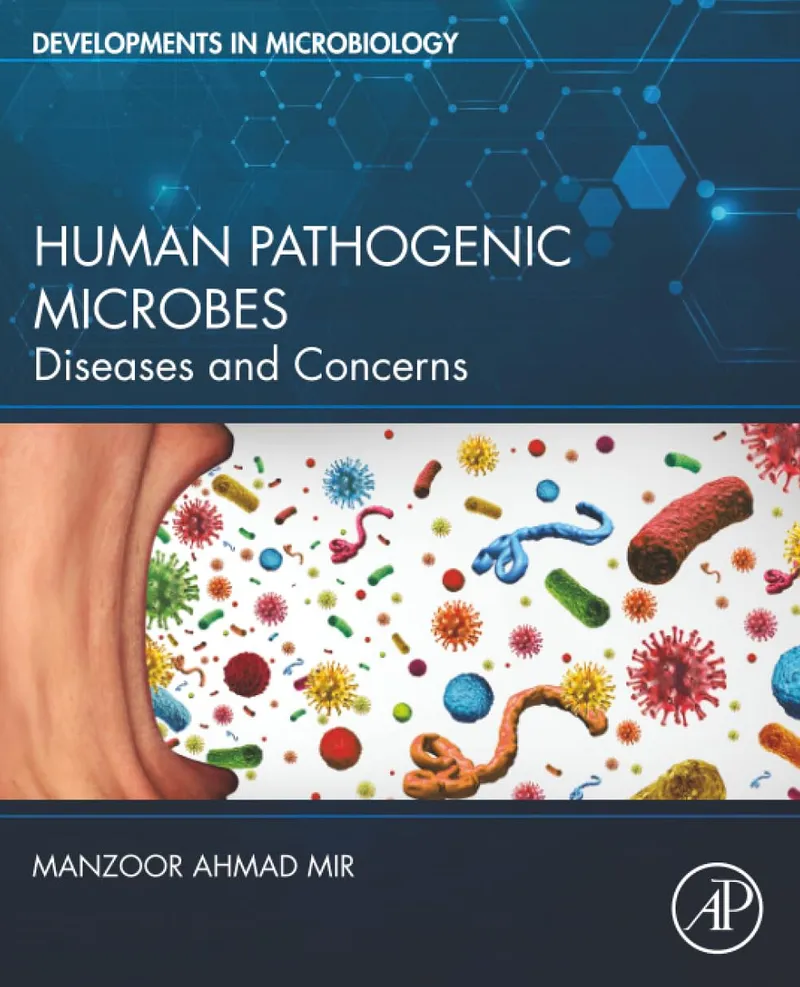

Human Pathogenic Microbes: Diseases and Concerns, 1st Edition
Human Pathogenic Microbes: Diseases and Concerns is a focused microbiology resource examining microorganisms that cause disease in humans and the challenges associated with infectious diseases. Published by Academic Press as part of the Developments in Microbiology series, the book explores the relationship between pathogenic microorganisms, human health, disease development, and emerging concerns in microbiology.
With 290 pages, this first edition provides a relatively concise resource for readers interested in medical microbiology, infectious diseases, microbial pathogenesis, and public health.
About Human Pathogenic Microbes
Human health is influenced by interactions with a vast range of microorganisms. While many microbes are harmless or beneficial, certain microorganisms can cause infections when they enter suitable hosts and overcome the body’s defense mechanisms.
Understanding pathogenic microbes requires knowledge of their biology, mechanisms of infection, transmission, and interactions with the human immune system.
This book examines these relationships while considering the broader concerns associated with infectious diseases.
Human Pathogens and Infectious Diseases
Pathogenic microorganisms can include bacteria, viruses, fungi, and parasites.
Each group has distinct biological characteristics and mechanisms for causing disease. Some pathogens invade tissues, others produce toxins, while some interfere with host cellular processes or evade immune defenses.
Studying these mechanisms helps explain why different microorganisms produce different types of disease.
Microbial Pathogenesis
Pathogenesis describes the processes through which microorganisms cause disease.
A pathogen may need to attach to host cells, enter tissues, acquire nutrients, avoid immune responses, and reproduce within the host.
Understanding these processes is an important part of medical microbiology because it helps connect the biological properties of microorganisms with clinical disease.
Host-Microbe Interactions
The outcome of an infection depends on both the pathogen and the host.
The immune system provides multiple defenses against microorganisms, while pathogens have evolved different strategies for surviving within their hosts.
These interactions can determine whether an organism is eliminated, establishes a persistent infection, or produces significant disease.
Transmission of Pathogens
The ability of a microorganism to spread between hosts is an important factor in infectious disease.
Pathogens can be transmitted through different routes, including direct contact, respiratory exposure, contaminated food and water, biological vectors, and environmental sources.
Understanding transmission pathways is essential for developing effective infection prevention and public health strategies.
Emerging Infectious Diseases
New infectious diseases and changing patterns of existing infections continue to present challenges to global health.
Changes in microbial populations, human behavior, environmental conditions, international travel, and interactions between humans and animals can influence the emergence and spread of infectious diseases.
Monitoring pathogenic microorganisms is therefore an important part of modern microbiological research.
Antimicrobial Resistance
One of the major concerns surrounding bacterial pathogens is antimicrobial resistance.
Microorganisms can acquire genetic changes that reduce their susceptibility to antimicrobial drugs, making some infections more difficult to treat.
Understanding the biology of resistance and the factors that contribute to its spread is essential for modern microbiology, medicine, and public health.
Pathogens and Public Health
The study of pathogenic microbes extends beyond individual patients.
Infectious diseases can affect communities and populations, making surveillance, prevention, vaccination, sanitation, infection control, and responsible antimicrobial use important components of public health.
Microbiology provides the scientific foundation for many of these strategies.
Modern Microbiology and Human Disease
Advances in molecular biology and microbiological technologies have significantly improved the ability to detect and study pathogenic microorganisms.
Modern approaches can help researchers investigate microbial genomes, identify mechanisms of virulence, track outbreaks, and understand how pathogens adapt to changing environments.
These developments continue to shape the field of medical and infectious disease microbiology.
Who Is This Book For?
Human Pathogenic Microbes: Diseases and Concerns can be useful for:
- Microbiology students
- Medical students
- Biomedical science students
- Biotechnology students
- Infectious disease students
- Public health students
- Medical laboratory students
- Researchers studying microbial pathogenesis
- Healthcare professionals
- Readers interested in infectious diseases
It can also serve as supplementary reading for students studying medical microbiology and microbial pathogenesis.
Why Study Human Pathogenic Microbes?
Understanding pathogenic microorganisms is fundamental to understanding infectious disease.
By studying how microbes enter the host, establish infection, evade immune defenses, cause tissue damage, and spread between individuals, students can develop a more complete picture of the biological processes behind infectious diseases.
This knowledge also supports the development of better diagnostic, preventive, and therapeutic approaches.
Final Thoughts
Human Pathogenic Microbes: Diseases and Concerns, 1st Edition provides a focused examination of microorganisms capable of causing disease in humans and the broader challenges associated with infectious diseases.
The book explores concepts related to human pathogens, microbial pathogenesis, host-microbe interactions, transmission, emerging infections, antimicrobial resistance, and public health.
With 290 pages, it offers a manageable resource for students and readers seeking to strengthen their understanding of pathogenic microorganisms without relying solely on large comprehensive microbiology textbooks.
For readers interested in medical microbiology, infectious diseases, microbial pathogenesis, biotechnology, biomedical science, and public health, this book provides useful background on the microorganisms responsible for human disease and the concerns they present.
Book Information
Title: Human Pathogenic Microbes: Diseases and Concerns
Series: Developments in Microbiology
Edition: 1st Edition
Publisher: Academic Press
Publication Date: March 31, 2022
Language: English
Print Length: 290 pages
ISBN-10: 0323961274
ISBN-13: 978-0323961271
Subject: Medical Microbiology / Pathogenic Microbes / Infectious Diseases / Microbial Pathogenesis / Public Health
Human Pathogenic Microbes: Diseases and Concerns explores human pathogens, microbial pathogenesis, host-microbe interactions, infectious disease transmission, emerging infections, and antimicrobial resistance, making it a useful resource for students and readers interested in the biological and public health challenges associated with pathogenic microorganisms.
Support the Creators!
If you enjoy this book, please consider supporting the author and publisher by purchasing a physical or digital copy. Buying official copies ensures authors can keep writing great books.