
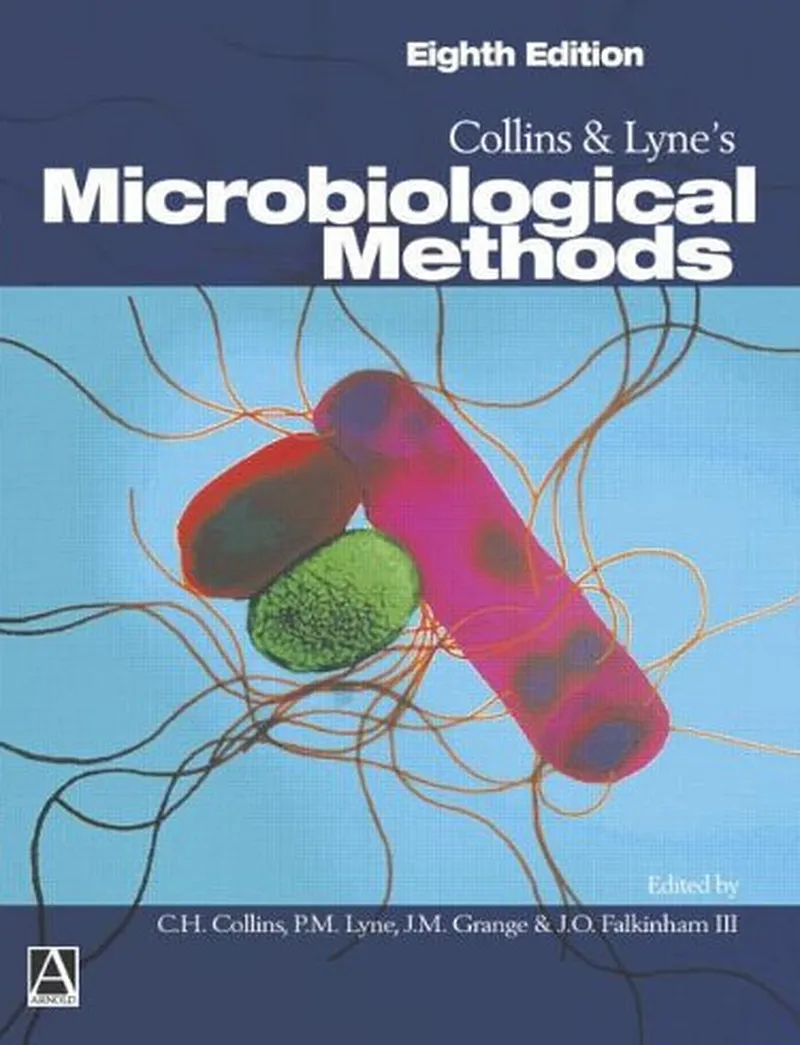

Collins and Lyne’s Microbiological Methods, 8th Edition
Collins and Lyne’s Microbiological Methods, 8th Edition is a comprehensive laboratory reference covering traditional, conventional, and modern techniques used in microbiology. Published by Hodder Education Publishers, this revised edition provides practical guidance on the isolation, identification, cultivation, and testing of bacteria and fungi of importance in medical microbiology, public health, and food hygiene.
The book combines detailed microbiological methods with information about culture media, bacterial and fungal identification, laboratory safety, and the handling of pathogenic microorganisms, making it a useful reference for students and laboratory professionals.
About the Book
This 8th edition continues the tradition of Collins and Lyne’s Microbiological Methods as a practical bench-oriented microbiology reference. It covers established microbiological procedures while also introducing more recent innovations and automated methods used in the laboratory.
In addition to describing laboratory methods, the book provides information about the media used to cultivate microorganisms and includes concise chapters covering individual bacteria and genera. The expanded author group also brings a North American perspective to the material.
Microbiological Methods and Techniques
The book provides guidance on a range of microbiological laboratory practices, including:
- Traditional and conventional microbiological techniques
- Modern and automated microbiological methods
- Isolation and identification of bacteria
- Examination and testing of fungi
- Culture media and the cultivation of microorganisms
- Methods relevant to medical microbiology
- Microbiological techniques for public health
- Methods used in food hygiene
- Identification of individual bacteria and genera
- Laboratory handling of pathogenic microorganisms
These topics provide readers with practical background for understanding how microorganisms are cultivated, isolated, identified, and examined in microbiological laboratories.
Culture Media and Microbial Identification
An important component of the book is its coverage of the media used to cultivate bacteria and other microorganisms. Understanding culture media is an essential part of conventional microbiology because appropriate media can support the growth and differentiation of microorganisms during laboratory investigation.
The book also includes succinct chapters on individual bacteria and genera, helping readers connect specific microorganisms with the methods used for their laboratory study.
Medical, Public Health, and Food Microbiology
The techniques discussed in Collins and Lyne’s Microbiological Methods have applications across several areas of microbiology. The book focuses particularly on microorganisms that are important in medical practice, public health, and food hygiene.
This broad scope makes the text relevant to readers who need to understand microbiological methods in different laboratory and applied settings.
Laboratory Safety and Pathogenic Microorganisms
The 8th edition also addresses the safe handling of pathogenic microorganisms and includes discussion of legal issues associated with laboratory work involving potentially harmful organisms.
This aspect of the book reinforces the importance of appropriate laboratory practices when working with microorganisms that may present risks to laboratory personnel or the wider community.
Who Should Use This Book?
This microbiology reference may be useful for:
- Students studying microbiology
- Medical microbiology students
- Clinical laboratory science students
- Laboratory technicians and professionals
- Students studying public health microbiology
- Food microbiology and food hygiene students
- Researchers working with bacterial and fungal microorganisms
- Readers seeking a practical microbiological methods reference
Final Thoughts
Collins and Lyne’s Microbiological Methods, 8th Edition provides a broad practical reference for understanding the laboratory methods used to isolate, cultivate, identify, and test bacteria and fungi. Its combination of conventional techniques, newer methods, culture media, organism-specific information, and laboratory safety makes it relevant to both microbiology education and laboratory practice.
For students and laboratory professionals looking for a practical resource covering microbiological methods, culture media, bacterial and fungal identification, and safe laboratory handling of pathogenic microorganisms, this book offers a comprehensive reference.
Book Information
Title: Collins and Lyne’s Microbiological Methods, 8th Edition
Publisher: Hodder Education Publishers
Publication Date: May 27, 2004
Edition: 8th
Language: English
Print Length: 480 pages
ISBN-10: 0340808969
ISBN-13: 978-0340808962
Subjects: Microbiology / Microbiological Methods / Medical Microbiology / Public Health Microbiology / Food Hygiene / Bacteriology / Mycology / Laboratory Techniques
Collins and Lyne’s Microbiological Methods, 8th Edition is a practical microbiology reference for students and laboratory professionals seeking guidance on conventional and modern microbiological techniques, culture media, microbial identification, and the safe handling of pathogenic microorganisms.
Support the Creators!
If you enjoy this book, please consider supporting the author and publisher by purchasing a physical or digital copy. Buying official copies ensures authors can keep writing great books.