
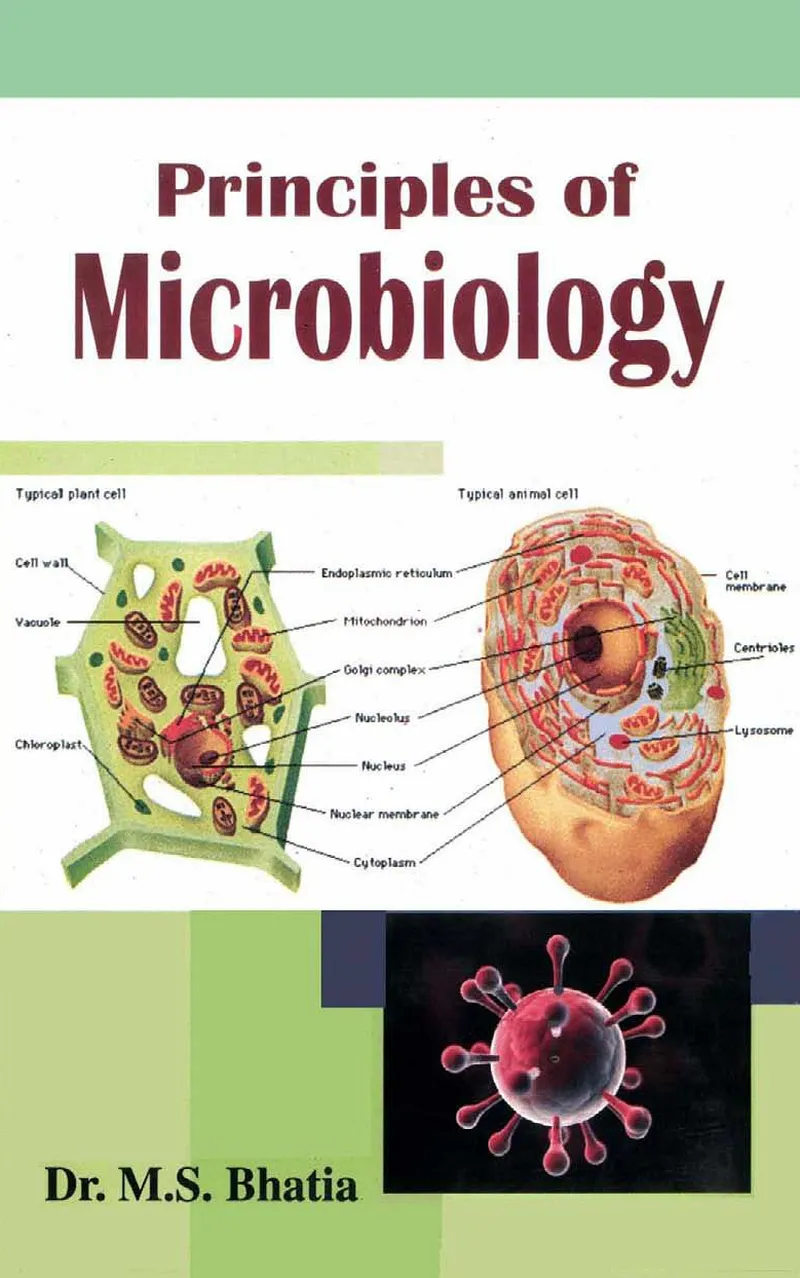

Principles of Microbiology – M. S. Bhatia
Principles of Microbiology by M. S. Bhatia is an academic textbook designed to introduce students to the fundamental concepts of microbiology and the microorganisms that influence health, the environment, and biological processes. Published by Swastik Publishers & Distributors, the book provides a concise foundation for understanding the basic principles and major areas of microbiology.
About the Book
The book presents microbiology from a foundational perspective, making it useful for students who are beginning their study of microorganisms and microbial processes. It introduces important concepts related to microorganisms and provides a basis for understanding their characteristics, activities, and significance in different biological contexts.
With 283 pages, Principles of Microbiology offers a relatively compact treatment of the subject, making it suitable as a supporting textbook for microbiology courses and for students who need a straightforward introduction to the discipline.
Fundamentals of Microbiology
Understanding the basic principles of microbiology is essential for studying microorganisms and their interactions with living systems. The book provides students with a foundation for progressing to more specialized areas such as medical microbiology, environmental microbiology, industrial microbiology, and applied microbiology.
The concise format can also make the text useful for reviewing fundamental concepts and building the background knowledge needed for more advanced microbiology courses.
Microorganisms and Their Importance
Microorganisms are involved in a wide range of biological and environmental processes. Studying their characteristics and activities helps explain their importance in areas such as human health, disease, biotechnology, agriculture, food production, and environmental processes.
A foundational microbiology text therefore provides an important starting point for understanding how microorganisms interact with their surroundings and why they are significant in both natural and applied settings.
Academic and Study Use
Principles of Microbiology can serve as a useful introductory resource for students who are developing their basic knowledge of microbiology. Its compact length makes it appropriate for coursework, general study, revision, and as a reference alongside more specialized microbiology textbooks.
The book can also help students establish terminology and core concepts before moving into subjects such as bacteriology, virology, mycology, parasitology, immunology, and microbial biotechnology.
Who Should Use This Book?
Principles of Microbiology is particularly useful for:
- Undergraduate students beginning their study of microbiology.
- Students taking introductory courses in biological and life sciences.
- Learners seeking a concise foundation in microbiological concepts.
- Students preparing for coursework and examinations in microbiology.
- Readers who need a supporting reference before studying specialized areas of microbiology.
Final Thoughts
Principles of Microbiology by M. S. Bhatia provides a concise introduction to the fundamental concepts of microbiology. Its accessible scope and moderate length make it suitable for students looking for a foundation upon which to build more advanced knowledge of microorganisms and their applications.
As an introductory microbiology textbook, it can complement more specialized resources and help students develop the basic understanding required for further study in microbiology and related biological sciences.
Book Information
Title: Principles of Microbiology
Author: M. S. Bhatia
Publisher: Swastik Publishers & Distributors
Publication Date: January 1, 2009
Language: English
Print Length: 283 pages
ISBN-10: 8189981277
ISBN-13: 978-8189981273
Subjects: Microbiology, General Microbiology, Microorganisms, Biological Sciences, Life Sciences, Microbial Biology
Principles of Microbiology by M. S. Bhatia is a concise introductory textbook covering the fundamental concepts and significance of microbiology for students of the biological and life sciences.
Support the Creators!
If you enjoy this book, please consider supporting the author and publisher by purchasing a physical or digital copy. Buying official copies ensures authors can keep writing great books.