
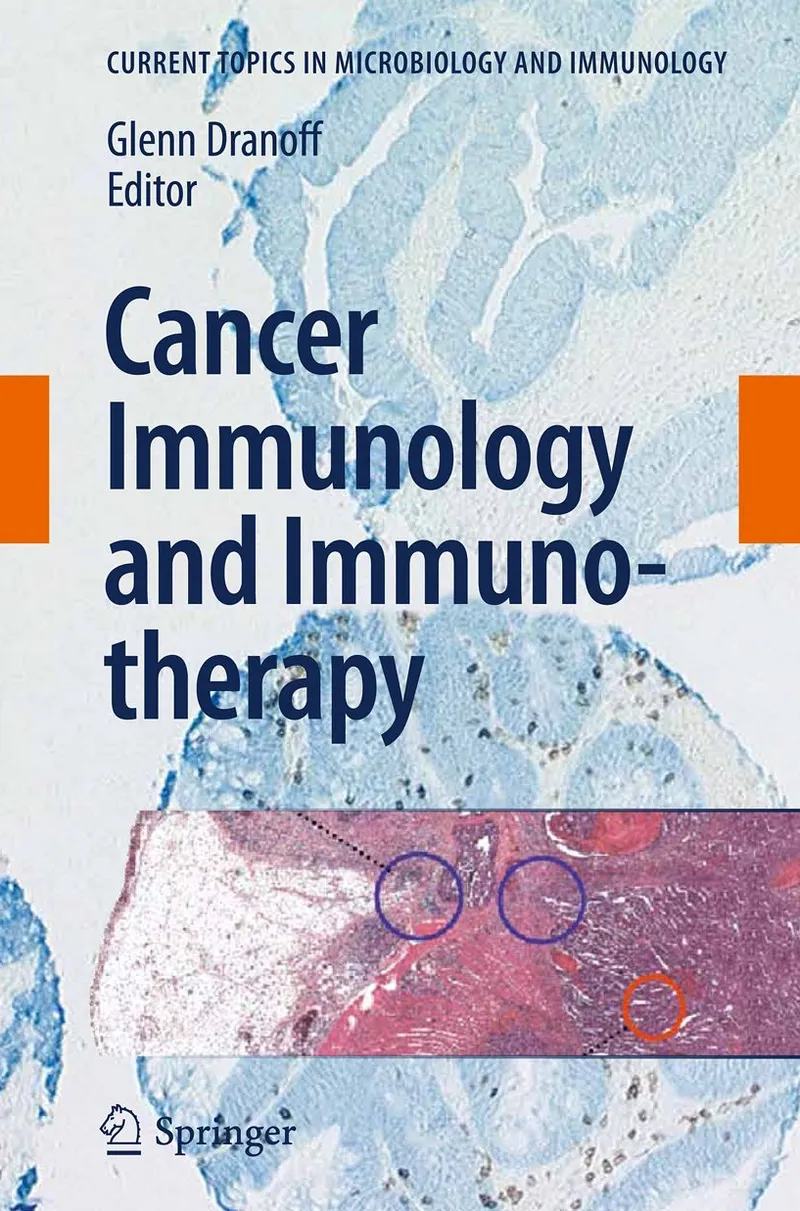

Cancer Immunology and Immunotherapy
Cancer Immunology and Immunotherapy is a specialized textbook from Springer that examines the complex relationship between tumors and the immune system and its importance for the development of new diagnostic and therapeutic approaches. The book explores how the immune microenvironment surrounding tumors can influence disease progression and clinical outcomes, while also discussing strategies for improving the effectiveness of cancer immunotherapy.
By bringing together concepts from tumor immunology, immune regulation, cancer vaccines, and immunotherapy, the book provides readers with an overview of the challenges involved in developing effective immune-based treatments for cancer.
About the Book
The interaction between cancer cells and the immune system is complex and involves numerous mechanisms that can influence tumor growth, disease progression, and treatment response. Understanding these interactions is important for identifying potential prognostic markers and developing new therapeutic strategies.
Cancer Immunology and Immunotherapy reviews tumor–immune interactions across several human cancers and considers how local immune reactions may affect clinical outcomes. The book also examines current approaches to cancer immunotherapy and the factors that can limit their effectiveness.
Tumor–Immune Interactions
A central focus of the book is the relationship between tumors and their surrounding immunologic microenvironment. Tumors can influence immune responses in ways that may help them avoid effective immune-mediated destruction.
The book discusses several aspects of this complex interaction, including:
- Tumor–immune system interactions
- The tumor microenvironment
- Local immune reactions and clinical outcomes
- Immune regulation within tumors
- Mechanisms that can interfere with effective anti-tumor immunity
- The relationship between immune responses and cancer progression
Understanding these interactions provides an important foundation for developing more effective approaches to cancer treatment.
Cancer Vaccines and Immunotherapy
The book examines the development of cancer vaccines and active immunotherapy as approaches for stimulating immune responses against tumors. Clinical trials have demonstrated durable tumor regression in a proportion of patients, highlighting the potential of immune-based cancer treatments.
At the same time, the book considers why the effectiveness of current cancer vaccines can be limited, particularly in patients with advanced or metastatic disease.
Immunosuppressive Mechanisms
One of the important challenges in cancer immunotherapy is the ability of tumors to alter and suppress immune responses. The book discusses several cell populations involved in this process, including:
- Myeloid-derived suppressor cells
- Inflammatory type 2 T cells
- Regulatory T cells (Tregs)
- Suppression of anti-tumor effector cell generation
- The immunosuppressive tumor microenvironment
These mechanisms can prevent the immune system from generating sufficiently strong responses against cancer cells and represent important targets for improving immunotherapy.
Improving Cancer Immunotherapy
The book highlights the need for new strategies capable of strengthening adaptive immunity against cancer while overcoming mechanisms of immune suppression.
Improving the effectiveness of cancer vaccines and other immunotherapeutic approaches may require strategies that can address regulatory T cells, counteract immunosuppressive mechanisms, and modify the tumor microenvironment to support stronger anti-tumor immune responses.
Who Should Use This Book?
This book may be useful for:
- Students studying immunology
- Cancer biology students
- Medical and biomedical science students
- Researchers in tumor immunology
- Students and professionals interested in cancer immunotherapy
- Researchers studying cancer vaccines
- Readers interested in immune regulation and the tumor microenvironment
- Learners studying the relationship between cancer and the immune system
Final Thoughts
Cancer Immunology and Immunotherapy provides an overview of the complex interactions between tumors, immune responses, and the tumor microenvironment. It examines both the potential of immunotherapy and the biological mechanisms that can limit its effectiveness.
For readers interested in tumor immunology, cancer vaccines, immune regulation, and immunotherapeutic strategies, the book offers a useful perspective on the challenges involved in developing more effective immune-based approaches to cancer treatment.
Book Information
Title: Cancer Immunology and Immunotherapy
Publisher: Springer
Publication Date: April 15, 2011
Edition: 1st
Language: English
Print Length: 320 pages
ISBN-10: 3642141358
ISBN-13: 978-3642141355
Subjects: Cancer Immunology / Immunotherapy / Tumor Immunology / Cancer Vaccines / Tumor Microenvironment / Immune Regulation / Oncology
Cancer Immunology and Immunotherapy is a specialized resource exploring tumor–immune interactions, cancer vaccines, immunosuppressive mechanisms, and strategies for improving the effectiveness of cancer immunotherapy.
Support the Creators!
If you enjoy this book, please consider supporting the author and publisher by purchasing a physical or digital copy. Buying official copies ensures authors can keep writing great books.