
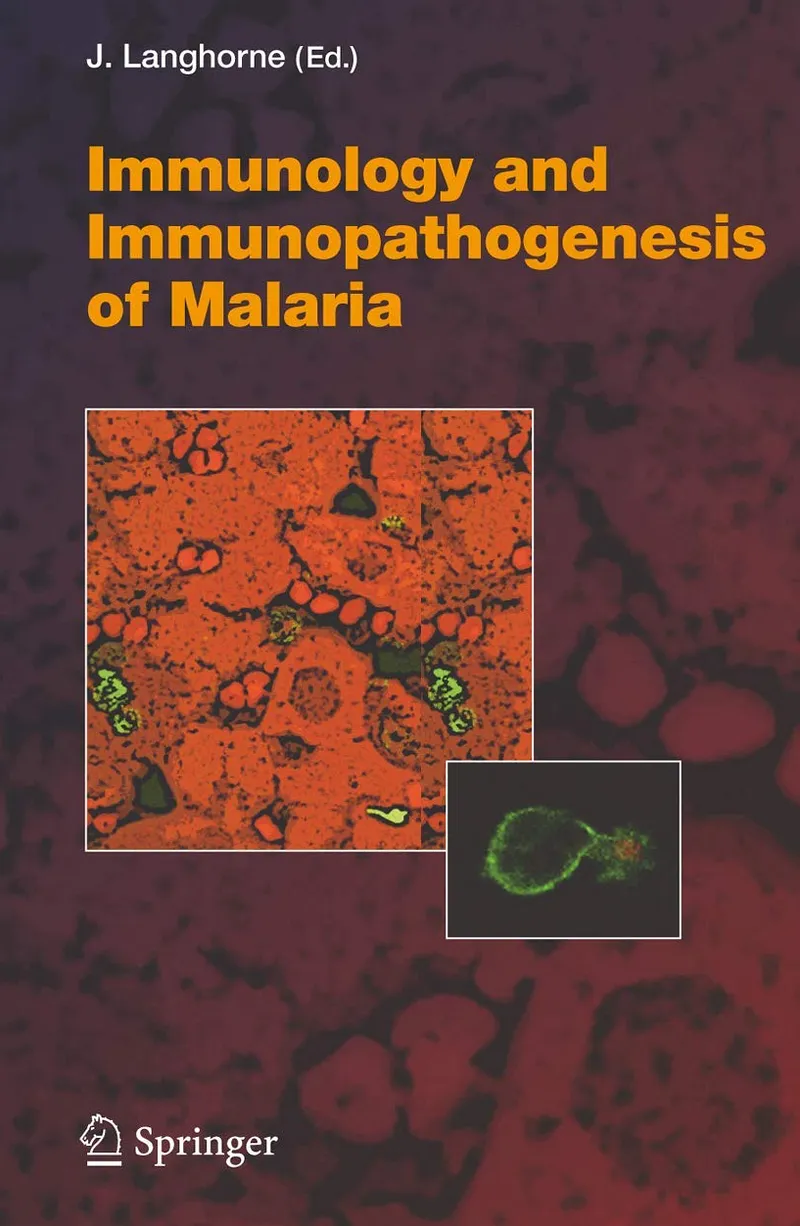

Immunology and Immunopathogenesis of Malaria
Immunology and Immunopathogenesis of Malaria is a specialized Springer reference that examines the immune responses and immunopathological mechanisms associated with malaria. The book brings together a collection of reviews addressing important aspects of malaria immunity and the pathological consequences of infection, with particular attention to Plasmodium falciparum, the major cause of severe malaria and malaria-related mortality.
The book provides a perspective on malaria from both immunological and disease-related viewpoints, making it relevant not only to researchers specializing in malaria but also to the wider immunology and infectious disease communities.
About the Book
Malaria remains an important global health challenge, particularly in regions where transmission is widespread and the burden of severe disease is high. Plasmodium falciparum is responsible for the majority of malaria-related deaths, making the study of host–parasite interactions and immune responses particularly important.
This collection of reviews examines the mechanisms involved in malarial immunity and immunopathology, providing readers with a scientific perspective on how the immune system responds to malaria parasites and how immune responses may also contribute to disease.
Malaria Immunity
A major focus of the book is the study of the immune response to malaria parasites. Understanding malaria immunity is important for investigating why individuals respond differently to infection and for developing improved approaches to prevention and treatment.
The book addresses topics related to:
- Host immunity to malaria
- Immune responses to Plasmodium parasites
- Malarial immunopathology
- Host–parasite interactions
- Immune mechanisms associated with malaria
- The relationship between immunity and disease
- Challenges in developing effective malaria interventions
Immunopathogenesis of Malaria
Malaria is characterized not only by the presence of parasites but also by complex interactions between the parasite and the host immune system. Immune responses can contribute to controlling infection, while dysregulated or excessive responses may be associated with pathological effects.
The book explores these aspects of immunopathogenesis, helping readers understand the relationship between immune mechanisms and the clinical consequences of malaria.
Plasmodium falciparum and Global Malaria
Particular importance is given to Plasmodium falciparum, the malaria parasite responsible for most malaria-associated deaths. The burden of malaria has historically been especially severe in Sub-Saharan Africa, where children are among the populations most affected by severe disease.
The book places malaria immunology within this broader public health context while focusing primarily on the scientific questions surrounding immunity, immunopathology, and therapeutic intervention.
Challenges in Malaria Control
The continued burden of malaria is influenced by several factors, including parasite drug resistance, insecticide-resistant mosquitoes, poverty, social and political instability, and the lack of sufficiently effective vaccines.
Understanding the immunological mechanisms involved in malaria is therefore important for efforts to develop improved preventive and therapeutic strategies. The book emphasizes the value of collaboration between malariologists and immunologists working in other infectious diseases and basic immunology.
Who Should Use This Book?
This book may be useful for:
- Researchers studying malaria
- Students of immunology
- Malariologists
- Infectious disease researchers
- Parasitology students and researchers
- Microbiology students
- Medical and biomedical science students
- Researchers studying host–parasite interactions
- Scientists interested in infectious disease immunology and immunopathology
Final Thoughts
Immunology and Immunopathogenesis of Malaria provides a focused collection of reviews examining the immune response to malaria and the immunopathological mechanisms associated with infection. Its emphasis on malaria immunity, Plasmodium falciparum, host–parasite interactions, and the challenges of therapeutic intervention makes it a valuable resource for readers interested in malaria and infectious disease immunology.
For students and researchers seeking to understand the relationship between malaria parasites, host immunity, and disease pathology, this Springer volume offers a specialized perspective that connects malaria research with broader concepts in immunology and infectious diseases.
Book Information
Title: Immunology and Immunopathogenesis of Malaria
Publisher: Springer
Publication Date: September 25, 2014
Edition: 2005th
Language: English
Print Length: 245 pages
ISBN-10: 3642421849
ISBN-13: 978-3642421846
Subjects: Malaria / Immunology / Immunopathogenesis / Parasitology / Infectious Diseases / Plasmodium falciparum / Host–Parasite Interactions
Immunology and Immunopathogenesis of Malaria is a specialized resource exploring malarial immunity, immunopathology, host–parasite interactions, and the scientific challenges involved in developing improved approaches to malaria prevention and treatment.
Support the Creators!
If you enjoy this book, please consider supporting the author and publisher by purchasing a physical or digital copy. Buying official copies ensures authors can keep writing great books.