

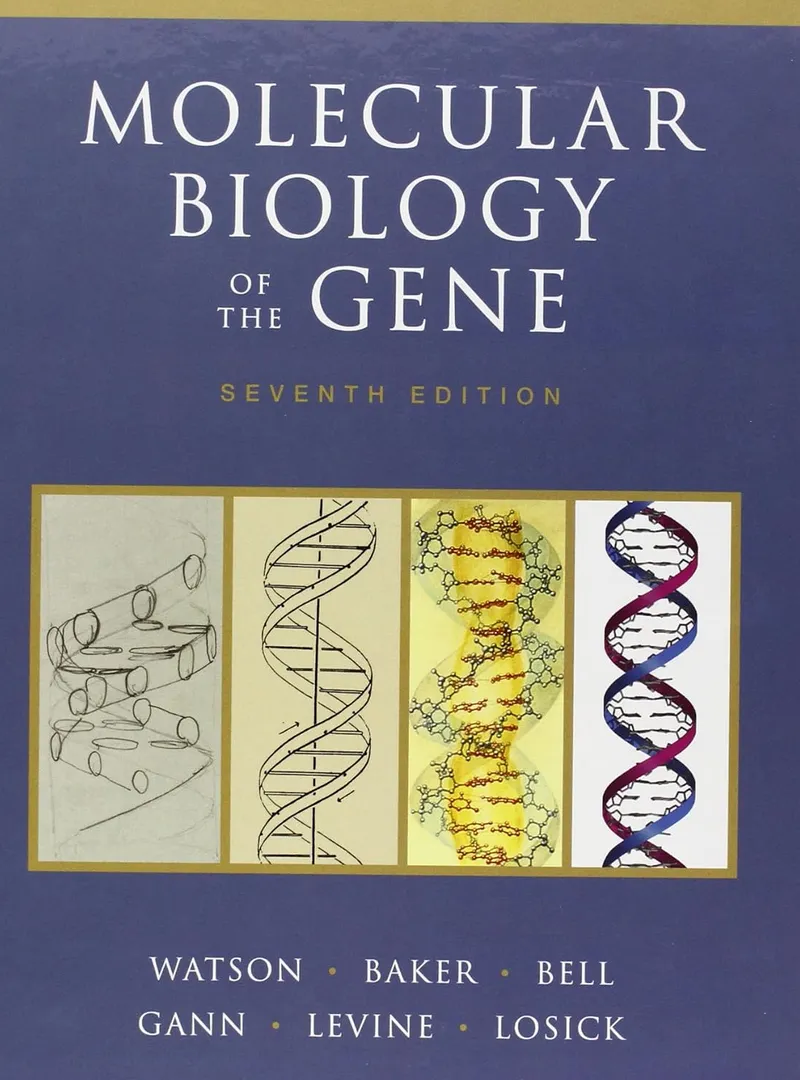

Molecular Biology of the Gene, 7th Edition
Molecular Biology of the Gene, 7th Edition is a comprehensive textbook that explores the molecular mechanisms responsible for storing, copying, expressing, and regulating genetic information. Published by Pearson, this edition of James D. Watson’s classic work brings together foundational concepts and research developments in molecular biology in a structured and accessible format.
The book examines genetics at the molecular level, beginning with the chemical nature and structure of nucleic acids and progressing through DNA replication, DNA repair, recombination, transcription, RNA processing, translation, and gene regulation. It also connects these molecular mechanisms with genome organization, development, evolution, systems biology, and model organisms.
About the Book
The seventh edition retains the distinctive approach that has characterized Molecular Biology of the Gene while providing updated coverage of a rapidly developing scientific discipline. The text is organized into 22 concise chapters and brings together contributions from distinguished biologists to provide broad coverage of modern molecular biology.
Rather than treating molecular processes as isolated topics, the book demonstrates how different mechanisms work together to control genetic information and cellular function. This makes it a useful resource for students seeking a strong conceptual foundation in molecular biology and genetics.
Genetic Information and the Structure of Biological Molecules
The book begins with the fundamental principles underlying molecular genetics, including the relationship between genes and genetic information. Students are introduced to:
- The Mendelian view of heredity
- Nucleic acids as carriers of genetic information
- Chemical bonds and molecular interactions
- DNA structure and organization
- RNA structure and function
- Protein structure
- Protein–nucleic acid interactions
These concepts establish the molecular framework needed to understand how genetic information is stored and expressed.
Genome Structure, Chromatin, and DNA Replication
Understanding the genome requires more than examining individual genes. The book explores genome organization and the role of chromatin and nucleosomes in packaging and regulating DNA.
It also explains the molecular mechanisms involved in DNA replication, showing how genetic information is accurately copied and passed from one generation of cells to the next.
DNA Mutability, Repair, and Recombination
DNA is continuously exposed to processes that can introduce genetic changes. Molecular Biology of the Gene examines DNA mutability and the mechanisms cells use to repair damaged genetic material.
The text also explores recombination at the molecular level, including:
- Homologous recombination
- Site-specific recombination
- DNA transposition
- Molecular mechanisms underlying genetic rearrangements
These topics help explain how genomes remain stable while also acquiring genetic variation.
Transcription, RNA Processing, and Translation
A major focus of molecular biology is understanding how information encoded in DNA is converted into functional RNA and proteins. The book provides detailed coverage of the mechanisms of transcription, RNA splicing, and translation.
Students can follow the flow of genetic information from DNA through RNA to protein while learning about the molecular machinery and regulatory mechanisms involved in gene expression.
Genetic Code and Gene Regulation
The genetic code provides the connection between nucleotide sequences and protein synthesis. The book examines the principles underlying this code and then extends the discussion to the regulation of gene expression.
Coverage includes transcriptional regulation in both:
- Prokaryotes
- Eukaryotes
- Regulatory RNAs
- Developmental gene regulation
- Evolutionary aspects of gene regulation
This progression helps students understand how cells control when and where genes are expressed.
Molecular Biology, Development, and Evolution
Gene regulation is closely connected to the development and evolution of organisms. The book explores how changes in genetic regulation can contribute to differences among organisms and influence developmental processes.
It also discusses the origins and early evolution of life, placing molecular biology within a broader evolutionary framework.
Systems Biology and Model Organisms
Modern molecular biology increasingly considers biological processes as interconnected systems rather than isolated pathways. The book introduces systems biology and demonstrates how molecular information can be examined within larger biological networks.
Model organisms also play an important role in genetic and molecular research. Their use provides researchers with experimental systems for investigating fundamental biological mechanisms that can apply across diverse organisms.
Techniques of Molecular Biology
Modern molecular biology depends heavily on experimental techniques used to investigate DNA, RNA, proteins, genomes, and gene expression. The book introduces important techniques of molecular biology and places them within the broader context of genetic research.
This connection between experimental methods and biological concepts helps students understand not only what molecular processes occur, but also how scientists obtain evidence for those processes.
Who Should Use This Book?
Molecular Biology of the Gene, 7th Edition is suitable for:
- Undergraduate and graduate students studying molecular biology
- Students taking genetics and molecular genetics courses
- Biology and life science students
- Students studying gene expression and regulation
- Biochemistry and biotechnology students
- Researchers seeking a comprehensive molecular biology reference
- Instructors teaching genetics or molecular biology
- Readers interested in genome organization and molecular mechanisms of heredity
Final Thoughts
Molecular Biology of the Gene, 7th Edition provides a broad and detailed examination of the molecular basis of genetics. From DNA structure and replication to transcription, RNA processing, translation, recombination, and gene regulation, the book explains the mechanisms through which genetic information is maintained and expressed.
By extending its coverage to genome structure, development, evolution, systems biology, and model organisms, the seventh edition gives readers a wider perspective on how molecular biology connects individual genetic mechanisms with complex biological systems.
Book Information
Title: Molecular Biology of the Gene
Author: James D. Watson and contributing authors
Publisher: Pearson
Publication Date: April 2, 2013
Edition: 7th Edition
Language: English
Print Length: 912 pages
ISBN-10: 0321762436
ISBN-13: 978-0321762436
Subjects: Molecular Biology, Genetics, Molecular Genetics, DNA, RNA, Gene Expression, Genome Biology, DNA Replication, Transcription, Translation, Gene Regulation, Genomics, Systems Biology
Molecular Biology of the Gene, 7th Edition provides a comprehensive introduction to the molecular mechanisms of heredity, gene expression, genome organization, and gene regulation while connecting these principles to development, evolution, and modern molecular biology.
Support the Creators!
If you enjoy this book, please consider supporting the author and publisher by purchasing a physical or digital copy. Buying official copies ensures authors can keep writing great books.







good joub
You are welcome dear!.
Thank you
You are welcome dear!.