

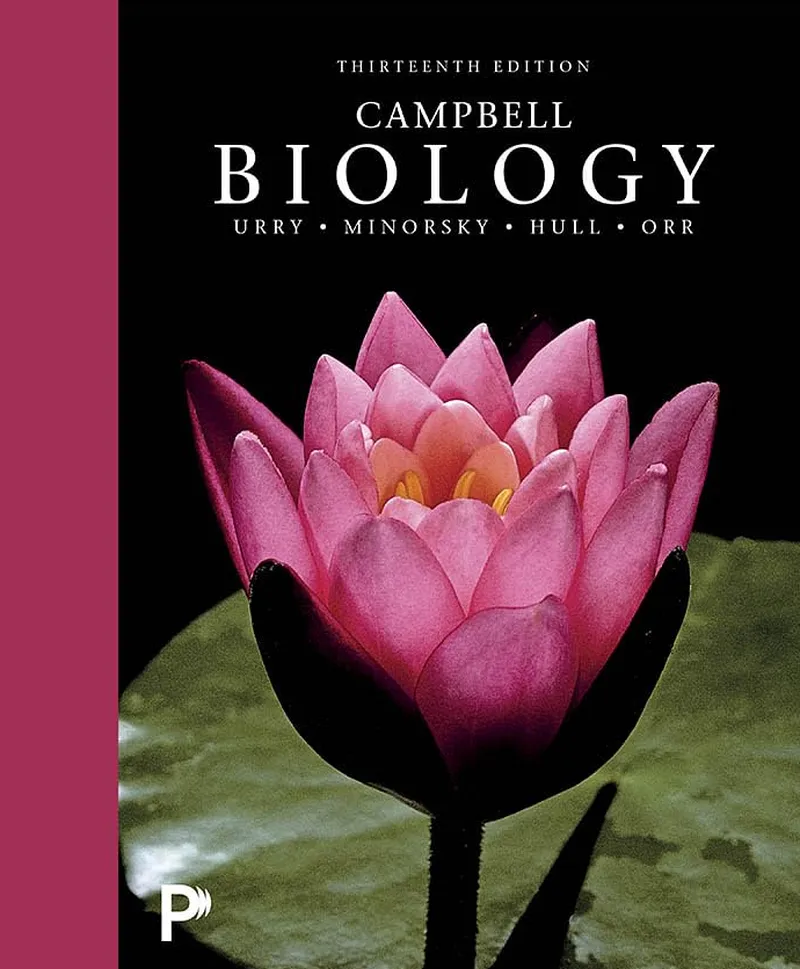

Campbell’s Biology, 13th Edition
Campbell’s Biology, 13th Edition is a comprehensive introductory biology textbook designed to help students understand biology as a connected science rather than as a collection of isolated facts. Published by Pearson and authored by Lisa A. Urry, Peter V. Minorsky, Kerry L. Hull, and Rebecca B. Orr, this edition continues the approach associated with Neil Campbell’s original vision while incorporating newer developments in modern biology.
The book provides a broad introduction to the principles that explain how living organisms are organized, how cells function, how genetic information is transmitted and expressed, how populations evolve, and how organisms interact with their environments. Its organization makes it suitable for students taking introductory or general biology courses, while also serving as a useful reference for readers who want to strengthen their understanding of biological science.
About Campbell’s Biology, 13th Edition
Biology covers an enormous range of subjects, from molecules and cells to ecosystems and global environmental change. One of the strengths of Campbell’s Biology is the way these different levels of biology are brought together. Fundamental concepts introduced early in the book become building blocks for understanding genetics, evolution, physiology, biodiversity, and ecology later on.
The 13th Edition maintains this broad progression while introducing new and updated material reflecting developments in contemporary biological science. Pearson highlights updates involving gene editing, stem cell research, artificial intelligence in bioinformatics and medical diagnosis, climate and population change, SARS-CoV-2 and COVID-19, and emerging and zoonotic pathogens. The edition also introduces new Practice Applying Your Learning question sets in each unit.
This combination of foundational biology and modern scientific developments makes the book particularly relevant for students who want to understand not only established biological principles but also how those principles connect to current scientific research.
What Does Campbell’s Biology 13th Edition Cover?
The textbook is organized into eight major units and 56 chapters, moving from the chemical foundations of life toward cells, genetics, evolution, biological diversity, plant and animal physiology, and ecology.
Chemistry of Life
The opening section establishes the chemical foundations necessary for understanding biological systems. Topics include the chemical context of life, the properties of water, carbon and its importance to biological diversity, and the structure and function of major biological molecules.
These concepts provide an important foundation for later discussions of cellular structure, metabolism, genetics, and physiology.
Cell Biology
The cell section explores the basic organization and operation of living cells. Students are introduced to cellular structures, membrane function, metabolism, cellular respiration, fermentation, photosynthesis, cell communication, and the cell cycle.
The material helps connect cellular structures with the processes they perform, making it easier to understand how energy is obtained and transformed and how cells respond to their surroundings.
Genetics and Molecular Biology
Genetics is another major component of the book. The 13th Edition covers meiosis, Mendelian genetics, chromosome inheritance, the molecular basis of inheritance, gene expression, regulation of gene expression, viruses, biotechnology, DNA tools, and genome evolution.
These chapters provide a pathway from classical genetics to modern molecular biology. Readers can follow the progression from the inheritance of traits to DNA, genes, proteins, genetic regulation, and contemporary biotechnology.
The updated treatment of gene editing and related developments also helps place fundamental genetic concepts in the context of modern biological research.
Evolution
Evolution provides another central theme throughout Campbell’s Biology. The book examines Darwinian evolution, evolutionary change within populations, the origin of species, and the history of life on Earth.
Rather than treating evolution as an isolated topic, the textbook connects evolutionary thinking with genetics, biodiversity, adaptation, and the history of organisms. This makes it easier for students to see evolution as one of the major organizing principles of biology.
Biological Diversity
The textbook then expands from evolutionary principles to the diversity of life. Topics include phylogeny and the tree of life, bacteria and archaea, eukaryotic diversity, plants, fungi, animals, invertebrates, and vertebrates.
This section provides students with a broad framework for understanding how different groups of organisms are related and how biological diversity has developed over evolutionary time.
Plant Biology
The plant biology chapters examine vascular plant structure, growth and development, resource acquisition and transport, soil and plant nutrition, angiosperm reproduction, biotechnology, and plant responses to internal and external signals.
These topics are useful for understanding how plants acquire resources, transport water and nutrients, reproduce, grow, and respond to environmental conditions.
Animal Form and Function
The animal biology section covers many of the physiological systems that allow animals to survive and maintain internal balance. Subjects include animal nutrition, circulation, gas exchange, the immune system, osmoregulation and excretion, hormones, reproduction, development, neurons, nervous systems, sensory mechanisms, and animal behavior.
For students preparing for further study in areas such as medicine, health sciences, veterinary science, neuroscience, or related biological disciplines, these chapters provide a valuable foundation in animal physiology and function.
Ecology and Global Change
The final unit introduces ecology from the level of individual populations to communities and ecosystems. It covers population ecology, community ecology, ecosystems, restoration ecology, conservation biology, and global change.
The updated emphasis on global climate and population changes makes this section particularly relevant to contemporary environmental discussions.
What Makes the 13th Edition Different?
The 13th Edition is not simply a reorganization of older introductory biology material. Pearson describes several areas of new and updated content intended to connect the textbook with current biological science.
Among the notable updates are discussions of gene editing and stem cell research, the growing role of artificial intelligence in bioinformatics and medical diagnosis, changes involving global climate and populations, and developments related to SARS-CoV-2, COVID-19, emerging pathogens, and zoonotic diseases.
The edition also adds new Practice Applying Your Learning question sets throughout the units, giving students additional opportunities to move beyond memorization and apply biological concepts to problems and situations.
Who Is Campbell’s Biology 13th Edition For?
Campbell’s Biology, 13th Edition is primarily intended for students studying general or introductory biology. It can be particularly useful for undergraduate students who are encountering university-level biology for the first time.
The book may also be valuable to:
- Undergraduate biology students
- Students taking introductory life-science courses
- Students preparing for further study in biological sciences
- Pre-medical and health-science students who need a strong biology foundation
- Students studying genetics, microbiology, ecology, or physiology
- Independent learners interested in understanding modern biology
- Readers looking for a comprehensive biology reference
Because the textbook moves from basic principles toward increasingly complex biological systems, it can also serve as a useful starting point for students deciding which area of biology they may want to explore more deeply.
Why Study Biology with Campbell’s Biology?
One of the biggest challenges in learning biology is seeing how individual concepts fit together. A student may learn about DNA, proteins, cells, evolution, physiology, and ecosystems as separate topics without immediately recognizing their connections.
Campbell’s Biology is designed around those connections. Chemistry helps explain cellular structure and metabolism; cellular processes provide the foundation for genetics and physiology; genetics helps explain evolution; evolution provides a framework for understanding biological diversity; and ecology extends the study of life to populations, communities, and ecosystems.
This broad perspective can make the textbook useful beyond a single biology course. It gives students a framework they can return to when encountering more specialized subjects later in their academic studies.
Additional Learning Resources
The 13th Edition is also supported by Pearson’s digital learning ecosystem. Pearson describes resources associated with the edition including interactive reading assignments, Dynamic Study Modules, interactive laboratory experiences, practice materials, figure walkthroughs, videos, animations, and other study resources through Mastering Biology.
For students using the digital version, Pearson also describes interactive questions and an AI-powered study tool designed around Campbell Biology content. These resources are intended to complement the textbook and provide additional opportunities for practice and review.
Final Thoughts
Campbell’s Biology, 13th Edition remains a broad and ambitious introduction to the life sciences. Instead of concentrating on one specialized area, it takes readers through the major levels of biological organization—from molecules and cells to organisms, evolution, biodiversity, and ecosystems.
For students beginning their study of biology, the book offers a structured path through many of the concepts that form the foundation of modern life science. Its updated coverage of biotechnology, genetics, artificial intelligence, infectious disease, climate change, and other contemporary topics also helps connect traditional biological principles with questions being explored in science today.
Whether it is being used as a primary textbook for an introductory biology course or as a reference while studying a particular biological topic, Campbell’s Biology, 13th Edition provides a broad foundation for exploring the science of life.
Book Information
Title: Campbell’s Biology, 13th Edition
Authors: Lisa A. Urry, Peter V. Minorsky, Kerry L. Hull, Rebecca B. Orr
Publisher: Pearson
Subject: Biology / Life Sciences
Edition: 13th Edition
ISBN-13: 9780135455890 (Pearson eTextbook listing)
Support the Creators!
If you enjoy this book, please consider supporting the author and publisher by purchasing a physical or digital copy. Buying official copies ensures authors can keep writing great books.

This book is valuable book
Yes it is, thank you very much for your feedback!.