
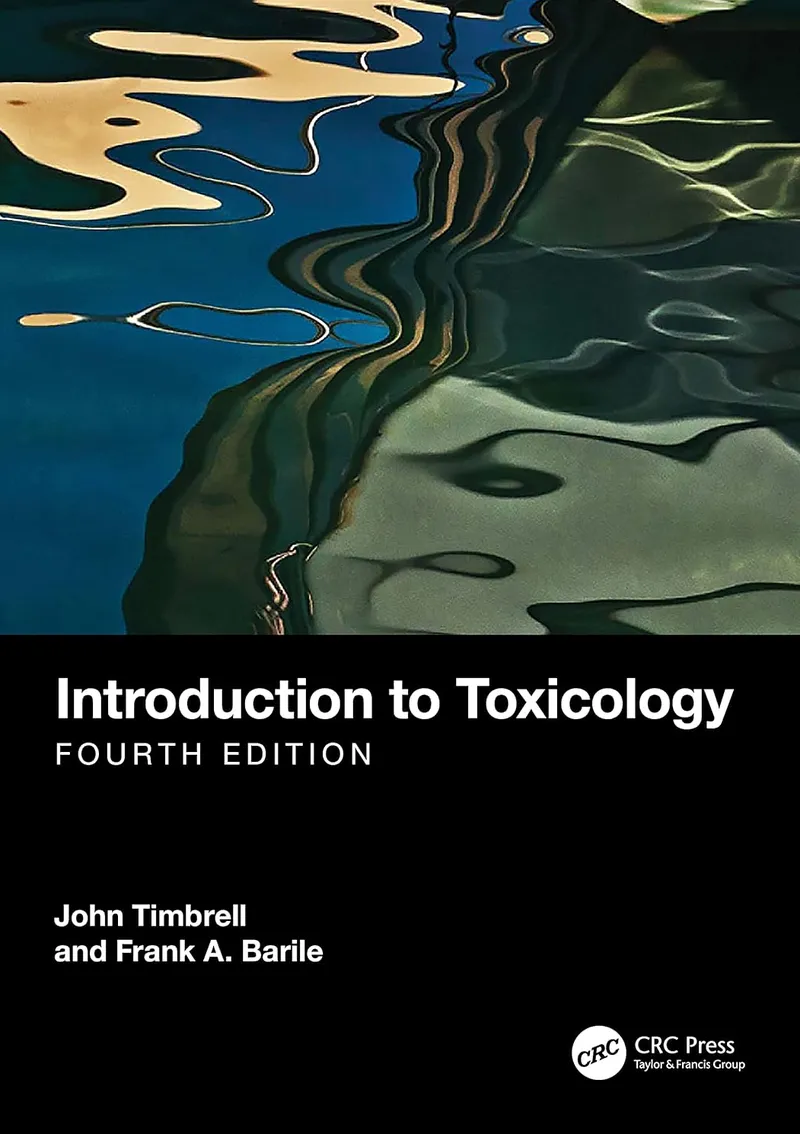

Introduction to Toxicology, 4th Edition
Introduction to Toxicology, 4th Edition, by John A. Timbrell and Frank A. Barile, provides a clear and accessible introduction to the science of toxicology and its importance to human health, animal welfare, medicine, and the environment. Published by CRC Press, this revised edition traces the development of toxicology from its historical origins to contemporary concerns involving therapeutic drugs, pesticides, industrial chemicals, carcinogens, and environmental toxins.
The fourth edition expands and updates the material from the previous edition, introducing new and expanded chapters on dose-response relationships, exposure-response relationships, target organ toxicity, carcinogenic agents, toxicity testing, antidotes, and the treatment of poisonings. The book combines fundamental principles with historical and contemporary examples, making complex toxicological concepts easier to understand for students and professionals entering the field.
About the Book
Toxicology is a multidisciplinary science concerned with understanding how harmful substances interact with living organisms and produce adverse effects. Introduction to Toxicology presents the subject progressively, beginning with basic principles and developing them through examples, tables, diagrams, and discussions of real-world toxicological problems.
The book also places toxicology in its historical context, tracing the field from the use of natural toxins by ancient societies through the influential work of Paracelsus and the subsequent development of modern toxicological science.
Historical Development of Toxicology
Understanding how toxicology evolved provides useful context for its modern principles. The book begins with a historical overview, showing how observations about poisons and their effects gradually developed into a scientific discipline.
This historical perspective provides a foundation for understanding why concepts such as dose, exposure, toxicity, and risk have become central to modern toxicology.
Basic Principles of Toxicology
The book introduces the fundamental principles of toxicology, providing students with the knowledge needed to understand more specialized topics. It examines how toxic substances interact with biological systems and how toxicological events can produce different outcomes depending on the nature and extent of exposure.
The material is presented progressively, allowing readers to build their understanding from basic concepts toward more complex toxicological mechanisms.
Dose-Response and Exposure-Response Relationships
The fourth edition adds dedicated coverage of dose-response relationships and exposure-response relationships. These concepts are central to understanding toxic effects because biological responses can vary according to the amount of a substance involved and the nature of exposure.
The expanded treatment helps readers develop a clearer understanding of the relationship between exposure and toxicological outcomes.
Disposition and Metabolism of Xenobiotics
Another important area covered by the book is the disposition and metabolism of xenobiotic toxic substances. Understanding what happens to foreign chemicals after entering the body is essential for explaining their toxicity.
The book connects these processes with the broader mechanisms through which toxic substances can affect biological and physiological systems.
Target Organ Toxicity
Toxic substances can affect particular organs and tissues in different ways. The fourth edition includes expanded discussion of target organ toxicity, helping readers understand how toxicological effects can manifest in specific biological systems.
This provides an important bridge between general toxicological principles and the physiological consequences of exposure.
Carcinogenic Agents and Chemical Toxicity
The book also introduces the toxicity of carcinogenic agents, addressing an important area of toxicology related to long-term exposure and human health.
Alongside carcinogenic substances, the text considers broader concerns surrounding therapeutic drugs, industrial toxins, pesticides, and herbicides, illustrating the diverse range of substances studied in toxicology.
Toxicity Testing
Reliable evaluation of potentially harmful substances depends on appropriate toxicity testing. The fourth edition presents updated concepts in toxicity testing, helping readers understand how toxic effects can be investigated and evaluated.
This topic is relevant to medical, pharmaceutical, environmental, industrial, and regulatory applications of toxicology.
Antidotes and Treatment of Poisonings
The clinical dimension of toxicology is addressed through coverage of antidotes and the treatment of poisonings. These topics introduce readers to the practical management of toxic exposures and demonstrate how toxicological knowledge can be applied in healthcare settings.
The inclusion of poisoning treatment makes the book relevant to students studying toxicology alongside medicine, pharmacy, biomedical sciences, and other health disciplines.
Toxicology and the Environment
Toxicology is not limited to human health. Chemicals and toxic substances can also affect animals, ecosystems, and environmental stability. The book examines toxicological concerns related to environmental health and ecosystem maintenance, highlighting the broader societal importance of the field.
This perspective makes the book relevant to environmental scientists and others working with chemical exposure and environmental risk.
Toxicology in Society
Contemporary concerns about therapeutic drugs, carcinogens, pesticides, herbicides, and industrial toxins demonstrate how toxicology affects everyday life and public health. The book uses these issues to illustrate the importance of toxicological research in understanding and managing chemical risks.
Its broad perspective shows how toxicology connects laboratory science with medicine, environmental protection, public health, regulation, and society.
Tables, Figures, Learning Objectives, and Self-Assessment
The fourth edition uses tables, diagrams, and figures to make complex concepts easier to follow. Each chapter also includes learning objectives and summaries that help readers identify and review the major points.
Questions and answers provide an additional self-assessment tool, allowing students to test their understanding and reinforce important toxicological concepts while studying.
Who Should Use This Book?
Introduction to Toxicology, 4th Edition may be particularly useful for:
- Undergraduate toxicology students.
- Graduate students beginning advanced study in toxicology.
- Biomedical science students.
- Health science students.
- Medical and pharmacy students seeking an introduction to toxicology.
- Environmental scientists.
- Medical biologists and chemists.
- Chemical engineers working with toxicological issues.
- Professionals and regulatory agencies involved in toxicology-related areas.
- Readers seeking an accessible introductory toxicology reference.
Final Thoughts
Introduction to Toxicology, 4th Edition offers a structured introduction to a broad and increasingly important scientific discipline. Beginning with the historical development of toxicology and fundamental principles, the book progresses through dose and exposure relationships, xenobiotic disposition and metabolism, target organ toxicity, carcinogenic agents, toxicity testing, and the treatment of poisonings.
Its combination of clear explanations, historical examples, visual learning aids, chapter summaries, learning objectives, and self-assessment questions makes it a practical foundation for students and professionals entering toxicology and related fields.
Book Information
Title: Introduction to Toxicology
Authors: John A. Timbrell, Frank A. Barile
Publisher: CRC Press
Publication Date: February 27, 2023
Edition: 4th
Language: English
Print Length: 298 pages
ISBN-10: 1032036923
ISBN-13: 978-1032036922
Subjects: Toxicology, Introduction to Toxicology, Medical Toxicology, Environmental Toxicology, Toxicological Principles, Dose-Response Relationships, Exposure-Response Relationships, Xenobiotics, Toxicity Testing, Target Organ Toxicity, Carcinogens, Poisoning, Antidotes, Environmental Health
Introduction to Toxicology, 4th Edition provides an accessible foundation in toxicological science, connecting fundamental principles and exposure relationships with toxic mechanisms, clinical poisoning, toxicity testing, and environmental health.
Support the Creators!
If you enjoy this book, please consider supporting the author and publisher by purchasing a physical or digital copy. Buying official copies ensures authors can keep writing great books.