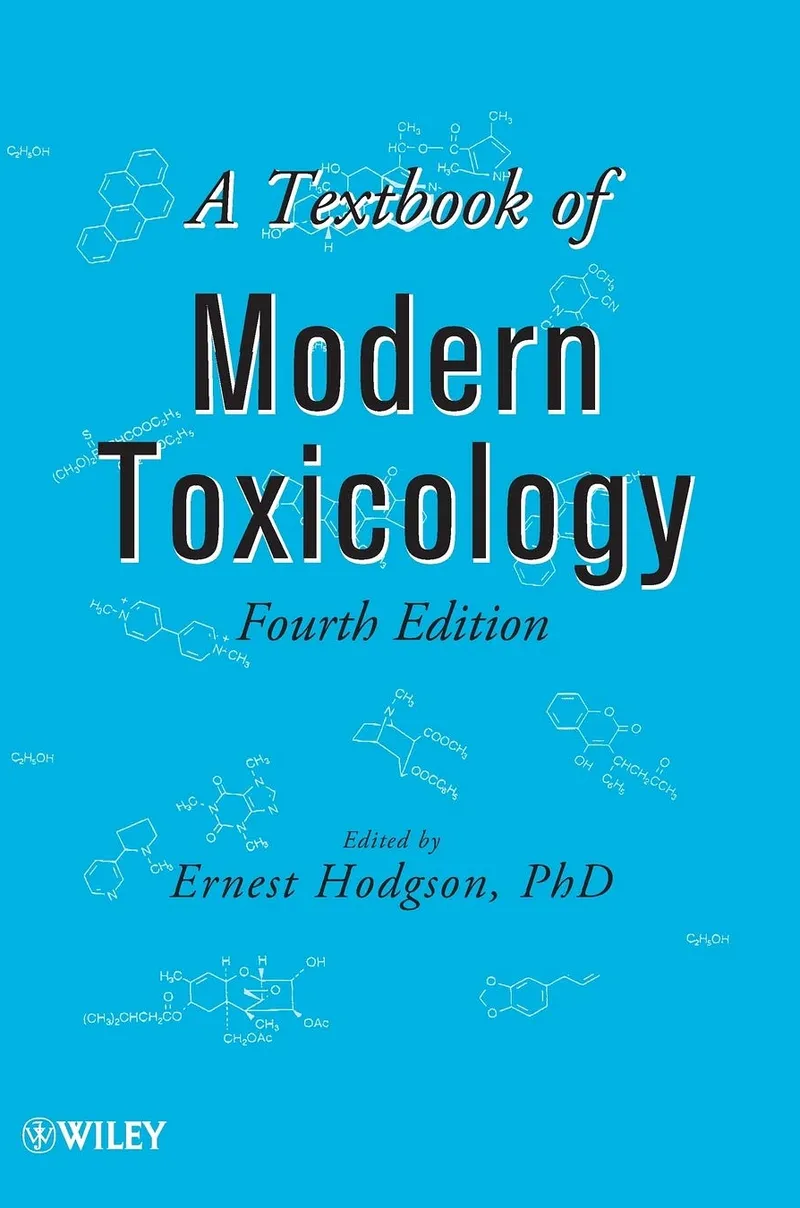

A Textbook of Modern Toxicology, 4th Edition
A Textbook of Modern Toxicology, 4th Edition, edited by Ernest Hodgson, provides a broad and accessible introduction to the principles, methods, and applications of modern toxicology. Published by Wiley, this edition is designed for both students and practitioners and can support courses and study in environmental, pharmacological, medical, and veterinary toxicology.
The fourth edition expands its coverage with chapters addressing emerging approaches in toxicological research, including toxicogenomics, proteomics, metabolomics, bioinformatics, and systems biology. Alongside these newer methods, the book maintains comprehensive coverage of established areas such as acute toxicity, chemical carcinogenesis, organ toxicity, toxicity testing, and ecological risk assessment.
About the Book
Toxicology is a multidisciplinary field concerned with understanding how chemicals and other potentially harmful agents affect living organisms. A Textbook of Modern Toxicology provides a broad overview of the discipline, bringing together contributions from experts across different areas of toxicological research and practice.
The book is structured to help readers develop a strong understanding of both fundamental toxicology and the modern technologies being used to investigate toxic effects.
Foundations of Modern Toxicology
A solid foundation in toxicology requires an understanding of how toxic substances interact with biological systems and how their effects can be identified and evaluated. The book introduces important principles that provide the basis for studying more specialized areas of toxicology.
Its wide-ranging approach makes it suitable for readers encountering toxicology as part of environmental science, pharmacology, medicine, veterinary medicine, or related programs.
Molecular Approaches and the -Omics Revolution
One of the significant additions to the fourth edition is its coverage of molecular approaches to toxicology. Modern toxicological research increasingly relies on large-scale molecular analysis to investigate biological responses to chemical exposure.
The book introduces areas such as:
- Toxicogenomics
- Proteomics
- Metabolomics
These approaches provide new ways of examining how toxic substances influence genes, proteins, metabolic processes, and biological pathways.
Bioinformatics and Systems Biology
The fourth edition also incorporates bioinformatics and systems biology, reflecting the increasingly data-driven nature of contemporary toxicological research.
These fields allow researchers to analyze complex biological information and examine relationships among molecular pathways and toxic responses. Their inclusion provides students with an introduction to important technologies shaping the development of modern toxicology.
Acute Toxicity and Chemical Carcinogenesis
The book continues to address established areas of toxicology, including acute toxicity and chemical carcinogenesis. Understanding acute toxic effects is essential for evaluating the immediate consequences of exposure, while the study of chemical carcinogenesis examines how particular agents can contribute to cancer development.
These topics provide an important foundation for understanding both experimental and applied toxicology.
Organ Toxicity
Different organs and biological systems can respond differently to toxic substances. Organ toxicity is therefore an important component of toxicological assessment.
The book examines this area within its broader framework, helping readers understand how toxic exposures can produce effects in specific tissues and organ systems.
In Vitro and In Vivo Toxicity Testing
Reliable toxicity assessment depends on appropriate experimental methods. The book covers both in vitro and in vivo toxicity testing, providing readers with an understanding of different approaches used to investigate the harmful effects of chemicals.
This coverage is relevant to students and practitioners interested in experimental toxicology, pharmaceutical research, environmental assessment, and related fields.
Ecological Risk Assessment
Toxicology extends beyond human health to include the effects of potentially harmful substances on ecosystems. The book addresses ecological risk assessment, highlighting the importance of evaluating chemical hazards in environmental contexts.
This makes the text particularly relevant to environmental toxicology and the assessment of risks associated with chemical exposure in ecological systems.
Multidisciplinary Applications
The broad scope of A Textbook of Modern Toxicology reflects the multidisciplinary nature of toxicology. Its coverage connects molecular science with environmental assessment, pharmacology, medicine, veterinary science, and experimental research.
This makes the book useful for readers who need to understand toxicology from more than one perspective.
Questions and Learning Support
The fourth edition includes end-of-chapter questions, giving students an opportunity to review key concepts and assess their understanding of the material.
A separate Solutions Manual is also available for academic adopters, providing additional support for instructors and structured course use.
Who Should Use This Book?
A Textbook of Modern Toxicology, 4th Edition may be particularly useful for:
- Students studying toxicology.
- Students of environmental toxicology.
- Pharmacology and pharmaceutical science students.
- Medical students and biomedical science students.
- Veterinary medicine students.
- Environmental science students.
- Toxicology researchers and practitioners.
- Readers interested in molecular and systems approaches to toxicology.
- Students seeking a broad introduction to modern toxicological methods.
Final Thoughts
A Textbook of Modern Toxicology, 4th Edition combines the established foundations of toxicology with newer molecular and computational approaches. Its coverage of acute toxicity, chemical carcinogenesis, organ toxicity, toxicity testing, and ecological risk assessment provides a broad foundation, while toxicogenomics, proteomics, metabolomics, bioinformatics, and systems biology introduce readers to modern research methods.
With contributions from experts and end-of-chapter questions to support learning, the book is a useful academic resource for students and practitioners seeking a comprehensive introduction to the principles and applications of modern toxicology.
Book Information
Title: A Textbook of Modern Toxicology
Author/Editor: Ernest Hodgson
Publisher: Wiley
Publication Date: June 21, 2010
Edition: 4th
Language: English
Print Length: 672 pages
ISBN-10: 047046206X
ISBN-13: 978-0470462065
Subjects: Toxicology, Modern Toxicology, Environmental Toxicology, Pharmacological Toxicology, Medical Toxicology, Veterinary Toxicology, Toxicogenomics, Proteomics, Metabolomics, Bioinformatics, Systems Biology, Chemical Carcinogenesis, Organ Toxicity, Toxicity Testing, Ecological Risk Assessment
A Textbook of Modern Toxicology, 4th Edition provides a broad foundation in toxicology while introducing molecular, computational, experimental, and ecological approaches used to understand and assess toxic effects.
Support the Creators!
If you enjoy this book, please consider supporting the author and publisher by purchasing a physical or digital copy. Buying official copies ensures authors can keep writing great books.