

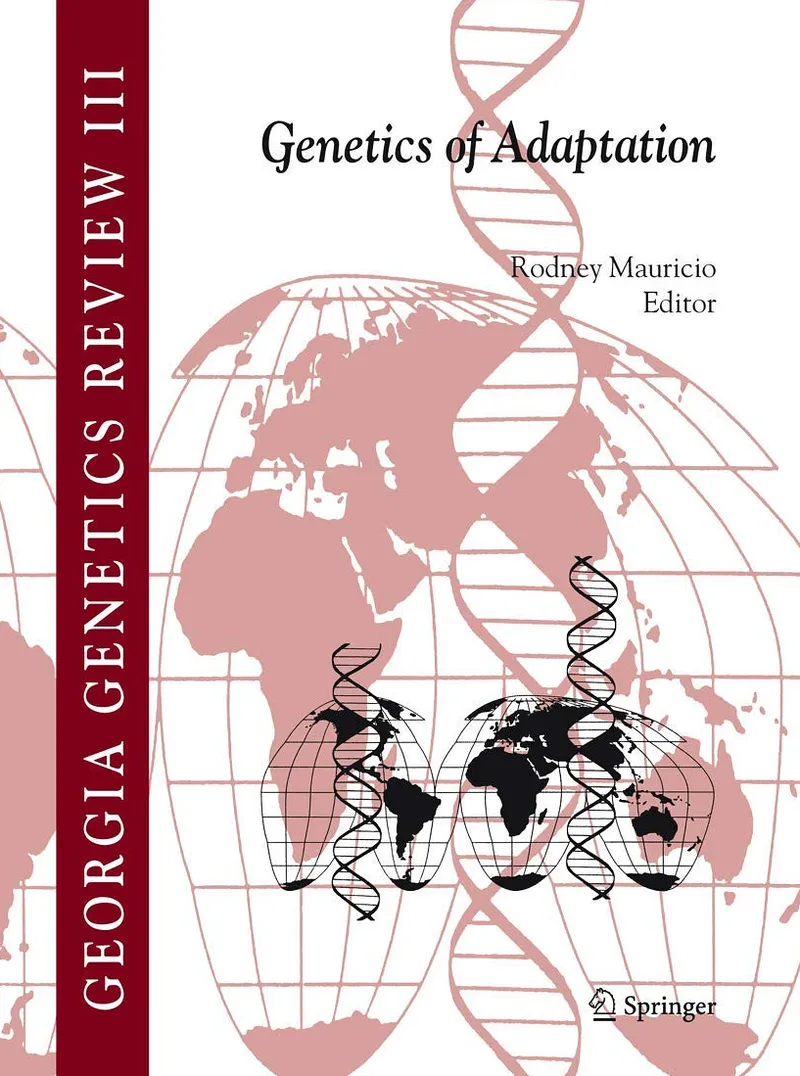

Genetics of Adaptation (Georgia Genetics Review, 3)
Genetics of Adaptation (Georgia Genetics Review, 3) examines one of the enduring questions in evolutionary biology: what is the genetic basis of adaptive evolution? Published by Springer, this 214-page volume brings together work from a new generation of evolutionary geneticists who use modern molecular genetic and statistical approaches to investigate how genetic changes contribute to adaptation.
The genetic basis of adaptation has been debated since the development of evolutionary genetics. While the Modern Synthesis established a framework in which mutations of relatively small effect could contribute to adaptive evolution, later analyses raised questions about the strength of the theoretical and empirical evidence supporting this view. This volume explores the progress made in addressing these questions and presents examples from both plant and animal studies.
About the Book
The book focuses on the relationship between genetics and adaptive evolution, particularly the genetic changes underlying complex traits. It provides an overview of an important area of evolutionary genetics that has received renewed attention through advances in molecular biology, statistical genetics, and related research techniques.
By bringing together diverse examples and approaches, the volume provides readers with a broader perspective on how genetic variation can contribute to evolutionary adaptation.
The Genetic Basis of Adaptation
A central question explored in the book is whether adaptive evolution is primarily driven by many genetic changes of small effect or whether mutations with larger effects can also play an important role.
This question has been part of evolutionary biology since the early twentieth century. Darwin’s emphasis on small heritable differences was challenged by Mendelian geneticists who highlighted the possible importance of larger mutations. The Modern Synthesis subsequently provided a framework for reconciling genetics and natural selection, but the genetic architecture of adaptation has continued to generate debate.
Revisiting the Modern Synthesis
The book discusses the renewed examination of traditional neo-Darwinian assumptions about adaptive evolution. In particular, the work of evolutionary biologists Allen Orr and Jerry Coyne is highlighted for questioning whether the theoretical and empirical evidence was sufficient to support some established views about the genetic basis of adaptation.
This reassessment helped stimulate renewed research into how genetic changes actually contribute to evolutionary adaptation.
Molecular and Statistical Approaches
Recent advances in molecular genetics and statistical techniques have provided evolutionary researchers with new ways to investigate adaptive evolution. These methods allow scientists to examine genetic variation and its relationship to changes in complex biological traits with greater detail.
The volume reflects this progress by presenting research that applies modern genetic and statistical approaches to questions that were previously difficult to investigate.
Complex Traits and Adaptive Evolution
Understanding the genetics of complex traits is an important part of studying adaptation. Many biological characteristics are influenced by multiple genes and interactions between genetic and environmental factors, making their evolutionary history particularly challenging to understand.
Examples drawn from both plant and animal studies provide valuable perspectives on the genetic architecture of adaptive traits and the processes through which evolutionary change occurs.
Plant and Animal Studies
The diversity of examples included in the volume demonstrates how questions about genetic adaptation can be investigated across different organisms. Comparative perspectives from plant and animal research help illustrate the variety of genetic mechanisms that may contribute to adaptive evolution.
These examples make the book relevant to readers interested in both fundamental evolutionary theory and empirical studies of genetic variation.
Who Should Use This Book?
This book may be particularly useful for:
- Evolutionary biology students and researchers
- Genetics students and researchers
- Population geneticists
- Evolutionary geneticists
- Molecular biology researchers
- Researchers studying complex traits
- Plant and animal evolutionary biologists
- Graduate and postgraduate students
- Readers interested in the genetic basis of adaptation
Final Thoughts
Genetics of Adaptation (Georgia Genetics Review, 3) provides a focused examination of the genetic foundations of adaptive evolution. By revisiting the historical debate surrounding small- and large-effect mutations and incorporating modern molecular and statistical approaches, the volume presents a valuable perspective on an important question in evolutionary biology.
Its combination of theoretical discussion and examples from plant and animal studies makes it a useful reference for students and researchers seeking to understand how genetic variation contributes to adaptation and the evolution of complex traits.
Book Information
Title: Genetics of Adaptation
Series: Georgia Genetics Review, 3
Publisher: Springer
Publication Date: October 28, 2010
Edition: Reprint
Language: English
Print Length: 214 pages
ISBN-10: 9048168767
ISBN-13: 978-9048168767
Subjects: Genetics, Evolutionary Biology, Evolutionary Genetics, Genetic Adaptation, Population Genetics, Natural Selection, Adaptive Evolution, Molecular Genetics, Statistical Genetics, Complex Traits
A focused collection examining the genetic basis of adaptation through modern molecular and statistical approaches and diverse examples from plant and animal evolution.
Support the Creators!
If you enjoy this book, please consider supporting the author and publisher by purchasing a physical or digital copy. Buying official copies ensures authors can keep writing great books.