

Pathological Blood Coagulation: The Myxotoxic Oxidative Stress Test
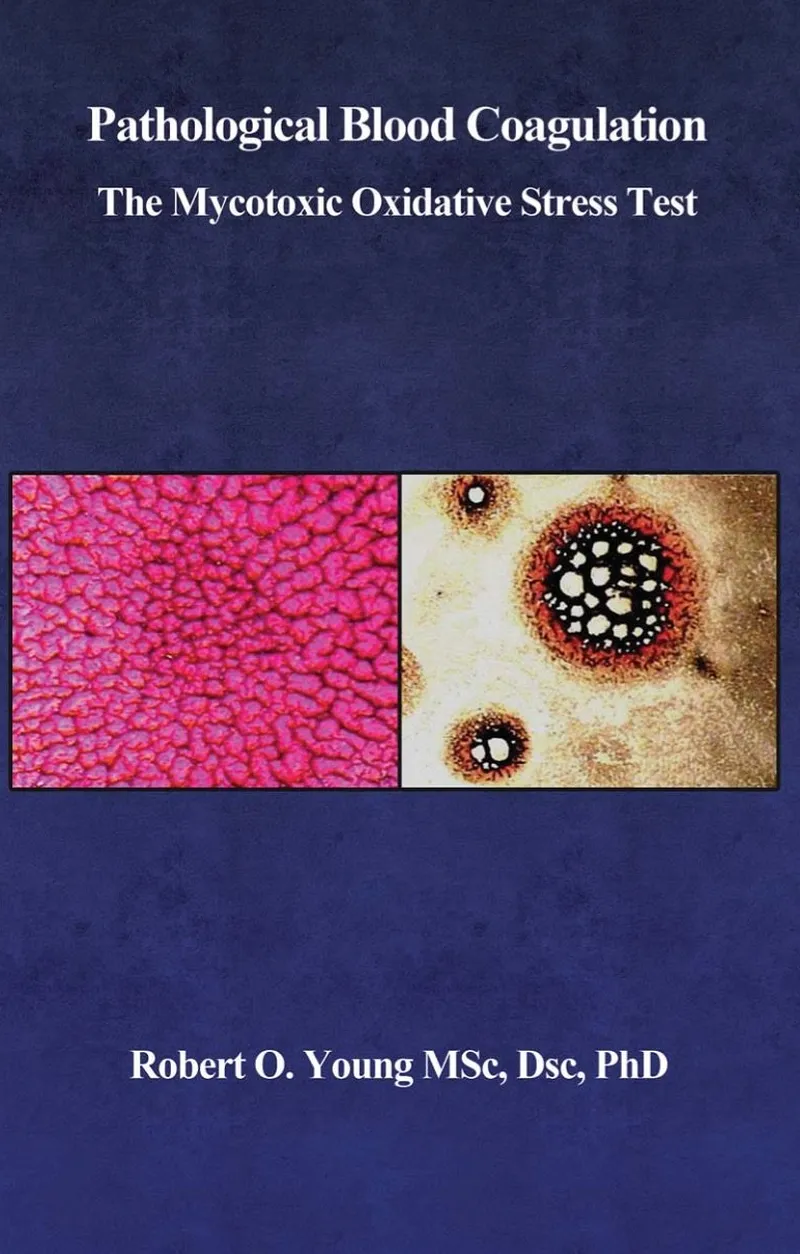
Pathological Blood Coagulation: The Myxotoxic Oxidative Stress Test by Robert Young is a monograph examining the complex mechanisms involved in blood coagulation and the development of pathological intravascular clotting. The book places these mechanisms in a historical and biochemical context, beginning with early observations about why circulating blood normally remains fluid and progressing toward modern understanding of thrombosis, coagulation factors, and abnormal clot formation.
Published by Hikari Omni Media, this work focuses particularly on pathological blood coagulation and methods proposed for detecting abnormal clotting conditions. A central topic is the Mycotoxin Oxidative Stress Test (MOST), which the author presents as a blood test intended to investigate pathological coagulation and related oxidative stress.
About the Book
Blood coagulation is an essential physiological process that prevents excessive bleeding, yet inappropriate activation of coagulation within blood vessels can contribute to serious pathological conditions. The biochemical pathways responsible for clot formation involve numerous clotting factors and regulatory mechanisms, making coagulation a complex area of pathology and laboratory medicine.
The book explores this subject through historical observations and discussions of the biochemical mechanisms involved in normal and pathological coagulation.
Historical Foundations of Blood Coagulation
The development of modern coagulation science is closely connected to questions about why blood does not normally clot while circulating through healthy blood vessels. The book revisits early work that helped establish the foundations of modern ideas about thrombosis and intravascular coagulation.
It also discusses the contributions of physicians such as T. W. Jones, Armand Trousseau, and Rudolf Virchow, whose observations and theories helped shape the study of thrombosis, embolism, and abnormal blood coagulation.
Thrombosis and Hypercoagulability
The monograph examines pathological clotting within blood vessels and the concept of hypercoagulability. It discusses Trousseau’s observations concerning the association between cancer and abnormal coagulation, including the condition now known as Trousseau’s syndrome.
The historical perspective provides context for understanding why pathological coagulation remains an important subject in medicine and pathology.
Discovery of Coagulation Factors
An interesting aspect of coagulation research is the historical discovery of individual clotting factors. The book describes how investigations of patients with unexplained bleeding disorders contributed to the identification of previously unknown components of the coagulation system.
Examples include Factor IX, known as the Christmas factor, and Factor XII, known as the Hageman factor. These discoveries illustrate how the study of abnormal bleeding helped researchers gradually establish the complex network of coagulation factors.
Pathological Intravascular Clotting
A major focus of the book is the causes of pathological intravascular coagulation. It considers how blood may become predisposed to clotting within the circulation and discusses the biochemical processes associated with this condition.
The discussion is relevant to readers interested in the relationship between coagulation abnormalities, thrombosis, pathology, and laboratory investigation.
The Mycotoxin Oxidative Stress Test
The book places particular emphasis on the Mycotoxin Oxidative Stress Test (MOST), described by the author as a method for detecting pathological blood coagulation. The monograph discusses the proposed relationship between mycotoxins, oxidative stress, and abnormal coagulation and presents MOST as a diagnostic approach within this framework.
Readers should consider these proposed mechanisms and testing approaches in the context of the scientific evidence and clinical standards applicable to their particular setting.
Who Should Use This Book?
This monograph may be of interest to:
- Pathology students and researchers
- Hematology students and professionals
- Laboratory medicine professionals
- Researchers studying blood coagulation
- Researchers interested in thrombosis and embolism
- Biomedical science students
- Readers interested in the history of coagulation research
- Professionals exploring proposed approaches to pathological coagulation testing
Final Thoughts
Pathological Blood Coagulation: The Myxotoxic Oxidative Stress Test provides a focused discussion of pathological intravascular coagulation, combining historical developments in coagulation science with an examination of biochemical mechanisms and proposed methods of detection. Its discussion of thrombosis, hypercoagulability, coagulation factors, and the author’s Mycotoxin Oxidative Stress Test makes it a specialized resource for readers interested in the intersection of pathology, hematology, and laboratory investigation.
Book Information
Title: Pathological Blood Coagulation: The Myxotoxic Oxidative Stress Test
Author: Robert Young
Publisher: Hikari Omni Media
Publication Date: August 3, 2016
Language: English
ISBN-13: 978-0997906288
ASIN: B01JNPLP9C
Subjects: Blood Coagulation, Hematology, Pathology, Thrombosis, Intravascular Coagulation, Coagulation Factors, Oxidative Stress, Laboratory Medicine, Clinical Pathology, Hemostasis
A specialized monograph exploring pathological blood coagulation, thrombosis, coagulation mechanisms, and the author’s proposed Mycotoxin Oxidative Stress Test.
Support the Creators!
If you enjoy this book, please consider supporting the author and publisher by purchasing a physical or digital copy. Buying official copies ensures authors can keep writing great books.