
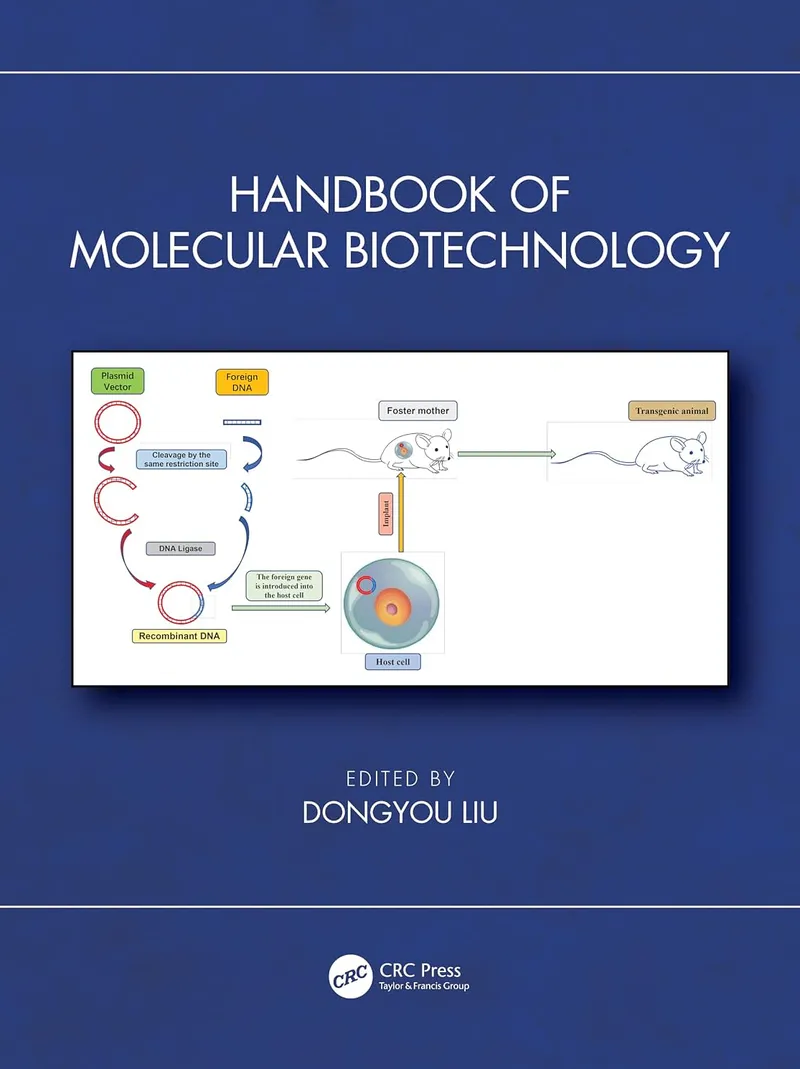

Handbook of Molecular Biotechnology
Handbook of Molecular Biotechnology, 1st Edition provides a broad and contemporary overview of molecular biotechnology, connecting the fundamental technologies of DNA, RNA, and proteins with their applications in medicine, agriculture, industry, food production, and environmental science. Published by CRC Press in 2024, the book brings together contributions from international scientists working in molecular biotechnology research and development.
The development of biotechnology spans thousands of years, from selective breeding and fermentation to modern molecular techniques. The discovery of the DNA double helix and the emergence of recombinant DNA technology transformed biotechnology into a molecular discipline, creating new approaches to disease diagnosis, treatment and prevention, pharmaceutical production, agriculture, and industrial biotechnology.
About the Book
The Handbook of Molecular Biotechnology is designed to bridge the gap between highly detailed laboratory manuals and conventional textbooks that may provide limited practical insight. Rather than concentrating exclusively on procedural instructions, the book emphasizes the principles, reasoning, strategies, and applications behind molecular biotechnology techniques.
The book is organized into four major sections. The first three provide in-depth coverage of DNA, RNA, and protein technologies, while the fourth explores how these technologies are applied across different areas of biotechnology.
DNA, RNA, and Protein Technologies
A major strength of the handbook is its coverage of the molecular technologies that form the foundation of modern biotechnology. Individual chapters discuss the history, principles, development, and applications of important techniques, allowing readers to understand not only how technologies are used but also why they are valuable.
The interconnected treatment of DNA, RNA, and protein technologies helps readers develop a broader understanding of molecular biotechnology and the relationships between different experimental approaches.
Biotechnology Applications
The technologies discussed throughout the book have applications across a wide range of scientific and industrial fields, including:
- Medical biotechnology and human health
- Disease diagnosis, treatment, and prevention
- Pharmaceutical and industrial biotechnology
- Agricultural biotechnology
- Animal biotechnology and welfare
- Food processing and production
- Environmental biotechnology and conservation
- Molecular research and biotechnology development
This application-focused approach helps demonstrate how fundamental molecular technologies can be translated into practical solutions.
Scientific Thinking and Experimental Research
Beyond technical knowledge, the book places particular emphasis on scientific reasoning and experimental verification. Its introduction discusses strategies such as being first, being better, and being different, together with different approaches to scientific thinking, including lateral, parallel, causal, reverse, and random thinking.
The discussion of experimental execution is intended to help readers approach research projects more effectively, evaluate scientific information, prepare research reports, and develop innovative approaches to biotechnology problems.
A Connected Approach to Molecular Biotechnology
The chapters are written as relatively independent lectures while remaining interconnected through common molecular biotechnology concepts. This structure makes the book useful for both systematic study and selective reference.
By combining historical background, fundamental principles, technological developments, and applications, the handbook provides a broader perspective than a technique-focused laboratory manual. It encourages readers to understand biotechnology as a combination of molecular knowledge, experimental reasoning, and practical application.
Who Should Read This Book?
Handbook of Molecular Biotechnology is particularly useful for:
- Undergraduate and postgraduate students studying molecular biotechnology
- Students of molecular biology, biotechnology, biochemistry, and related disciplines
- Researchers beginning work in molecular biotechnology laboratories
- Scientists seeking an overview of modern molecular technologies
- Educators and academic instructors
- Scholars following developments in biotechnology research
- Policymakers interested in contemporary biotechnology technologies and applications
Final Thoughts
Handbook of Molecular Biotechnology offers a comprehensive introduction to the technologies and scientific thinking underlying modern molecular biotechnology. Its combination of DNA, RNA, and protein technologies with diverse biotechnological applications makes it relevant to students, researchers, educators, and professionals across several life-science disciplines.
Rather than serving solely as a collection of laboratory procedures, the book emphasizes understanding, reasoning, experimental verification, and the practical value of molecular technologies. For readers looking to build a strong foundation in molecular biotechnology while exploring its applications across medicine, agriculture, industry, food, and environmental science, this handbook provides a valuable contemporary reference.
Book Information
Title: Handbook of Molecular Biotechnology
Publisher: CRC Press
Publication Date: September 5, 2024
Edition: 1st Edition
Language: English
Print Length: 730 pages
ISBN-10: 0367517876
ISBN-13: 978-0367517878
Subjects: Molecular Biotechnology, Biotechnology, Molecular Biology, DNA Technology, RNA Technology, Protein Technology, Genetic Engineering, Medical Biotechnology, Agricultural Biotechnology, Industrial Biotechnology, Environmental Biotechnology
Handbook of Molecular Biotechnology provides a contemporary and interdisciplinary overview of DNA, RNA, and protein technologies together with the scientific reasoning and applications that drive modern biotechnology.
Support the Creators!
If you enjoy this book, please consider supporting the author and publisher by purchasing a physical or digital copy. Buying official copies ensures authors can keep writing great books.