
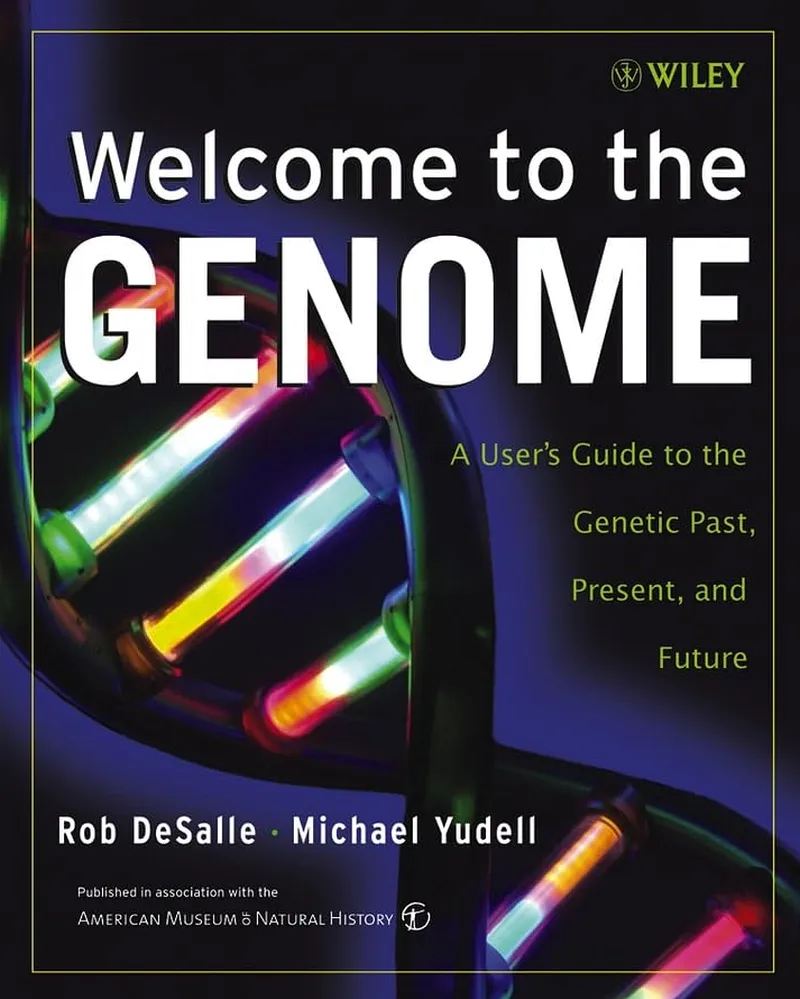

Welcome to the Genome: A User’s Guide to the Genetic Past, Present, and Future
Welcome to the Genome: A User’s Guide to the Genetic Past, Present, and Future offers an accessible introduction to genomics and the growing influence of genetic science on medicine, society, and everyday life. Written by Rob DeSalle and Michael Yudell, the book explores how scientists came to understand the human genome, what genomic discoveries meant at the time of publication, and the scientific, ethical, and social questions raised by the emerging genomic era.
Rather than presenting genomics as a collection of difficult technical concepts, the book uses reader-friendly explanations and full-color illustrations to make complex ideas easier to understand. It provides historical background, scientific context, and discussion of the broader consequences of learning how genetic information works.
About the Book
The genome can be viewed as the biological information system contained within our DNA. The book introduces readers to this remarkable molecular blueprint and explains how the development of genomics transformed ideas about biology, heredity, health, and disease.
A central theme is the Genomic Revolution and its potential to influence areas ranging from personalized medicine and gene therapy to agriculture and genetically modified foods. The authors place these developments within a larger historical narrative, helping readers understand how discoveries in genetics gradually led to the sequencing of the human genome.
From Genetics to the Human Genome
The book traces important discoveries that contributed to modern genomics and the effort to decode human DNA. This historical perspective helps explain why genome sequencing represented such a significant milestone in biological science.
By following the progression from early genetic discoveries to genome research, readers can gain a clearer appreciation of how scientific knowledge develops and how individual discoveries contribute to major changes in medicine and biology.
Genomics and Human Health
One of the book’s major areas of interest is the potential impact of genomic science on healthcare. It examines possibilities such as personalized medicine and gene therapy, while considering how knowledge of individual genetic information could influence the diagnosis, prevention, and treatment of disease.
The discussion also encourages readers to think critically about the limitations of genetic explanations. The idea that DNA alone determines human destiny is treated with appropriate caution, emphasizing that biology is more complex than a simple genetic blueprint.
Science, Society, and Ethics
Genomics does not exist independently of society. As genetic technologies develop, they raise important questions concerning ethics, public policy, health, technology, and the responsible use of genetic information.
Welcome to the Genome gives particular attention to these social and ethical dimensions. Topics such as genetically modified foods and the wider consequences of genomic research demonstrate why understanding genetics requires more than scientific knowledge alone.
Looking Toward the Future
The book also considers the possibilities opened by the developing genomic era. Because this edition was published in 2004, its predictions and discussions of emerging technologies should be understood within the scientific and technological context of that period.
Nevertheless, its broader examination of how genomic discoveries influence scientific thinking, healthcare, public discussion, and ethical decision-making remains useful for readers interested in the history and development of modern genomics.
An Accessible Introduction to Genomics
With approachable explanations and visual material, the book is intended for readers who want to understand the significance of genomic science without beginning with a highly specialized technical textbook. It combines scientific information with history, social discussion, and ethical considerations.
This interdisciplinary approach makes the book particularly relevant to readers interested in genetics, genomics, molecular biology, medicine, biotechnology, public health, and the social implications of science.
Who Should Read This Book?
Welcome to the Genome may be useful for:
- Students beginning their study of genetics and genomics
- Readers interested in the history of the Human Genome Project
- Students of biology, biotechnology, and molecular biology
- Readers interested in genetics and modern medicine
- Those exploring gene therapy and personalized medicine
- Readers interested in genetically modified foods and biotechnology
- Students examining the ethical and social dimensions of genetic science
- General readers looking for an accessible introduction to genomics
Final Thoughts
Welcome to the Genome: A User’s Guide to the Genetic Past, Present, and Future presents genomics as both a scientific revolution and a social development. By combining the history of genetic discovery with accessible explanations and discussions of medicine, biotechnology, ethics, and society, the book helps readers understand why the genome became such an important subject at the beginning of the twenty-first century.
Published in 2004, the book is best approached today as both an introduction to genomic concepts and a historical perspective on the early genomic era. Its central message remains relevant: understanding DNA and genomes is not simply about decoding genetic information, but also about considering how that knowledge should be interpreted and used.
Book Information
Title: Welcome to the Genome: A User’s Guide to the Genetic Past, Present, and Future
Authors: Rob DeSalle, Michael Yudell
Publisher: Wiley
Publication Date: September 28, 2004
Edition: 1st Edition
Language: English
Print Length: 240 pages
ISBN-10: 0471453315
ISBN-13: 978-0471453314
Subjects: Genetics, Genomics, Human Genome, Molecular Biology, DNA, Human Genetics, Genome Science, Genetic Medicine, Gene Therapy, Personalized Medicine, Biotechnology, Genetics and Ethics
Welcome to the Genome provides an accessible introduction to genomics while exploring the history, medical possibilities, ethical questions, and social implications surrounding our growing understanding of genetic information.
Support the Creators!
If you enjoy this book, please consider supporting the author and publisher by purchasing a physical or digital copy. Buying official copies ensures authors can keep writing great books.