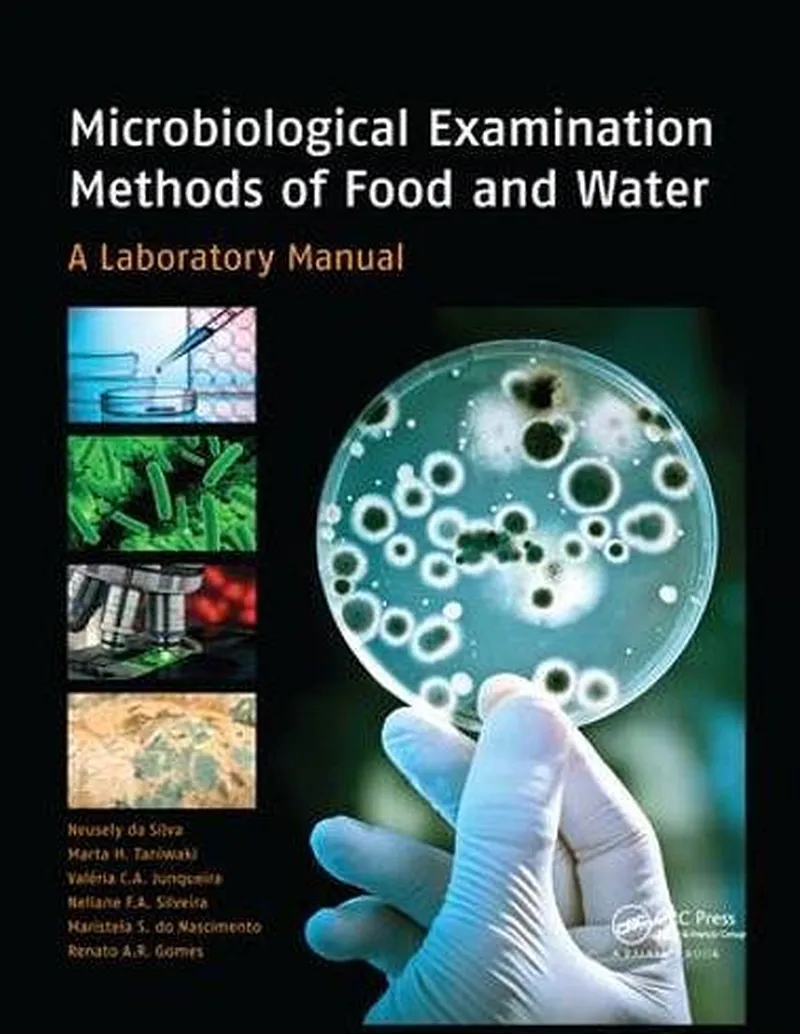

Microbiological Examination Methods of Food and Water: A Laboratory Manual
Microbiological Examination Methods of Food and Water: A Laboratory Manual is a practical reference for the microbiological analysis of food and water samples. Published by CRC Press, this illustrated laboratory manual presents standard culture-based methods used to detect, enumerate, and investigate microorganisms associated with contamination, hygiene, spoilage, and food- and waterborne disease.
The book brings together established methods associated with major international organizations and provides a practical framework for selecting and carrying out microbiological examination procedures in laboratory settings.
About the Book
The manual covers microbiological methods for examining food and water, with particular attention to the enumeration and detection of different groups of microorganisms. Its coverage includes indicator microorganisms, hygiene and sanitary indicators, spore-forming microorganisms, spoilage fungi, and pathogenic bacteria.
Each chapter begins with an updated scientific and bibliographic overview of the microorganisms being examined. Information on taxonomy and nomenclature helps readers navigate changes in the classification and naming of microorganisms, an increasingly important consideration when consulting microbiological literature and online resources.
Standard Microbiological Methods
A major feature of the book is its focus on standard microbiological culture methods associated with internationally recognized organizations, including:
- ISO
- AOAC
- APHA
- FDA
- FSIS/USDA
The procedures provide a foundation for the microbiological examination of food and water while helping laboratory users understand the differences between commonly used approaches.
Comparing Methods and Choosing Procedures
The book does more than simply describe individual laboratory procedures. Each chapter includes schematic comparisons of the methods presented, emphasizing their major similarities and differences.
This comparative approach can help laboratory professionals and students determine which method is most appropriate for a particular analytical purpose. Chapters also identify validated alternative rapid methods that may be suitable for analyzing the microorganisms discussed, even when those methods are not described in full within the manual.
Step-by-Step Laboratory Procedures
The illustrated and practical format makes the book particularly useful as a laboratory companion. Procedures are presented using step-by-step schemes and visual explanations, allowing readers to quickly understand the sequence of operations involved in a particular examination method.
This format is valuable for laboratory training because it connects microbiological theory with the practical workflow required to obtain and interpret analytical results.
Key Areas Covered
The manual addresses methods for:
- Enumeration of microorganisms indicating general contamination
- Indicators of hygiene and sanitary conditions
- Spore-forming microorganisms
- Spoilage fungi
- Pathogenic bacteria
- Microbiological examination of food
- Microbiological examination of water
- Standard culture-based analytical procedures
- Comparison of alternative microbiological methods
- Validated rapid and alternative methods
- Microbial taxonomy and nomenclature relevant to laboratory analysis
Who Should Use This Laboratory Manual?
Microbiological Examination Methods of Food and Water is suitable for a wide range of academic and professional users, including:
- Food microbiologists
- Food and water analysts
- Laboratory professionals and technicians
- Research scientists
- Food microbiology instructors and teachers
- Food safety laboratories
- Food engineering students
- Food science and microbiology students
- Biotechnology and biology students
- Graduate students studying food microbiology or food engineering
It can also serve as a practical laboratory manual for undergraduate and graduate courses involving food microbiology, food science, food engineering, biotechnology, and biological analysis.
Final Thoughts
Microbiological Examination Methods of Food and Water: A Laboratory Manual combines established microbiological examination methods with an accessible, procedure-oriented format. Its coverage of standard culture methods, method comparisons, microbial taxonomy, and validated alternative techniques makes it a useful reference for understanding how microorganisms are examined in food and water samples.
Because the book was published in 2017, users applying its procedures in regulated or current laboratory environments should verify the latest versions of relevant standards, official methods, and regulatory requirements before implementation.
Book Information
Title: Microbiological Examination Methods of Food and Water: A Laboratory Manual
Publisher: CRC Press
Publication Date: July 27, 2017
Edition: 1st
Language: English
ISBN-10: 1138451975
ISBN-13: 978-1138451971
Subjects: Food Microbiology, Water Microbiology, Food Safety, Microbiological Analysis, Laboratory Methods, Food Testing, Water Testing, Pathogenic Bacteria, Spoilage Microorganisms, Microbial Enumeration
Support the Creators!
If you enjoy this book, please consider supporting the author and publisher by purchasing a physical or digital copy. Buying official copies ensures authors can keep writing great books.