
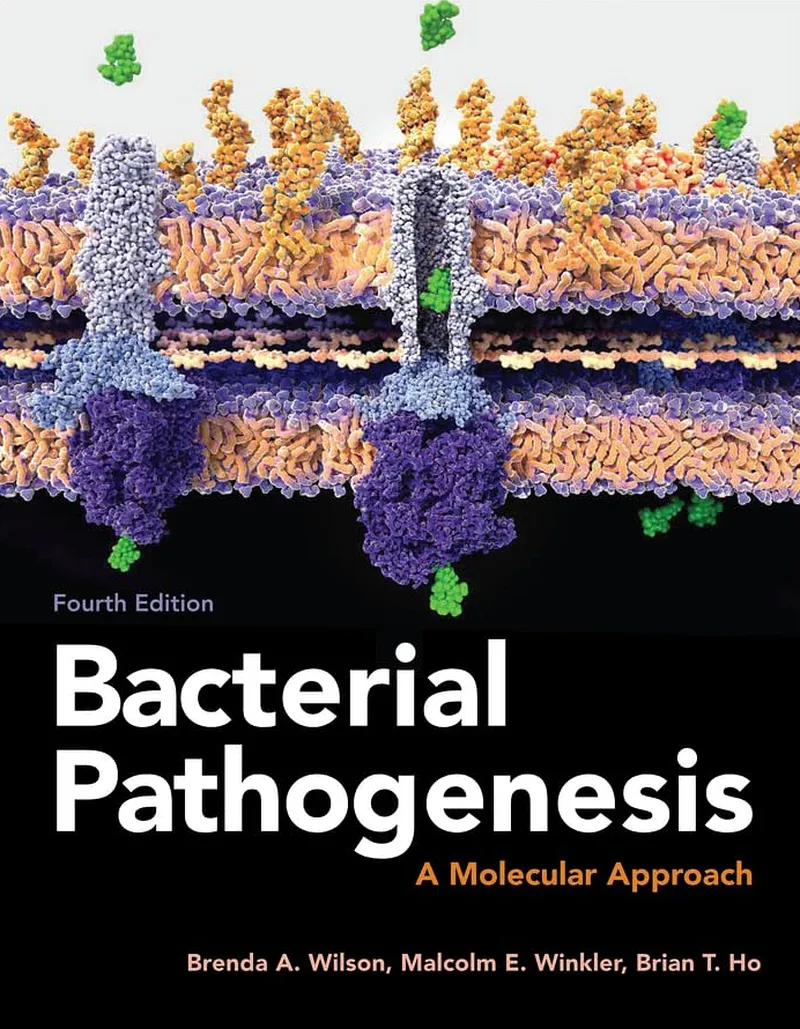

Bacterial Pathogenesis: A Molecular Approach, 4th Edition
Bacterial Pathogenesis: A Molecular Approach, 4th Edition is an advanced textbook that examines how bacterial pathogens interact with host organisms and cause infectious disease at the molecular and cellular levels. Published by ASM Press, the book connects fundamental microbiology with molecular biology, genetics, immunology, and infectious disease research.
With 720 pages, it provides an in-depth resource for students and researchers seeking to understand the mechanisms that allow bacteria to colonize hosts, evade immune defenses, damage tissues, and establish infection.
About the Book
Bacterial diseases result from complex interactions between microbial factors and host responses.
This edition explores the molecular mechanisms underlying bacterial virulence, host colonization, infection, immune evasion, cellular damage, and disease progression.
Bacterial Virulence
Virulence depends on the ability of bacteria to survive and interact with their hosts.
The book examines important virulence factors and molecular mechanisms that enable pathogenic bacteria to establish and maintain infections.
Host–Pathogen Interactions
Bacterial infection involves continuous interactions between bacterial cells and host tissues.
The text explores how pathogens recognize and interact with host cells, receptors, tissues, and immune systems during infection.
Bacterial Adhesion and Colonization
Successful infection often begins with bacterial attachment to host surfaces.
The book discusses mechanisms of adhesion, colonization, biofilm formation, and persistence, explaining how pathogens establish themselves within host environments.
Invasion and Intracellular Survival
Some pathogenic bacteria can enter host cells or survive within intracellular compartments.
The text examines molecular mechanisms involved in bacterial invasion, intracellular survival, trafficking, and manipulation of host cellular processes.
Bacterial Toxins
Many bacterial pathogens produce toxins that contribute directly to disease.
The book explores the molecular properties and mechanisms of bacterial toxins, including how they affect host cells and disrupt normal cellular functions.
Secretion Systems
Bacteria use specialized systems to transport proteins and other molecules.
The text examines bacterial secretion systems and effector proteins that allow pathogens to interact with and manipulate host cells.
Immune Evasion
Pathogenic bacteria have evolved mechanisms that allow them to resist host defenses.
The book discusses strategies involving immune evasion, complement resistance, antigenic variation, intracellular survival, and manipulation of immune signaling.
Bacterial Genetics and Virulence
Bacterial virulence is closely connected to microbial genetics.
The text examines how gene regulation, horizontal gene transfer, mobile genetic elements, mutations, and regulatory networks influence pathogenic characteristics.
Host Cellular Responses
Host cells respond to bacterial infection through complex signaling pathways.
The book explores interactions involving inflammation, innate immunity, cellular signaling, cytokine responses, and other host defense mechanisms.
Biofilms and Persistent Infection
Some bacteria can form structured communities that increase their ability to survive hostile environments.
The book discusses biofilm development, bacterial persistence, and mechanisms that contribute to chronic or difficult-to-treat infections.
Molecular Approaches to Pathogenesis
Modern research has transformed the study of bacterial disease.
The book emphasizes molecular approaches involving bacterial genetics, genomics, cell biology, molecular microbiology, and host–pathogen studies to investigate mechanisms of infection.
Who Is This Book For?
Bacterial Pathogenesis: A Molecular Approach, 4th Edition can be useful for:
- Microbiology students
- Molecular biology students
- Biomedical science students
- Graduate students
- Clinical microbiologists
- Infectious disease researchers
- Microbial genetics researchers
- Immunology researchers
- Biotechnology students
It is particularly appropriate for advanced undergraduate and graduate-level study of bacterial pathogenesis and host–microbe interactions.
Final Thoughts
Bacterial Pathogenesis: A Molecular Approach, 4th Edition provides an integrated examination of the molecular mechanisms responsible for bacterial infection and disease.
Its coverage of virulence factors, host–pathogen interactions, adhesion, invasion, toxins, secretion systems, immune evasion, bacterial genetics, biofilms, and host responses makes it a valuable resource for understanding bacterial pathogenesis from a molecular perspective.
Book Information
Title: Bacterial Pathogenesis: A Molecular Approach
Edition: 4th Edition
Series: ASM Books
Publisher: ASM Press
Publication Date: July 18, 2019
Language: English
Print Length: 720 pages
ISBN-10: 1555819400
ISBN-13: 978-1555819408
Subject: Bacterial Pathogenesis / Molecular Microbiology / Infectious Diseases / Microbial Genetics / Immunology
Bacterial Pathogenesis: A Molecular Approach, 4th Edition explores the molecular basis of bacterial virulence, host–pathogen interactions, toxins, secretion systems, immune evasion, invasion, colonization, and persistent infection, making it an important academic resource for students and researchers in microbiology and infectious disease.
Support the Creators!
If you enjoy this book, please consider supporting the author and publisher by purchasing a physical or digital copy. Buying official copies ensures authors can keep writing great books.