
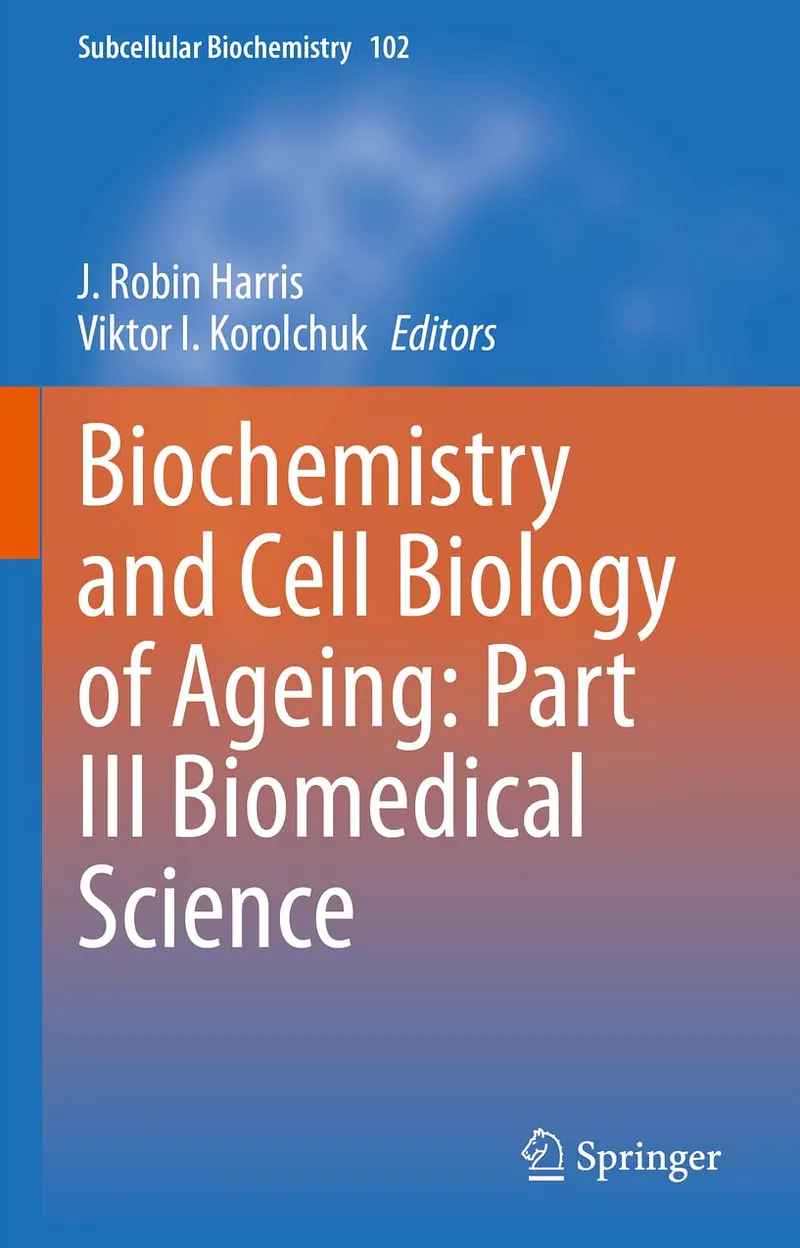

Biochemistry and Cell Biology of Ageing: Part III Biomedical Science
Biochemistry and Cell Biology of Ageing: Part III Biomedical Science provides a comprehensive and up-to-date overview of important areas of subcellular ageing research in human cells. Published by Springer as part of the Subcellular Biochemistry book series, this volume examines the molecular and cellular processes that contribute to ageing and cellular senescence.
The book introduces readers to both the historical development of biomedical ageing research and the latest developments in the field. Its chapters explore the roles of microRNAs, circRNAs, mitochondria, extracellular vesicles, gap junctions, the nuclear pore complex, and the proteasome in cellular ageing, while also considering emerging therapeutic approaches based on the modulation of cellular senescence.
About the Book
Understanding why and how cells age is one of the central challenges of modern biomedical research. Ageing involves complex interactions between molecular pathways, cellular structures, and communication mechanisms, making it a multidisciplinary area of investigation.
Biochemistry and Cell Biology of Ageing: Part III focuses on key subcellular mechanisms involved in ageing and cellular senescence. It continues the work presented in Parts I and II while introducing additional biomedical ageing topics that were not covered in the earlier volumes.
Development of Biomedical Ageing Research
The book provides an introduction to the historical development and progress of biomedical ageing research. Understanding how ideas about cellular ageing have evolved helps place contemporary discoveries within a broader scientific context.
This perspective also provides a foundation for appreciating the rapidly expanding research into the molecular and subcellular mechanisms that influence the ageing process.
MicroRNAs and circRNAs in Cellular Senescence
Non-coding RNAs have become important subjects in modern molecular biology and ageing research. The book examines the roles of microRNAs and circular RNAs (circRNAs) in cellular senescence.
These regulatory molecules provide another perspective on how changes in gene regulation and cellular signaling can contribute to age-related alterations within human cells.
Mitochondria and Extracellular Vesicles
The book explores the involvement of mitochondria and extracellular vesicles in cellular senescence. Mitochondria are central components of cellular metabolism and function, while extracellular vesicles contribute to communication between cells.
Examining both systems helps illustrate the interconnected nature of cellular ageing and the multiple subcellular processes that can influence senescence.
Gap Junctions and Cellular Communication
Cell-to-cell communication is another important aspect of ageing biology. The book discusses gap junctions and their relationship with ageing processes.
Understanding these communication mechanisms contributes to a broader picture of how changes occurring within individual cells can influence interactions between cells and tissues.
Nuclear Pore Complex
The nuclear pore complex is another subcellular structure examined in relation to ageing. Nuclear transport and communication between the nucleus and cytoplasm are fundamental to cellular function, making nuclear organization an important consideration in studies of cellular ageing.
The book places this structure within the wider context of the molecular and subcellular mechanisms associated with ageing.
Proteasome and Cellular Ageing
The book also considers the role of the proteasome in ageing processes. Protein quality control is an important aspect of cellular maintenance, and alterations in protein-processing systems can have significant consequences for cell function.
The discussion of the proteasome adds another dimension to the book’s examination of the mechanisms underlying cellular ageing.
Therapeutic Opportunities in Cellular Senescence
Beyond understanding the mechanisms of ageing, the book examines novel therapeutic opportunities through modulation of cellular senescence. This reflects the growing interest in translating discoveries in ageing biology into potential biomedical approaches.
The discussion provides a bridge between fundamental research into cellular ageing and emerging therapeutic perspectives.
Part of the Subcellular Biochemistry Series
This volume follows Parts I and II of Biochemistry and Cell Biology of Ageing, published as Volumes 90 and 91 of the Subcellular Biochemistry series. Part III expands the overall collection by addressing significant biomedical ageing topics not included in the earlier volumes.
As a continuation of the series, the book contributes to a broader examination of ageing at the molecular and cellular level.
Who Should Use This Book?
Biochemistry and Cell Biology of Ageing: Part III Biomedical Science is suitable for:
- Biomedical researchers
- Biochemists
- Cell biologists
- Molecular biologists
- Ageing and senescence researchers
- Geroscience researchers
- Biomedical science students
- Early-career scientists
- Experienced researchers studying cellular ageing
- Researchers interested in subcellular mechanisms of ageing
Final Thoughts
Biochemistry and Cell Biology of Ageing: Part III Biomedical Science provides a detailed examination of important molecular and subcellular mechanisms involved in human cellular ageing. From microRNAs, circRNAs, mitochondria, and extracellular vesicles to gap junctions, the nuclear pore complex, and the proteasome, the book explores a diverse range of processes associated with cellular senescence.
As the third part of the Biochemistry and Cell Biology of Ageing collection, it extends the coverage of the earlier volumes with additional biomedical topics and emerging therapeutic perspectives. It is a valuable reference for both experienced researchers and early-career scientists seeking to understand the complex and evolving science of why and how human cells age.
Book Information
Title: Biochemistry and Cell Biology of Ageing: Part III Biomedical Science
Publisher: Springer
Publication Date: January 7, 2024
Edition: 2023
Language: English
Print Length: 433 pages
ISBN-10: 3031214129
ISBN-13: 978-3031214127
Series: Subcellular Biochemistry
Subjects: Biochemistry, cell biology, ageing, cellular senescence, biomedical science, molecular biology, mitochondria, extracellular vesicles, microRNAs, circRNAs, proteasome, nuclear pore complex, ageing research
Biochemistry and Cell Biology of Ageing: Part III Biomedical Science explores the molecular and subcellular foundations of cellular ageing while highlighting emerging discoveries and therapeutic opportunities in modern biomedical ageing research.
Support the Creators!
If you enjoy this book, please consider supporting the author and publisher by purchasing a physical or digital copy. Buying official copies ensures authors can keep writing great books.