
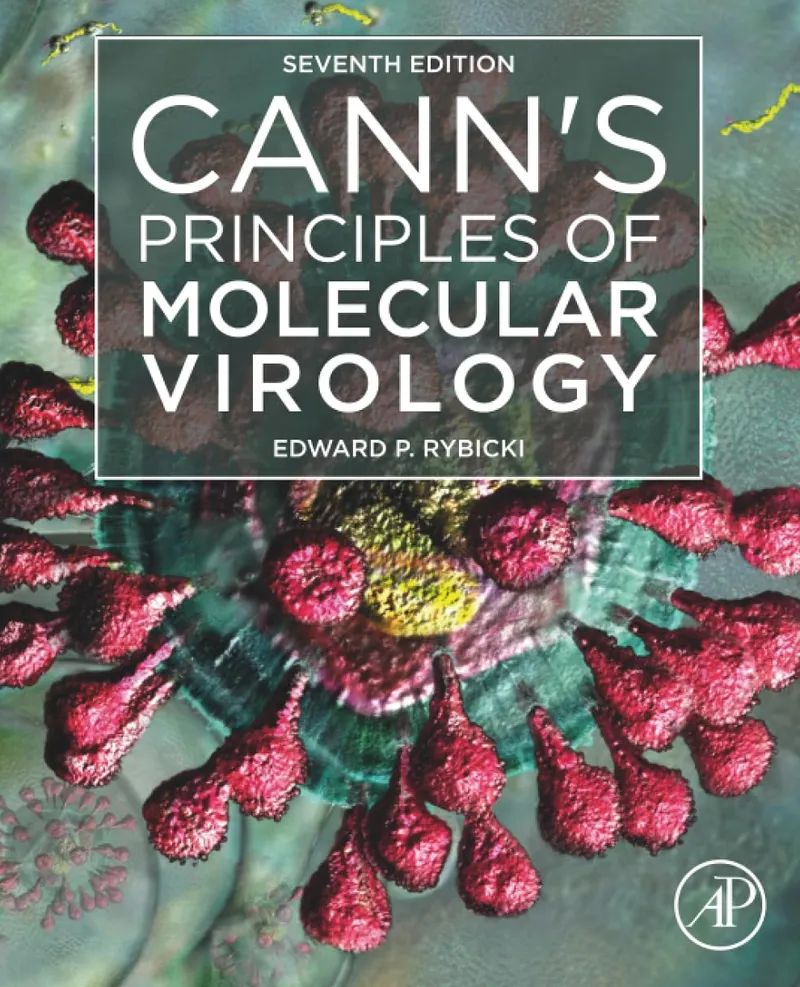

Cann’s Principles of Molecular Virology, 7th Edition
Cann’s Principles of Molecular Virology, 7th Edition provides an accessible introduction to the fundamental principles of modern virology, with a strong focus on the molecular mechanisms underlying viral structure, infection, replication, evolution, and disease. Published by Academic Press in 2023, this fully updated edition is designed to help students build a clear conceptual foundation in molecular virology.
The book explains how viruses function at the molecular level and how they interact with host cells. It moves from the history and basic principles of virology to viral structure, infection, replication, pathogenesis, and emerging areas of viral research. New material on phage therapy, CRISPR-based phage defense and offense, viral evolution, and giant viruses brings the seventh edition into the context of important developments in contemporary virology.
About the Book
Cann’s Principles of Molecular Virology, Seventh Edition presents the principles of molecular virology in a clear and concise format. Rather than treating viruses simply as infectious agents, the book examines the molecular processes that determine how viral particles are constructed, how they enter host cells, how they reproduce, and how infections affect their hosts.
The book is intended to provide a strong foundation for students and researchers entering virology and related fields, while also serving as a useful reference for readers who need a conceptual understanding of viral biology.
History and Fundamentals of Virology
The book begins by establishing the foundations of virology, including the historical development of the field and the fundamental concepts needed to understand viruses.
This foundation provides context for the molecular mechanisms discussed throughout the later chapters and helps readers appreciate how advances in molecular biology have transformed the study of viruses.
Viral Structure and Molecular Organization
Understanding how viruses work requires an understanding of their molecular architecture. The book examines the interactions that control the structure and organization of virus particles, connecting viral structure with the biological functions required for infection and replication.
This molecular perspective helps explain why different viruses possess distinct structural and functional characteristics.
Viral Infection and Replication
A major focus of molecular virology is understanding how viruses infect cells and reproduce themselves. The text explores the processes involved in viral infection and replication, emphasizing the molecular interactions between viruses and their host cells.
Understanding these mechanisms provides an essential foundation for studying viral diseases, antiviral strategies, and virus–host interactions.
Virus–Host Interactions and Pathogenesis
Viral infection can produce a wide range of consequences for host organisms. The book examines the relationship between viral replication and the pathogenesis of viral infections, helping readers understand how molecular events can lead to biological and clinical effects.
The discussion provides a bridge between fundamental viral biology and the consequences of infection in host organisms.
Viral Evolution and Emerging Concepts
The seventh edition includes new ideas about viral evolution, reflecting the continuing development of our understanding of how viruses change and diversify.
It also introduces the growing importance of giant viruses, expanding the reader’s perspective on viral diversity and the boundaries of traditional concepts of viral biology.
Phage Therapy and CRISPR
New material in this edition addresses phage therapy and the role of CRISPR in phage defense and offense systems. These topics illustrate how molecular mechanisms discovered through the study of microorganisms and viruses can have broader implications for biological research and biotechnology.
The inclusion of these emerging areas helps connect fundamental virology with contemporary research directions.
Learning Resources and Further Reading
The seventh edition includes updated learning outcomes and further reading for each chapter, helping students identify important concepts and explore topics beyond the main text.
Online resources for students and instructors provide additional support for teaching and learning, making the book suitable for structured courses as well as independent study.
Who Should Use This Book?
Cann’s Principles of Molecular Virology, 7th Edition is particularly useful for:
- Advanced undergraduate students studying virology, microbiology, or molecular biology.
- Graduate students beginning their studies in virology.
- Students studying viral structure, replication, infection, and pathogenesis.
- Researchers entering virology, infectious disease, or immunology research.
- Molecular biology students interested in virus–host interactions.
- Academics and instructors teaching introductory or intermediate virology courses.
- Readers seeking an accessible foundation in modern molecular virology.
Final Thoughts
Cann’s Principles of Molecular Virology, Seventh Edition offers a clear and accessible route into the molecular study of viruses. By connecting viral structure, infection, replication, host interactions, pathogenesis, and evolution, it provides students with the conceptual framework needed to understand modern virology.
The addition of topics such as phage therapy, CRISPR-based phage defense and offense, giant viruses, and emerging ideas about viral evolution further broadens the scope of the seventh edition. Together with updated learning outcomes, further reading, and online resources, the book serves as a strong foundational reference for students and researchers entering the field.
Book Information
Title: Cann’s Principles of Molecular Virology
Publisher: Academic Press
Publication Date: February 8, 2023
Edition: 7th
Language: English
Print Length: 388 pages
ISBN-13: 978-0128227855
ASIN: B0BVHWQVH2
Subjects: Molecular virology, virology, viral structure, virus replication, virus–host interactions, viral infection, pathogenesis, viral evolution, bacteriophages, phage therapy, CRISPR, giant viruses, microbiology, molecular biology, infectious diseases, and immunology.
Cann’s Principles of Molecular Virology, 7th Edition provides an accessible and up-to-date foundation in viral structure, replication, infection, pathogenesis, evolution, and emerging areas of modern virology.
Support the Creators!
If you enjoy this book, please consider supporting the author and publisher by purchasing a physical or digital copy. Buying official copies ensures authors can keep writing great books.