
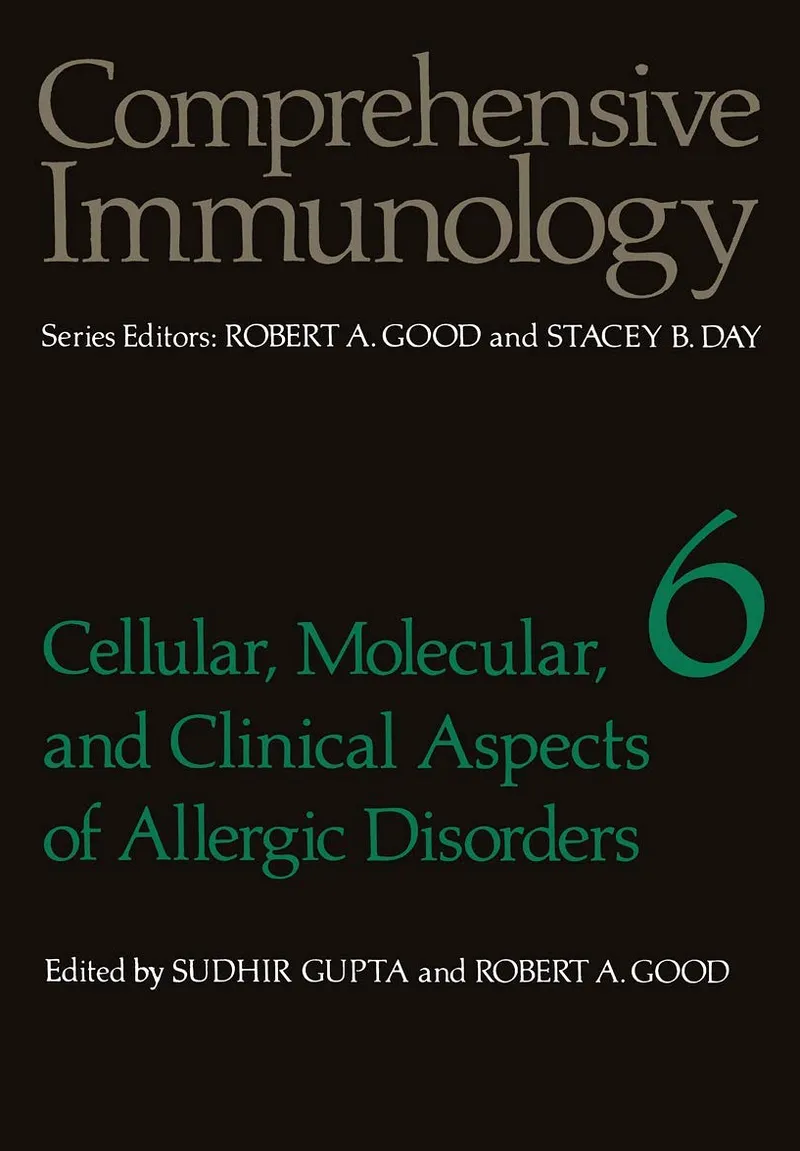

Cellular, Molecular, and Clinical Aspects of Allergic Disorders
Cellular, Molecular, and Clinical Aspects of Allergic Disorders is a specialized volume in the Comprehensive Immunology series that examines allergic disease from cellular, molecular, and clinical perspectives. Published by Springer, the book explores the biological mechanisms underlying allergic reactions and their relationship to clinical manifestations.
With 647 pages, this volume provides extensive coverage for readers interested in allergy, immunology, and immune-mediated disorders.
About the Book
Allergic disorders result from complex interactions between the immune system and environmental substances.
Understanding these conditions requires knowledge of the cells, antibodies, mediators, and biological pathways involved in allergic responses, as well as their clinical consequences.
Cellular Mechanisms of Allergy
Allergic reactions involve coordinated activity among several types of immune cells.
The book examines the roles of mast cells, basophils, eosinophils, lymphocytes, and other inflammatory cells, helping readers understand how cellular interactions contribute to allergic responses.
Molecular Components
Allergic reactions are regulated by numerous molecular mediators.
The book explores concepts involving immunoglobulins, inflammatory mediators, cytokines, receptors, and cellular signaling, providing insight into the molecular events that occur during allergic reactions.
Immune Responses and Hypersensitivity
Allergic disease is closely associated with abnormal or excessive immune responses.
Understanding immune sensitization, antigen recognition, antibody-mediated responses, and inflammatory pathways provides a foundation for studying the mechanisms responsible for allergic disorders.
Clinical Aspects
The biological mechanisms of allergy ultimately produce clinical manifestations affecting different organs and tissues.
The book connects cellular and molecular mechanisms with the clinical presentation and characteristics of allergic disorders, providing a bridge between basic immunology and clinical medicine.
Allergy Research
The study of allergic disease requires integration of multiple areas of immunology.
By bringing together cellular biology, molecular mechanisms, immunological responses, and clinical observations, the book provides a broad perspective on the scientific study of allergy.
Who Is This Book For?
Cellular, Molecular, and Clinical Aspects of Allergic Disorders can be useful for:
- Immunology students
- Medical students
- Allergy and immunology trainees
- Biomedical science students
- Researchers in immunology
- Pathology students
- Healthcare professionals
- Researchers studying hypersensitivity and allergic disease
It is particularly relevant to readers interested in the relationship between basic immune mechanisms and allergic disorders.
Final Thoughts
Cellular, Molecular, and Clinical Aspects of Allergic Disorders provides an extensive examination of allergy through multiple levels of biological organization.
The book connects immune cells, molecular mediators, hypersensitivity mechanisms, inflammatory responses, and clinical manifestations, providing a detailed reference for the study of allergic disorders.
As a reprint of an earlier work in the Comprehensive Immunology series, it also provides historical perspective on the development of concepts in allergy and immunology.
Book Information
Title: Cellular, Molecular, and Clinical Aspects of Allergic Disorders
Series: Comprehensive Immunology
Edition: Softcover reprint of the original 1st Edition
Publisher: Springer
Publication Date: December 27, 2012
Original Edition: 1979
Language: English
Print Length: 647 pages
ISBN-10: 1468409905
ISBN-13: 978-1468409901
Subject: Allergy / Immunology / Hypersensitivity / Clinical Immunology / Inflammatory Disorders
Cellular, Molecular, and Clinical Aspects of Allergic Disorders examines the cellular and molecular mechanisms of allergic reactions alongside their clinical manifestations, making it a specialized reference for students, researchers, and professionals interested in allergy and immunology.
Support the Creators!
If you enjoy this book, please consider supporting the author and publisher by purchasing a physical or digital copy. Buying official copies ensures authors can keep writing great books.