
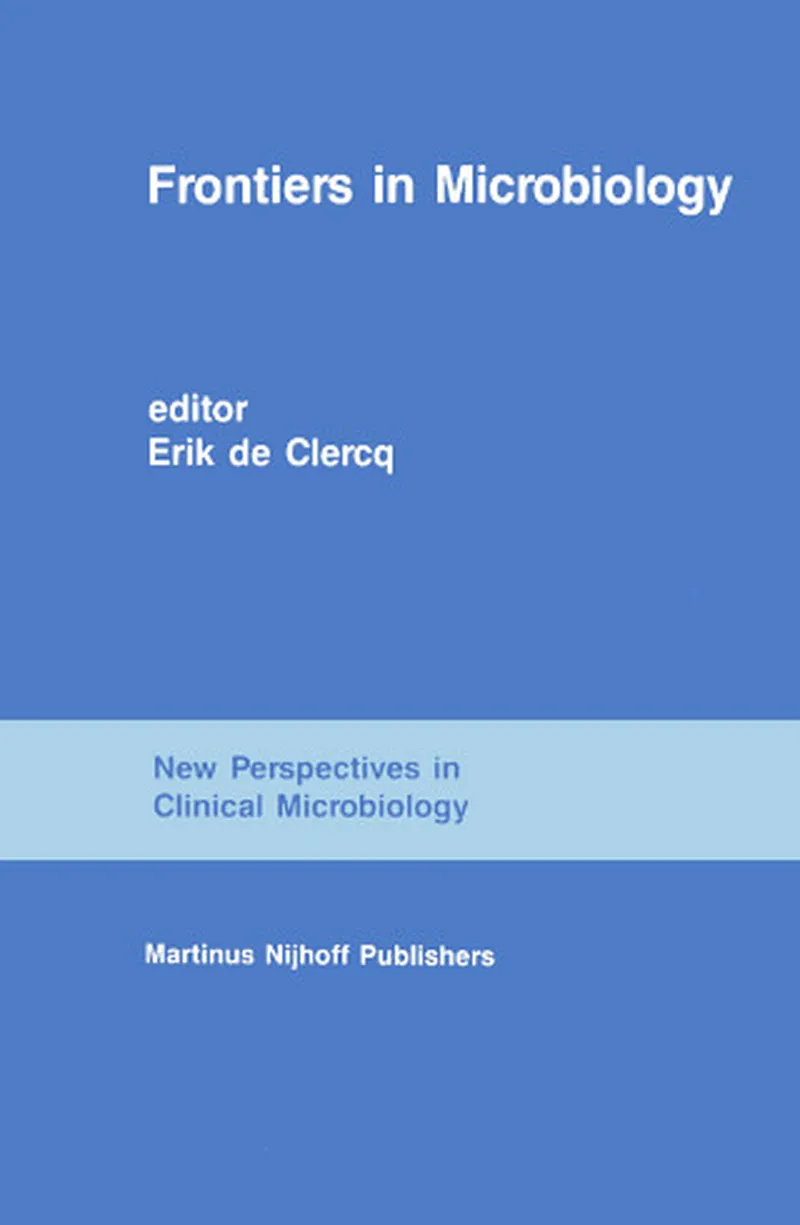

Frontiers in Microbiology: From Antibiotics to AIDS
Frontiers in Microbiology: From Antibiotics to AIDS is a collection focused on important developments and perspectives in clinical microbiology. Part of the New Perspectives in Clinical Microbiology series, the book explores topics ranging from antimicrobial therapy and bacterial infections to the emerging challenges associated with HIV/AIDS.
The volume provides historical and scientific perspectives on the development of clinical microbiology and infectious disease research.
About the Book
Clinical microbiology has evolved considerably through advances in antibiotics, microbial research, laboratory diagnosis, and infectious disease medicine.
This book examines selected developments that have shaped the field, providing readers with a broader perspective on the challenges and discoveries that influenced modern clinical microbiology.
Antibiotics and Antimicrobial Therapy
Antibiotics transformed the treatment of bacterial infections and became an essential part of modern medicine.
The study of antimicrobial therapy also highlights challenges such as microbial adaptation and antimicrobial resistance, which continue to influence infectious disease management.
Clinical Microbiology
Clinical microbiology connects laboratory science with the diagnosis and management of infectious diseases.
Important areas include microbial identification, laboratory investigation, pathogenic microorganisms, and the relationship between microbiological findings and clinical disease.
HIV/AIDS and Emerging Infections
The emergence of AIDS represented a major challenge for medicine and microbiology.
The study of HIV/AIDS contributed to advances in virology, immunology, infectious disease research, laboratory diagnosis, and public health, while also demonstrating how emerging infections can influence medical science.
Historical Perspective
As a reprint of an original 1987 edition, the book provides an opportunity to explore the scientific perspectives and clinical microbiology challenges of that period.
It can be particularly interesting for readers studying the development of infectious disease research and the history of clinical microbiology.
Who Is This Book For?
Frontiers in Microbiology: From Antibiotics to AIDS can be useful for:
- Microbiology students
- Medical students
- Clinical microbiology students
- Infectious disease researchers
- Biomedical science students
- Healthcare professionals
- Readers interested in the history of microbiology
- Researchers studying infectious diseases
Final Thoughts
Frontiers in Microbiology: From Antibiotics to AIDS presents perspectives on major developments in clinical microbiology, ranging from antibiotic therapy and infectious diseases to the emergence of AIDS.
With 314 pages, it offers a focused look at topics that shaped clinical microbiology and infectious disease research, while its original 1987 publication date provides valuable historical context.
For readers interested in clinical microbiology, infectious diseases, antimicrobial therapy, HIV/AIDS, and the development of modern microbiological research, this book provides an informative historical and scientific perspective.
Book Information
Title: Frontiers in Microbiology: From Antibiotics to AIDS
Series: New Perspectives in Clinical Microbiology
Edition: Softcover Reprint of the Original 1st Edition, 1987
Publisher: Springer Nature
Publication Date: September 20, 2011
Language: English
Print Length: 314 pages
ISBN-10: 9401080062
ISBN-13: 978-9401080064
Subject: Clinical Microbiology / Infectious Diseases / Antibiotics / HIV/AIDS / Medical Microbiology
Frontiers in Microbiology: From Antibiotics to AIDS explores important developments in clinical microbiology, antimicrobial therapy, infectious diseases, and HIV/AIDS, providing readers with a useful historical perspective on the evolution of microbiology and infectious disease research.
Support the Creators!
If you enjoy this book, please consider supporting the author and publisher by purchasing a physical or digital copy. Buying official copies ensures authors can keep writing great books.