
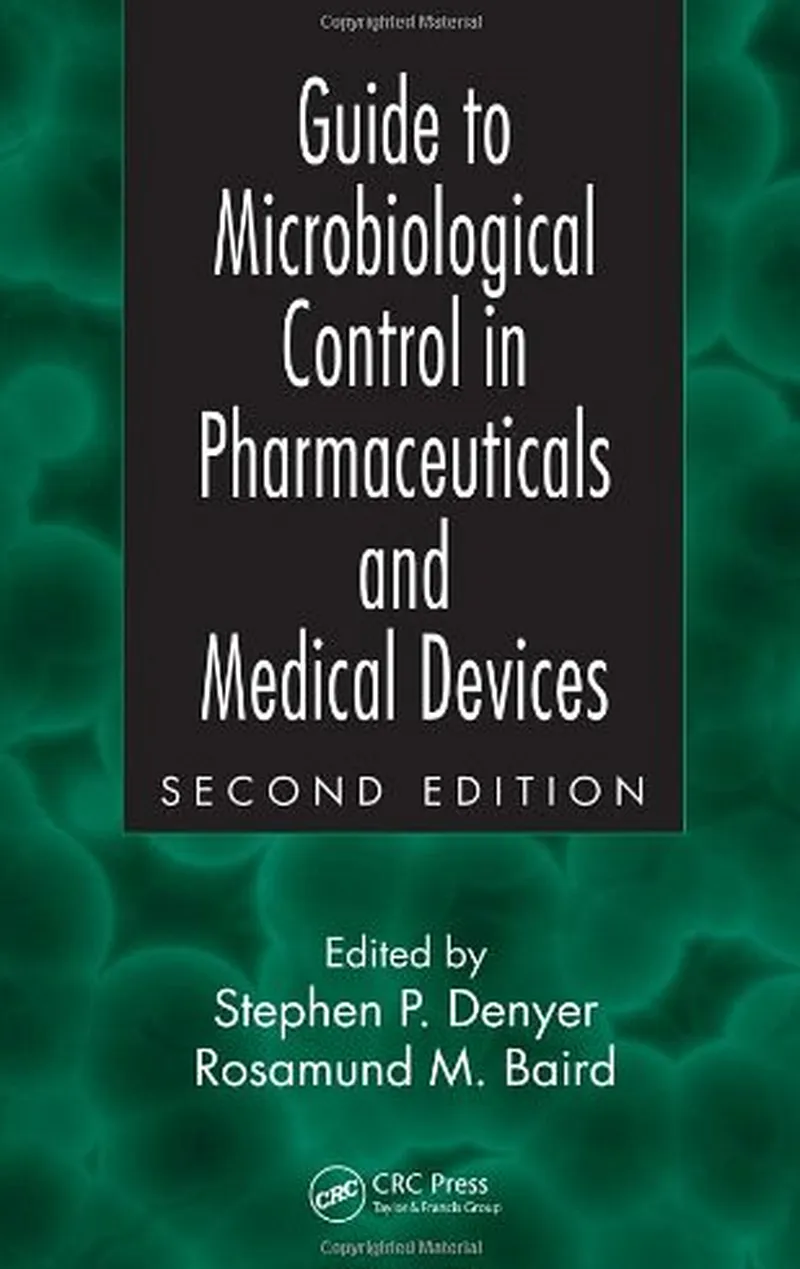

Guide to Microbiological Control in Pharmaceuticals and Medical Devices, 2nd Edition
Guide to Microbiological Control in Pharmaceuticals and Medical Devices, 2nd Edition is a specialized reference focused on preventing, detecting, and controlling microbial contamination in pharmaceutical products, medical devices, and related manufacturing environments. Published by CRC Press, the book connects microbiological principles with practical approaches to product quality and contamination control.
With 498 pages, it provides a substantial resource for students and professionals working in pharmaceutical microbiology, medical-device manufacturing, and quality assurance.
About the Book
Microbial contamination can compromise pharmaceutical products and medical devices and may present significant risks to product quality and patient safety.
Effective microbiological control therefore requires an understanding of contamination sources, microbial growth, sterilization, environmental monitoring, and quality-control practices.
Microbial Contamination
Microorganisms can enter pharmaceutical and medical-device manufacturing processes through raw materials, personnel, equipment, water systems, air, and manufacturing environments.
Understanding these contamination pathways is essential for developing effective microbiological control programs.
Sterilization and Disinfection
Sterilization is a fundamental component of microbiological control.
The book provides background on approaches used to eliminate or control microorganisms, helping readers understand the principles behind sterilization and disinfection processes used in pharmaceutical and medical-device applications.
Pharmaceutical Microbiology
Pharmaceutical products require careful microbiological evaluation throughout their development and manufacture.
The book addresses principles relevant to microbial contamination control, product testing, manufacturing hygiene, and microbiological quality assurance.
Medical Devices
Medical devices can also require rigorous microbiological control depending on their intended use.
The book examines considerations associated with microbial contamination, sterilization, product handling, and microbiological quality in medical-device environments.
Environmental Monitoring
Manufacturing environments must be monitored to identify potential sources of contamination.
Environmental microbiology practices can involve monitoring air, surfaces, personnel, equipment, and controlled manufacturing areas to help maintain appropriate microbiological conditions.
Water Systems
Water is an important component of pharmaceutical manufacturing and can serve as a potential source of microbial contamination.
Microbiological control therefore includes appropriate management and monitoring of pharmaceutical water systems and their microbial quality.
Quality Control and Assurance
Microbiological testing supports broader pharmaceutical and medical-device quality systems.
The book provides useful background on integrating microbiological monitoring, contamination prevention, testing, and quality assurance into manufacturing processes.
Who Is This Book For?
Guide to Microbiological Control in Pharmaceuticals and Medical Devices, 2nd Edition can be useful for:
- Pharmaceutical microbiology students
- Pharmacy students
- Microbiology students
- Pharmaceutical scientists
- Medical-device professionals
- Quality-control specialists
- Quality-assurance professionals
- Manufacturing microbiologists
- Biotechnology professionals
It is particularly relevant to readers working with contamination control, sterilization, environmental monitoring, and microbiological quality systems.
Final Thoughts
Guide to Microbiological Control in Pharmaceuticals and Medical Devices, 2nd Edition provides a focused reference on the microbiological challenges associated with pharmaceutical and medical-device manufacturing.
The book brings together concepts related to microbial contamination, sterilization, disinfection, environmental monitoring, water systems, microbiological testing, and quality assurance, making it a useful resource for professionals and students in pharmaceutical microbiology and related fields.
With 498 pages, it offers substantial coverage for readers seeking a dedicated reference on microbiological control in regulated manufacturing environments.
Book Information
Title: Guide to Microbiological Control in Pharmaceuticals and Medical Devices
Edition: 2nd Edition
Publisher: CRC Press
Publication Date: December 26, 2006
Language: English
Print Length: 498 pages
ISBN-10: 9780748406159
ISBN-13: 978-0748406159
ASIN: 0748406158
Subject: Pharmaceutical Microbiology / Medical Devices / Microbial Control / Sterilization / Environmental Monitoring / Quality Assurance
Guide to Microbiological Control in Pharmaceuticals and Medical Devices, 2nd Edition provides a practical foundation in contamination control, sterilization, environmental monitoring, pharmaceutical microbiology, medical-device microbiology, and microbiological quality assurance, making it a useful reference for students and professionals in pharmaceutical and healthcare manufacturing.
Support the Creators!
If you enjoy this book, please consider supporting the author and publisher by purchasing a physical or digital copy. Buying official copies ensures authors can keep writing great books.