
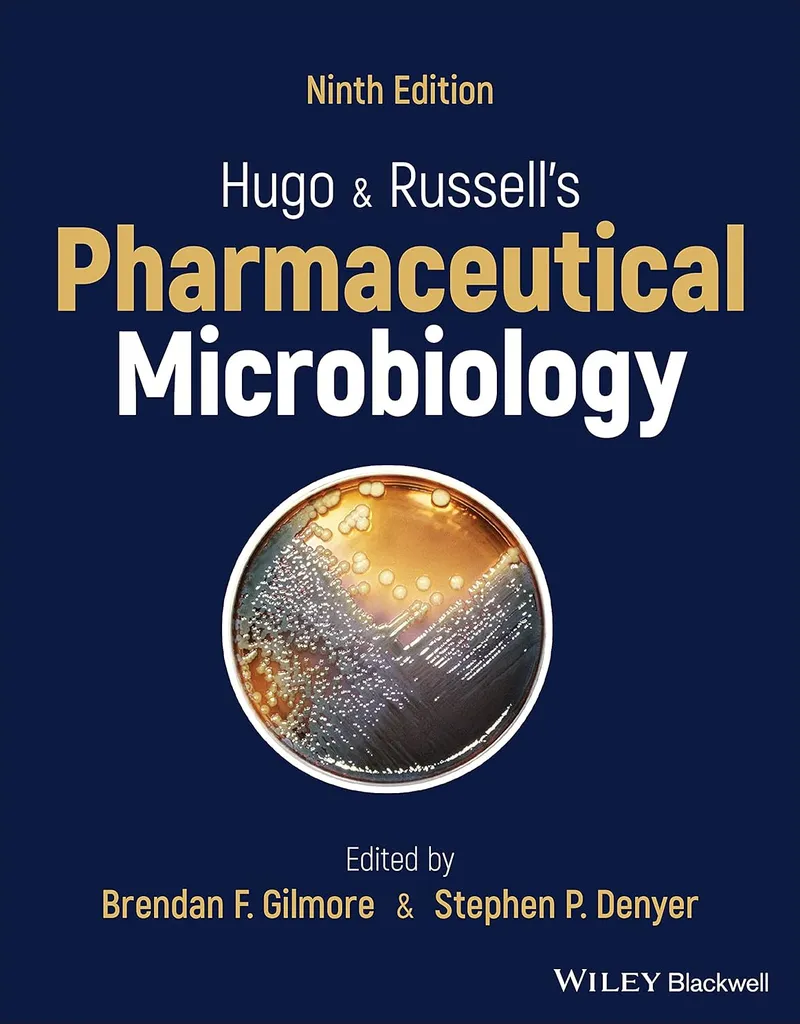

Hugo and Russell’s Pharmaceutical Microbiology, 9th Edition
Hugo and Russell’s Pharmaceutical Microbiology, 9th Edition is a comprehensive textbook covering the principles of microbiology as they relate to pharmaceutical science, medicines, healthcare, and the control of microorganisms. Published by Wiley-Blackwell, this edition provides students and professionals with a strong foundation in microbial biology while emphasizing the practical importance of microorganisms in pharmaceutical environments.
With 576 pages, the book offers broad coverage of pharmaceutical microbiology, including microbial contamination, sterilization, antimicrobial agents, quality control, and microbiological methods used in pharmaceutical settings.
About Hugo and Russell’s Pharmaceutical Microbiology
Pharmaceutical microbiology is an important area connecting microbiology, pharmacy, medicine, biotechnology, and quality control.
Microorganisms can be beneficial in pharmaceutical production, but unwanted microbial contamination can also compromise medicines, manufacturing environments, and patient safety.
Understanding microbial growth, contamination, identification, and control is therefore essential for pharmaceutical and healthcare professionals.
Microbial Biology and Pharmaceutical Science
A strong understanding of basic microbiology is essential for studying pharmaceutical microbiology.
The book provides a foundation for understanding microorganisms, their structures, growth characteristics, metabolism, and interactions with their environments.
These concepts help explain how microorganisms can enter pharmaceutical products and manufacturing systems and how they can subsequently be detected and controlled.
Microbial Contamination
Microbial contamination is an important concern in pharmaceutical manufacturing.
Microorganisms can potentially enter products through raw materials, water, equipment, personnel, air, and manufacturing environments.
Understanding contamination routes helps pharmaceutical scientists establish appropriate procedures for monitoring and controlling microbial populations.
Sterilization and Disinfection
Sterilization and disinfection are fundamental components of pharmaceutical microbiology.
Different methods can be used to reduce or eliminate microorganisms depending on the material, product, and manufacturing process. Understanding the principles behind these methods helps ensure that appropriate techniques are selected and applied correctly.
Sterility is particularly important for pharmaceutical products where microbial contamination could have serious consequences.
Antimicrobial Agents
Antimicrobial substances are widely used in medicine and pharmaceutical production.
Understanding how antimicrobial agents affect microorganisms helps explain their applications as well as the factors that influence their effectiveness.
The study of antimicrobial activity also provides important background for understanding microbial resistance and challenges associated with controlling microorganisms.
Pharmaceutical Microbiological Quality Control
Microbiological quality control helps ensure that pharmaceutical products meet appropriate standards.
Laboratory testing can be used to detect microorganisms, assess contamination, and monitor manufacturing environments.
Microbiological quality control is therefore an important part of pharmaceutical production and regulatory compliance.
Microorganisms in Pharmaceutical Products
Different pharmaceutical products present different microbiological considerations.
Factors such as formulation, water content, storage conditions, packaging, and manufacturing processes can influence microbial survival and growth.
Understanding these factors helps pharmaceutical microbiologists evaluate potential contamination risks and develop suitable control strategies.
Sterile Products and Aseptic Processing
Sterile pharmaceutical products require particularly careful microbiological control.
Aseptic processing involves maintaining conditions designed to prevent microorganisms from entering products during manufacturing and handling.
Understanding the microbiological principles behind sterile production is essential for professionals working with products where microbial contamination cannot be tolerated.
Microbiological Testing Methods
Pharmaceutical microbiology relies on laboratory methods for detecting, identifying, and evaluating microorganisms.
These methods can include:
- Microbial enumeration
- Microbial identification
- Sterility testing
- Environmental monitoring
- Microbial limit testing
- Antimicrobial effectiveness testing
- Microbiological quality assessment
These techniques provide important information for evaluating pharmaceutical products and manufacturing environments.
Microbiology in Pharmaceutical Manufacturing
Microbiological principles extend throughout the pharmaceutical manufacturing process.
Raw materials, production equipment, water systems, cleanrooms, personnel, packaging, and finished products may all require microbiological consideration.
A strong understanding of these interactions allows pharmaceutical manufacturers to reduce contamination risks and maintain consistent product quality.
Who Is This Book For?
Hugo and Russell’s Pharmaceutical Microbiology can be useful for:
- Pharmacy students
- Pharmaceutical science students
- Microbiology students
- Biotechnology students
- Biomedical science students
- Pharmaceutical microbiologists
- Quality-control professionals
- Healthcare science students
- Researchers working in pharmaceutical microbiology
It can also serve as a reference for professionals involved in pharmaceutical manufacturing and microbiological quality assurance.
Why Study Pharmaceutical Microbiology?
Pharmaceutical microbiology demonstrates how microbiological knowledge can be directly applied to product quality and patient safety.
Understanding microbial contamination, sterilization, disinfection, antimicrobial activity, environmental monitoring, and microbiological testing helps professionals recognize and control microbial risks throughout pharmaceutical production.
This makes pharmaceutical microbiology an important subject for anyone working at the intersection of microbiology and pharmaceutical science.
Final Thoughts
Hugo and Russell’s Pharmaceutical Microbiology, 9th Edition provides a comprehensive introduction to the principles and applications of microbiology within the pharmaceutical industry.
The book covers important areas including microbial contamination, sterilization, disinfection, antimicrobial agents, pharmaceutical microbiological testing, quality control, sterile products, aseptic processing, and environmental monitoring.
With 576 pages, it offers substantial coverage for students and professionals seeking to understand how microorganisms are managed in pharmaceutical environments.
For readers studying pharmacy, pharmaceutical sciences, microbiology, biotechnology, and related healthcare disciplines, this edition can serve as a valuable academic resource for understanding the microbiological principles that support pharmaceutical quality, safety, and manufacturing.
Book Information
Title: Hugo and Russell’s Pharmaceutical Microbiology
Edition: 9th Edition
Publisher: Wiley-Blackwell
Publication Date: March 20, 2023
Language: English
Print Length: 576 pages
ISBN-10: 1119434491
ISBN-13: 978-1119434498
Subject: Pharmaceutical Microbiology / Microbiology / Pharmacy / Sterilization / Pharmaceutical Quality Control
Hugo and Russell’s Pharmaceutical Microbiology, 9th Edition provides a comprehensive foundation in pharmaceutical microbiology, microbial contamination, sterilization, antimicrobial agents, microbiological testing, environmental monitoring, and quality control, making it a useful resource for pharmacy, pharmaceutical science, and microbiology students.
Support the Creators!
If you enjoy this book, please consider supporting the author and publisher by purchasing a physical or digital copy. Buying official copies ensures authors can keep writing great books.