
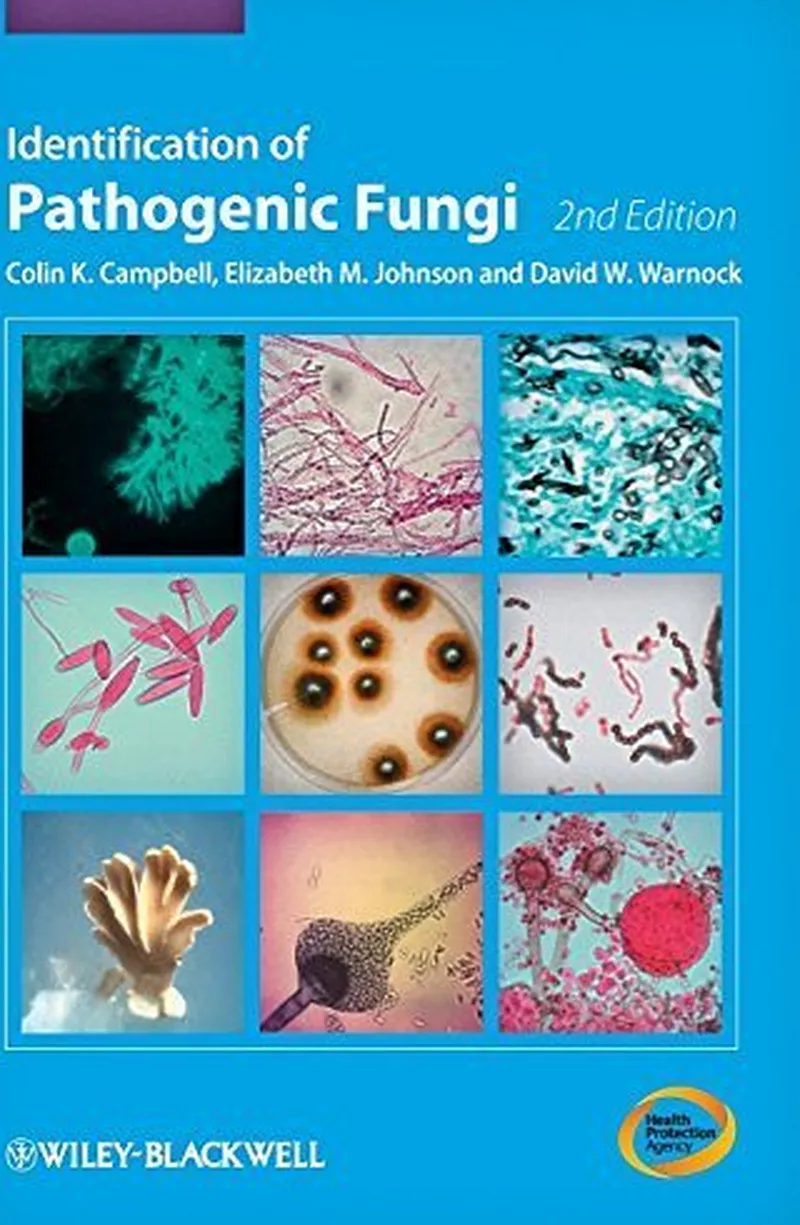

Identification of Pathogenic Fungi, Second Edition
Identification of Pathogenic Fungi, Second Edition is a practical reference for the identification of medically important fungi and the diagnosis of fungal infections. Published by Wiley-Blackwell in 2013, this extensively updated edition reflects advances in fungal diagnosis and treatment while addressing the growing challenge of antifungal resistance.
The book focuses on more than 100 significant pathogenic fungi and provides a systematic approach to distinguishing closely related organisms using both macroscopic and microscopic characteristics. Its detailed descriptions and extensive color illustrations make it particularly useful for clinical microbiology, medical mycology, and pathology laboratories.
About the Book
The diagnosis of fungal infections has changed considerably with the development of new diagnostic techniques and antifungal therapies. At the same time, the emergence of resistance to several antifungal drug classes and the increasing importance of intrinsically resistant fungi have created additional challenges for clinical laboratories.
Identification of Pathogenic Fungi, Second Edition addresses these developments while maintaining a strong emphasis on practical fungal identification. Chapters covering similar organisms are positioned together, allowing readers to compare related fungi and approach differential identification more efficiently.
Key Features
- Covers the identification of more than 100 medically important fungi
- Provides detailed descriptions of individual pathogenic organisms
- Uses both colonial appearance and microscopic characteristics for differential identification
- Includes a new chapter on identifying fungi in histopathological sections and smears
- Features color illustrations of fungal cultures and microscopic structures
- Incorporates high-quality four-color digital images throughout the book
- Reflects developments in fungal diagnosis and antifungal therapy
- Addresses the growing problem of antifungal resistance
- Organizes related organisms together to facilitate comparison and differential diagnosis
Fungal Identification and Differential Diagnosis
A central strength of the book is its practical approach to distinguishing pathogenic fungi. Identification relies on observable characteristics such as colony morphology and microscopic structures, giving readers a framework for comparing organisms that may appear similar.
The organization of related organisms on adjacent pages further supports differential diagnosis, allowing students and laboratory professionals to examine similarities and differences without having to move between widely separated sections.
Histopathology and Medical Mycology
The addition of a chapter devoted to fungal identification in histopathological sections and smears expands the usefulness of the second edition beyond conventional culture-based identification. This is particularly relevant when fungal structures must be recognized directly in clinical specimens or tissue.
The extensive use of color images also supports visual learning, which is especially important in medical mycology where colony morphology and microscopic appearance are key components of identification.
Who Should Use This Book?
Identification of Pathogenic Fungi, Second Edition may be useful for:
- Clinical microbiologists and laboratory scientists
- Medical mycology students and researchers
- Medical and veterinary microbiology students
- Pathologists and pathology trainees
- Laboratory technicians involved in fungal identification
- Healthcare professionals studying fungal infections
- Researchers working with medically important fungi
Final Thoughts
Identification of Pathogenic Fungi, Second Edition combines organism descriptions, differential identification criteria, microscopy, culture characteristics, and extensive visual material into a practical reference for medical mycology. Published in 2013, it reflects the diagnostic technologies and antifungal landscape of that period, while its foundational approaches to fungal morphology and identification remain useful for education and laboratory reference.
Book Information
Title: Identification of Pathogenic Fungi
Publisher: Wiley-Blackwell
Publication Date: April 22, 2013
Edition: 2nd
Language: English
Print Length: 637 pages
ISBN-13: 978-1118520062
ASIN: B00B89QVWS
Subjects: Medical Mycology, Pathogenic Fungi, Fungal Identification, Clinical Mycology, Clinical Microbiology, Medical Microbiology, Histopathology, Fungal Infections
Identification of Pathogenic Fungi, Second Edition provides a practical and richly illustrated approach to identifying medically important fungi through culture characteristics, microscopy, and differential diagnosis.
Support the Creators!
If you enjoy this book, please consider supporting the author and publisher by purchasing a physical or digital copy. Buying official copies ensures authors can keep writing great books.