
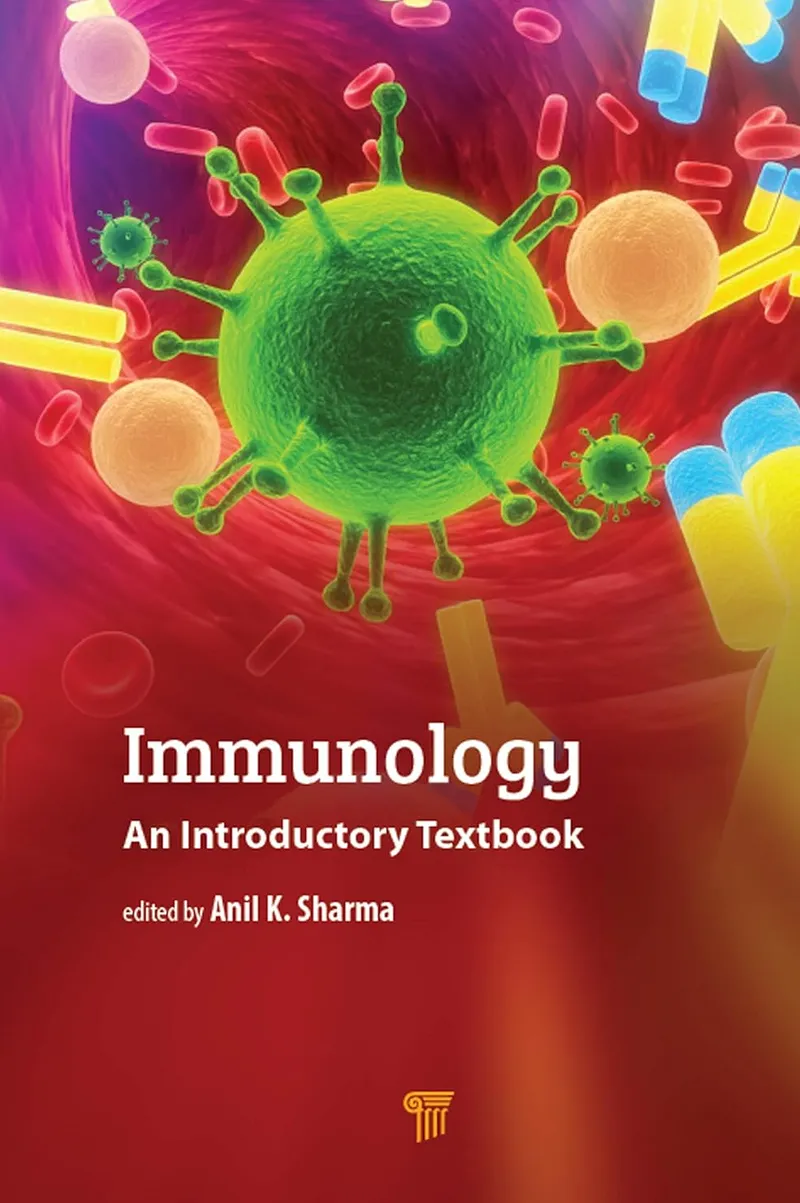

Immunology: An Introductory Textbook, 1st Edition
Immunology: An Introductory Textbook, 1st Edition provides a structured introduction to the fundamental principles of immunology and the mechanisms by which the immune system protects the body. Published by Jenny Stanford Publishing, the book introduces the cellular, molecular, and physiological components of immune responses.
With 260 pages, it is a concise academic resource for students beginning their study of immunology, microbiology, cell biology, biomedical sciences, and related life sciences.
About the Book
The immune system is a complex network of cells, tissues, molecules, and signaling pathways that protects the body against infectious organisms and other biological threats.
This introductory textbook presents the basic concepts needed to understand immune recognition, immune cells, antibodies, innate and adaptive immunity, inflammation, and immune-related disorders.
Innate Immunity
Innate immunity provides rapid protection against invading organisms.
The book introduces physical barriers, innate immune cells, inflammatory responses, pattern recognition, and other mechanisms that form the body’s first line of defense.
Adaptive Immunity
Adaptive immunity provides highly specific responses to foreign antigens.
The text explains the roles of B lymphocytes, T lymphocytes, antigen recognition, immune activation, and immunological memory.
Immune Cells
Different immune cells perform specialized functions.
The book examines important populations including lymphocytes, macrophages, neutrophils, dendritic cells, and other immune cells, explaining how they cooperate during immune responses.
Antigens and Antibodies
Recognition of foreign molecules is fundamental to adaptive immunity.
The text introduces antigens, antibodies, antibody structure, antigen–antibody interactions, and the mechanisms through which antibodies contribute to immune protection.
T-Cell and B-Cell Responses
T cells and B cells are central components of adaptive immunity.
The book explores T-cell activation, B-cell activation, antibody production, cellular immunity, and mechanisms that generate specific immune responses.
Complement System
The complement system contributes to innate and adaptive immune defense.
The text introduces the major principles of complement activation, regulation, and its role in pathogen elimination and inflammation.
Cytokines and Immune Signaling
Immune cells communicate through chemical signaling molecules.
The book discusses cytokines, cellular communication, immune regulation, and signaling mechanisms involved in coordinating immune responses.
Inflammation
Inflammation is an important component of immune defense.
The text explains how inflammatory responses help recruit immune cells, respond to tissue injury, and control infectious threats.
Immunological Memory
The adaptive immune system can retain information about previous encounters.
The book introduces immunological memory and explains its importance in long-term protection and vaccination.
Hypersensitivity and Autoimmunity
Abnormal immune responses can cause tissue damage and disease.
The textbook introduces hypersensitivity reactions and autoimmune disorders, explaining how inappropriate immune activity can affect the body.
Immunodeficiency
Effective immune defense depends on the proper functioning of multiple immune components.
The text provides an introduction to immunodeficiency disorders and the consequences of impaired immune responses.
Immunology and Infectious Diseases
The immune system interacts continuously with microorganisms.
The book connects immunological principles with bacterial, viral, fungal, and parasitic infections, helping readers understand how the body responds to infectious agents.
Who Is This Book For?
Immunology: An Introductory Textbook, 1st Edition can be useful for:
- Immunology students
- Biology students
- Microbiology students
- Medical students
- Biomedical science students
- Biotechnology students
- Pharmacy students
- Nursing students
- Graduate students
- Life science students
It is particularly suitable for readers seeking a clear introduction to the fundamental concepts of immunology.
Final Thoughts
Immunology: An Introductory Textbook, 1st Edition provides a concise foundation for understanding how the immune system recognizes threats and coordinates protective responses.
Its coverage of innate and adaptive immunity, immune cells, antibodies, T and B cells, complement, cytokines, inflammation, immune memory, hypersensitivity, autoimmunity, and immunodeficiency makes it a useful starting point for students studying immunology and related biomedical disciplines.
Book Information
Title: Immunology: An Introductory Textbook
Edition: 1st Edition
Publisher: Jenny Stanford Publishing
Publication Date: March 19, 2019
Language: English
Print Length: 260 pages
ISBN-10: 9814774510
ISBN-13: 978-9814774512
Subject: Immunology / Microbiology / Cell Biology / Biomedical Sciences / Infectious Diseases
Immunology: An Introductory Textbook, 1st Edition introduces the essential principles of innate and adaptive immunity, immune cells, antibodies, cytokines, inflammation, immune memory, hypersensitivity, autoimmunity, and immunodeficiency, making it a useful academic resource for students beginning their study of immunology.
Support the Creators!
If you enjoy this book, please consider supporting the author and publisher by purchasing a physical or digital copy. Buying official copies ensures authors can keep writing great books.