

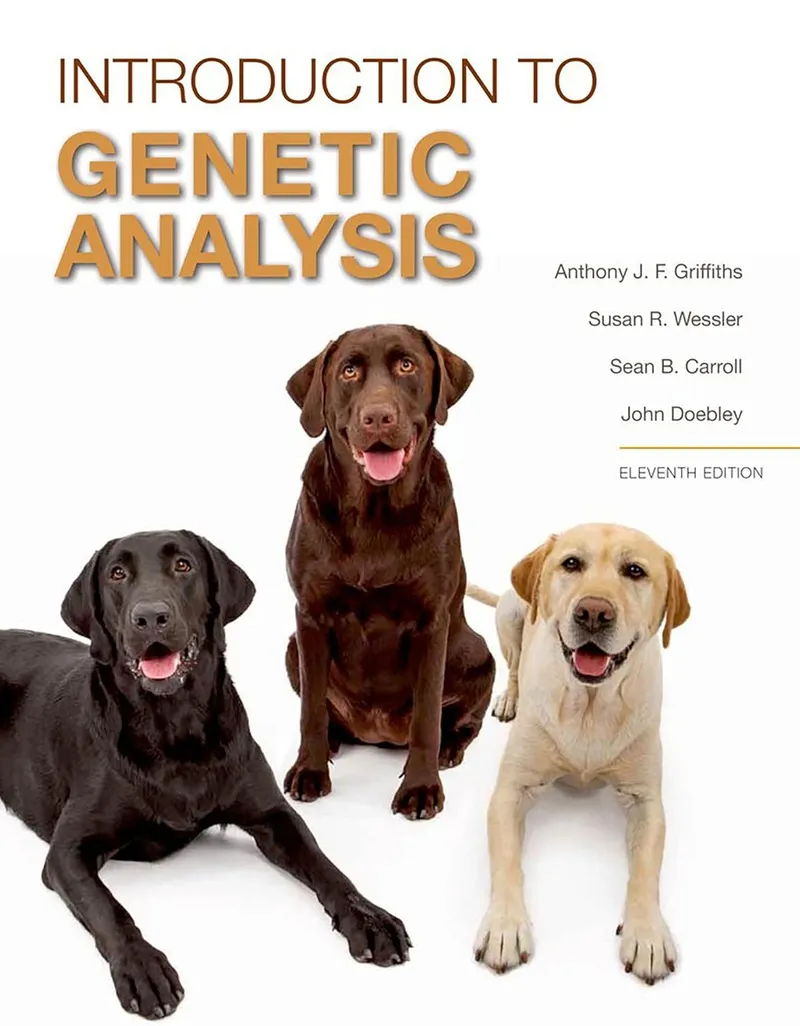

Introduction to Genetic Analysis, 11th Edition
Introduction to Genetic Analysis, 11th Edition is a comprehensive genetics textbook published by W. H. Freeman. Designed to take students from the fundamental principles of Mendelian genetics to modern discoveries that have shaped the field, the book provides a broad and conceptually connected introduction to genetic analysis.
Rather than presenting genetics as a collection of isolated facts, this edition emphasizes how genetic principles are discovered, tested, and applied. It introduces students to classical inheritance while building toward molecular genetics, genetic variation, chromosome behavior, and modern experimental approaches. Its combination of clear explanations, scientific examples, and problem-solving makes it a useful resource for learning how geneticists approach biological questions.
About the Book
The 11th edition provides a structured exploration of genetics, beginning with the foundations of heredity and gradually introducing more sophisticated concepts and experimental approaches. The book connects classical genetic analysis with molecular and modern genetics, helping students understand how discoveries at different levels contribute to our overall understanding of biological inheritance.
Its approach is particularly useful for students who need to develop both conceptual understanding and analytical skills. By following the progression from Mendelian principles to landmark genetic experiments, readers can see how evidence and experimentation have shaped modern genetics.
Foundations of Genetics
The book establishes the essential principles needed to understand genetic inheritance and analysis, including:
- Mendelian genetics and the principles of inheritance
- Genetic crosses and analysis of inheritance patterns
- Chromosomes and their role in heredity
- Genetic variation and the behavior of alleles
- Linkage and genetic mapping
- The relationship between genotype and phenotype
These foundations provide the framework for understanding more advanced areas of genetics.
Molecular and Modern Genetics
After establishing classical concepts, Introduction to Genetic Analysis connects them with molecular mechanisms and contemporary genetic research. Students can explore how genes function, how genetic information is organized, and how molecular discoveries have expanded traditional views of inheritance.
The book also places genetics in the context of landmark experiments, showing how experimental evidence has been used to answer fundamental questions about genes, chromosomes, and biological inheritance.
Genetic Analysis and Experimental Approaches
A central feature of the book is its emphasis on genetic analysis as a scientific process. Students are encouraged to think about how geneticists interpret experimental results, formulate hypotheses, and use genetic evidence to investigate biological mechanisms.
This approach helps bridge the gap between simply learning genetic terminology and developing the analytical reasoning required to solve genetics problems.
Connecting Classical and Contemporary Genetics
One of the strengths of the 11th edition is its progression from classical genetics toward modern genetic concepts. This allows students to understand how ideas developed historically while also appreciating their relevance to current biological research.
The connection between foundational genetics and modern discoveries makes the book suitable for courses that want students to understand both the principles and the broader development of the discipline.
Who Should Use This Book?
Introduction to Genetic Analysis, 11th Edition is particularly useful for:
- Undergraduate students studying genetics
- Biology and life science students
- Students taking introductory or intermediate genetics courses
- Students preparing for examinations in genetics and related biological sciences
- Instructors looking for a comprehensive genetics textbook
- Readers who want to develop stronger genetic problem-solving and analytical skills
Final Thoughts
Introduction to Genetic Analysis, 11th Edition provides a thorough introduction to genetics by connecting Mendelian foundations with molecular concepts, experimental evidence, and modern developments. Its emphasis on genetic reasoning makes it more than a reference to genetic terminology—it is designed to help students understand how genetic knowledge is developed and applied.
With its broad coverage and progression from classical inheritance to contemporary genetic analysis, this edition remains a valuable academic resource for students beginning their study of genetics and for anyone seeking a structured foundation in the principles of genetic analysis.
Book Information
Title: Introduction to Genetic Analysis
Publisher: W. H. Freeman
Publication Date: January 12, 2015
Edition: 11th Edition
Language: English
Print Length: 896 pages
ISBN-10: 1464109486
ISBN-13: 978-1464109485
Subjects: Genetics, Mendelian Genetics, Genetic Analysis, Molecular Genetics, Heredity, Genetic Variation, Chromosomes, Biology
Introduction to Genetic Analysis, 11th Edition is a comprehensive genetics textbook that connects classical Mendelian principles with modern genetic research, experimental analysis, and problem-solving.
Support the Creators!
If you enjoy this book, please consider supporting the author and publisher by purchasing a physical or digital copy. Buying official copies ensures authors can keep writing great books.