

Medical Microbiology, 24th Edition
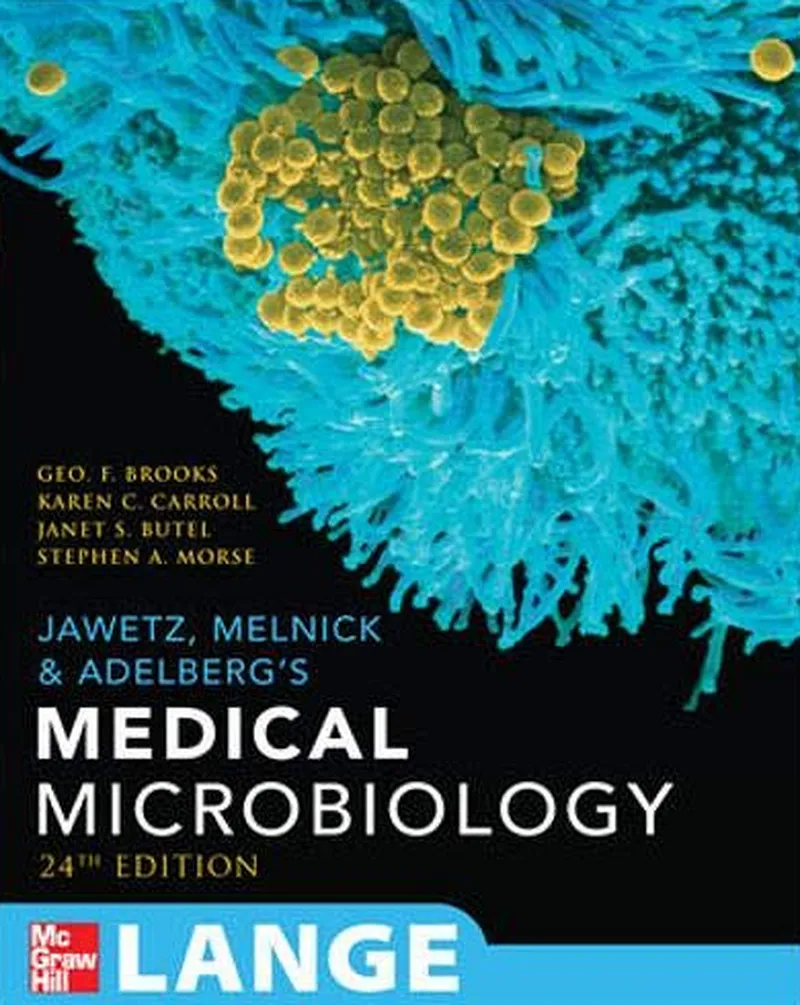
Medical Microbiology, 24th Edition is a comprehensive textbook covering the microorganisms responsible for human infections and the fundamental principles of medical microbiology. Published by McGraw-Hill Medical, this edition provides students with a broad foundation in bacteriology, virology, mycology, parasitology, immunology, infectious diseases, and antimicrobial therapy.
With 832 pages, the book offers extensive material for students and readers seeking to understand the relationship between microorganisms, human health, and infectious disease.
About Medical Microbiology
Medical microbiology focuses on microorganisms that can colonize, infect, or cause disease in humans.
Understanding infectious diseases requires knowledge of microbial structure and biology as well as pathogenesis, transmission, host responses, diagnosis, treatment, and prevention. This textbook brings these areas together to provide a broad overview of the subject.
Bacteria, Viruses, Fungi, and Parasites
Human infections can be caused by many different types of microorganisms.
The study of bacteria, viruses, fungi, and parasites helps students understand their biological characteristics, methods of transmission, mechanisms of disease, and approaches to diagnosis and control.
Learning the differences among these microbial groups is an important foundation for medical and clinical microbiology.
Microbial Pathogenesis
Microbial pathogenesis explains how microorganisms produce disease.
Pathogens may attach to host cells, invade tissues, produce toxins, interfere with cellular processes, or evade immune defenses.
Understanding these mechanisms helps explain why different microorganisms produce different clinical manifestations and how infections develop.
Host-Microbe Interactions
The relationship between microorganisms and the human host is an important part of medical microbiology.
Some microorganisms are part of the normal human microbiota, while others can cause disease when they enter normally sterile sites or when host defenses are compromised.
The immune system plays a central role in controlling infections, making host defenses and microbial immune evasion important areas of study.
Laboratory Diagnosis
Clinical microbiology provides the laboratory methods used to investigate infectious diseases.
Depending on the suspected pathogen, diagnosis may involve:
- Microscopy and staining
- Microbial culture
- Biochemical testing
- Antigen detection
- Serological methods
- Molecular diagnostics
- Antimicrobial susceptibility testing
Understanding these techniques helps students connect microbiological theory with clinical diagnosis.
Infectious Diseases
Microorganisms can cause infections affecting virtually every part of the human body.
Studying infectious diseases requires integrating information about the causative organism, route of transmission, pathogenesis, clinical presentation, diagnosis, and prevention.
This integrated perspective is particularly important for students preparing for medical and healthcare careers.
Antimicrobial Agents and Resistance
Antimicrobial therapy is an essential component of infectious disease management.
Microbiology provides the scientific basis for understanding how antibiotics and other antimicrobial agents affect microorganisms and why resistance can develop.
The study of antimicrobial resistance also demonstrates the importance of microbial genetics, evolution, and appropriate antimicrobial use.
Infection Prevention
Preventing infectious disease requires an understanding of how pathogens spread.
Microbiological principles support practices such as sterilization, disinfection, vaccination, isolation, environmental control, and appropriate infection-control procedures.
These concepts are important in healthcare facilities, laboratories, and public health.
Who Is This Book For?
Medical Microbiology, 24th Edition can be useful for:
- Medical students
- Microbiology students
- Nursing students
- Pharmacy students
- Dental students
- Medical laboratory students
- Biomedical science students
- Healthcare professionals
- Students studying infectious diseases
It can also serve as a supplementary reference for readers reviewing the fundamentals of human infectious diseases.
Why Study Medical Microbiology?
Medical microbiology provides the foundation for understanding many diseases encountered in clinical practice.
Learning how microorganisms survive, reproduce, cause disease, interact with the immune system, and respond to antimicrobial agents allows students to approach infectious diseases from a scientific and clinical perspective.
Final Thoughts
Medical Microbiology, 24th Edition provides a broad introduction to microorganisms and their role in human disease.
The book covers important areas including bacteriology, virology, mycology, parasitology, microbial pathogenesis, host-microbe interactions, laboratory diagnosis, antimicrobial therapy, resistance, and infection prevention.
With 832 pages, this edition offers extensive material for students who want to develop a solid foundation in medical microbiology.
For readers studying medicine, microbiology, nursing, pharmacy, dentistry, biomedical science, and laboratory medicine, this textbook can be a valuable resource for understanding the microorganisms responsible for human infections and the principles used to diagnose and control infectious diseases.
Book Information
Title: Medical Microbiology
Edition: 24th Edition
Publisher: McGraw-Hill Medical
Publication Date: April 20, 2007
Language: English
Print Length: 832 pages
ISBN-10: 0071476660
ISBN-13: 978-0071476669
Subject: Medical Microbiology / Infectious Diseases / Bacteriology / Virology / Mycology / Parasitology
Medical Microbiology, 24th Edition provides a comprehensive foundation in microbial pathogens, infectious diseases, pathogenesis, laboratory diagnosis, antimicrobial therapy, and infection prevention, making it a useful study resource for students and professionals in medicine and the health sciences.
Support the Creators!
If you enjoy this book, please consider supporting the author and publisher by purchasing a physical or digital copy. Buying official copies ensures authors can keep writing great books.