
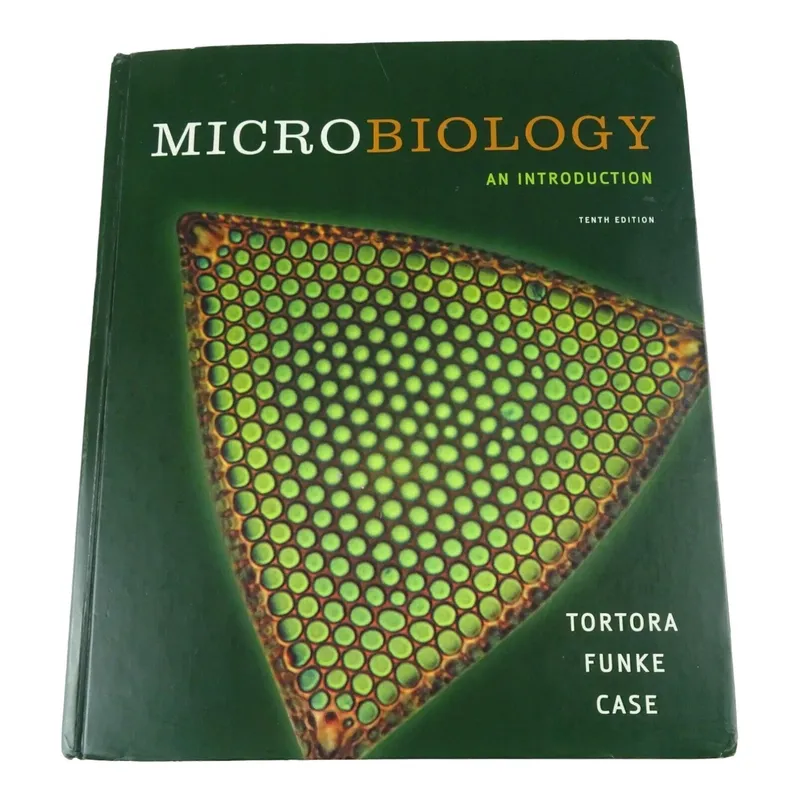

Microbiology: An Introduction, 10th Edition
Microbiology: An Introduction, 10th Edition by Gerard J. Tortora is a comprehensive introductory textbook that explores the fundamental principles of microbiology and their applications to human health, disease, and everyday life. Published by Pearson, this edition provides a clear foundation in microbiological concepts while introducing students to microorganisms, microbial processes, infectious diseases, and laboratory methods.
With 975 pages, the book offers broad coverage of bacteriology, virology, mycology, parasitology, immunology, microbial genetics, metabolism, microbial ecology, and infectious diseases, making it a useful resource for students beginning their study of microbiology.
About the Book
Microorganisms are involved in virtually every aspect of life, from ecosystems and biotechnology to human health and disease. Microbiology: An Introduction presents these topics in an accessible and organized manner, helping readers understand both the basic biology of microorganisms and their significance in the real world.
The book connects microbiological principles with clinical, environmental, industrial, and everyday applications.
Foundations of Microbiology
The text introduces the basic concepts needed to understand microorganisms, including microbial structure, classification, microscopy, growth, metabolism, and reproduction.
These principles provide the foundation for understanding how microorganisms survive, interact with their environments, and affect other organisms.
Microbial Structure and Function
Understanding cellular structure is essential to microbiology.
The book examines the structures and functions of bacterial, archaeal, fungal, protozoan, and other microbial cells, highlighting important differences between microorganisms and their hosts.
Microbial Metabolism and Growth
Microorganisms use diverse metabolic strategies to obtain energy and reproduce.
The text covers microbial nutrition, enzymes, energy production, metabolism, growth requirements, and factors affecting microbial growth.
Microbial Genetics
Genetic mechanisms allow microorganisms to adapt and acquire new characteristics.
The book introduces DNA replication, gene expression, mutations, genetic exchange, recombinant DNA technology, and microbial biotechnology.
Bacteriology
Bacteria are among the most extensively studied microorganisms.
The text explores bacterial characteristics, classification, physiology, and their roles in human health, disease, industry, and the environment.
Virology
Viruses differ fundamentally from cellular microorganisms.
The book introduces viral structure, replication, classification, viral diseases, and interactions between viruses and their hosts.
Fungi, Protozoa, and Algae
The text also examines important eukaryotic microorganisms.
Readers are introduced to fungi, protozoa, algae, and their biological characteristics, ecological roles, and medical significance.
Immunology
The immune system protects the body against infectious microorganisms.
The book introduces innate and adaptive immunity, immune cells, antibodies, antigen recognition, inflammation, and immune responses to infection.
Microbial Diseases
Microorganisms can cause a wide range of infectious diseases.
The text examines pathogenic microorganisms, mechanisms of disease, transmission, virulence, host defenses, and major infectious diseases affecting humans.
Epidemiology
Understanding how infectious diseases spread is essential for prevention and control.
The book introduces concepts involving reservoirs, transmission routes, incidence, prevalence, healthcare-associated infections, and epidemiological investigation.
Antimicrobial Drugs and Resistance
Antimicrobial therapy is an important application of microbiology.
The text explains the principles of antibacterial, antiviral, antifungal, and antiparasitic drugs, as well as the growing problem of antimicrobial resistance.
Microbial Ecology
Microorganisms play essential roles in natural ecosystems.
The book explores microbial communities, nutrient cycles, environmental microorganisms, and interactions between microorganisms and their surroundings.
Biotechnology and Applied Microbiology
Microorganisms have numerous applications beyond medicine.
The text introduces the use of microorganisms in biotechnology, food production, industrial processes, environmental applications, and other areas of applied microbiology.
Laboratory Methods
Laboratory techniques provide the foundation for studying microorganisms.
The book introduces methods involving microscopy, staining, cultivation, identification, microbial enumeration, and other fundamental microbiological techniques.
Who Is This Book For?
Microbiology: An Introduction, 10th Edition can be useful for:
- Microbiology students
- Biology students
- Medical students
- Nursing students
- Dental students
- Pharmacy students
- Medical laboratory science students
- Biomedical science students
- Biotechnology students
- Allied health students
- Undergraduate students
It is particularly suitable for learners looking for a comprehensive introductory microbiology textbook that connects fundamental concepts with clinical and real-world applications.
Final Thoughts
Microbiology: An Introduction, 10th Edition provides broad coverage of the science of microorganisms and their relationship with humans and the environment.
Its treatment of microbial structure and function, metabolism, growth, genetics, bacteriology, virology, fungi, protozoa, immunology, infectious diseases, epidemiology, antimicrobial therapy, microbial ecology, biotechnology, and laboratory techniques makes it a valuable foundation for students beginning their study of microbiology.
Book Information
Title: Microbiology: An Introduction
Author: Gerard J. Tortora
Edition: 10th Edition
Publisher: Pearson
Publication Date: January 1, 2009
Language: English
Print Length: 975 pages
ISBN-10: 0321550072
ISBN-13: 978-0321550071
ASIN: B0073RA7LA
Subject: Microbiology / Medical Microbiology / General Biology / Microbial Science
Microbiology: An Introduction, 10th Edition by Gerard J. Tortora provides comprehensive coverage of microbial structure, metabolism, growth, genetics, bacteriology, virology, mycology, protozoology, immunology, infectious diseases, epidemiology, antimicrobial resistance, microbial ecology, biotechnology, and laboratory methods, making it a valuable introductory resource for students in microbiology and related biological and health sciences.
Support the Creators!
If you enjoy this book, please consider supporting the author and publisher by purchasing a physical or digital copy. Buying official copies ensures authors can keep writing great books.